

One of the most important concepts in Islam is Iman 1 (إيمان), which is commonly translated as faith or belief.
Iman is much more than simply believing that Allah exists.
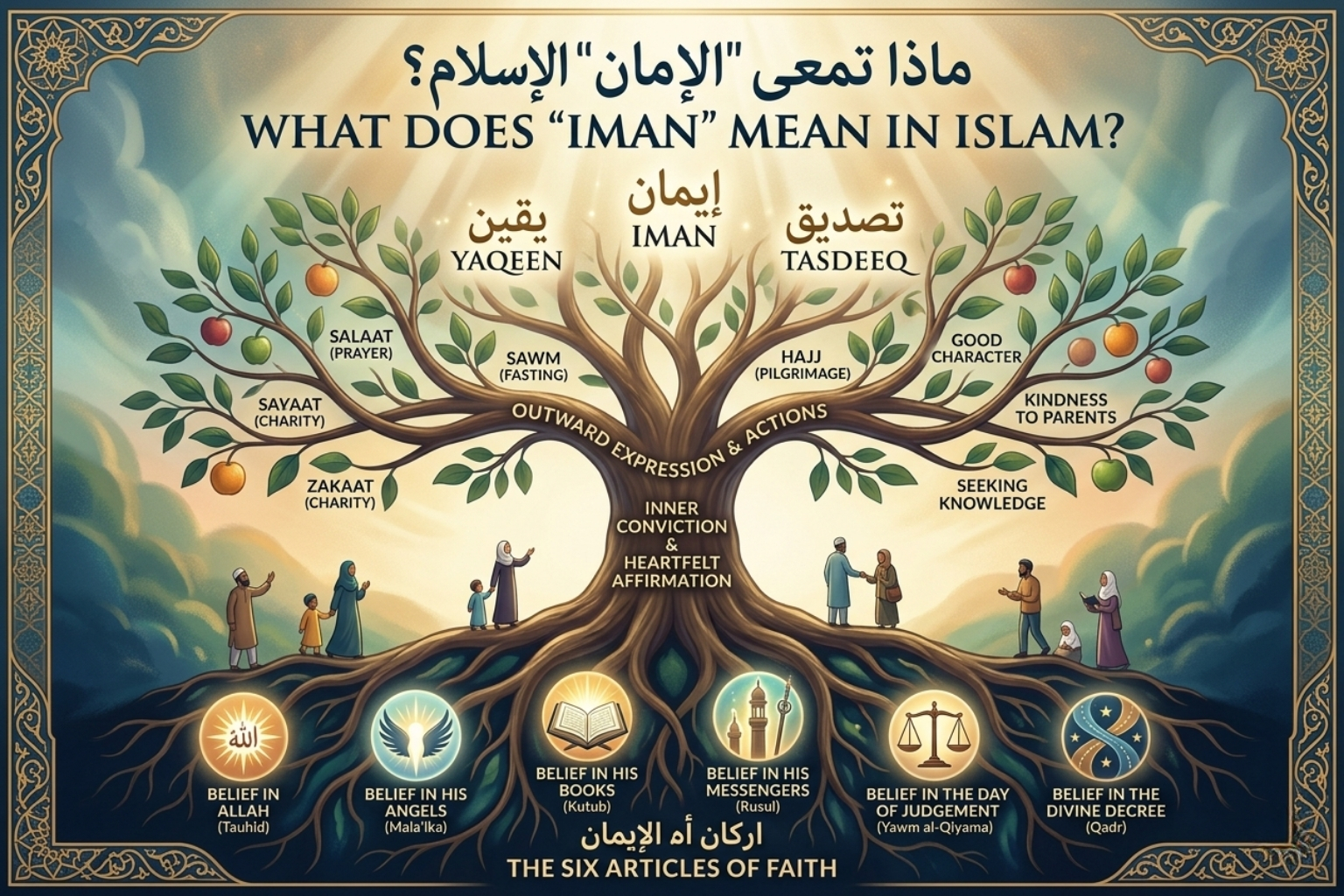
In Islam, Iman includes belief in the heart, declaration by the tongue, and actions shown through daily life.
The Quran and the teachings of the Prophet Muhammad ﷺ describe Iman as the foundation of a believer’s relationship with Allah and the key to spiritual success.
What Does “Iman” Mean?
The Arabic word Iman comes from a root related to security, trust, and certainty.
In Islamic teachings, Iman means:
- Believing in Allah sincerely 2
- Trusting His guidance
- Accepting His message
- Living according to faith
Iman is not only an idea or feeling.
True faith influences a person’s actions, character, worship, and decisions.
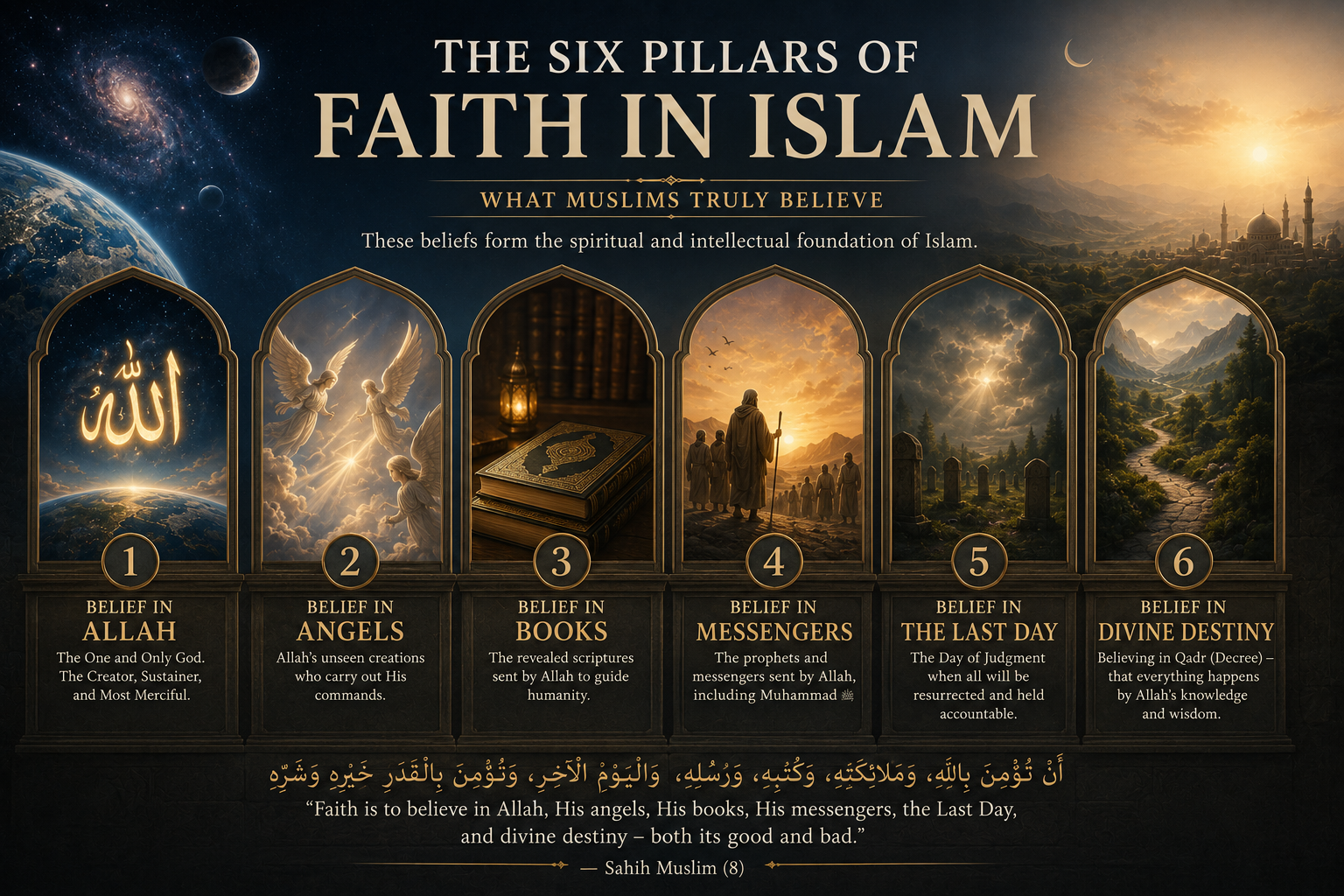
The Six Pillars of Iman
The Prophet Muhammad ﷺ explained the foundations of faith in a famous hadith.
He ﷺ said:
أَنْ تُؤْمِنَ بِاللَّهِ وَمَلَائِكَتِهِ وَكُتُبِهِ وَرُسُلِهِ وَالْيَوْمِ الْآخِرِ وَتُؤْمِنَ بِالْقَدَرِ خَيْرِهِ وَشَرِّهِ
“It is to believe in Allah, His angels, His books, His messengers, the Last Day, and to believe in divine decree, both its good and its bad.”
— Sahih Muslim, Hadith 8
These are known as the Six Pillars of Iman.
Belief in Allah
The foundation of Iman is belief in the oneness of Allah.
The Quran says:
قُلْ هُوَ اللَّهُ أَحَدٌ
“Say: He is Allah, the One.”
— Surah Al-Ikhlas (112:1)
Believers recognize Allah as:
- The Creator
- The Sustainer 3
- The Most Merciful
- The One worthy of worship 4 alone
Iman in the Quran
The Quran constantly praises those who believe sincerely.
Allah says:
إِنَّ الَّذِينَ آمَنُوا وَعَمِلُوا الصَّالِحَاتِ
“Indeed, those who believe and do righteous deeds…”
— Mentioned throughout the Quran
This repeated phrase shows that faith and righteous actions are closely connected in Islam.
Iman Increases and Decreases
Islamic teachings explain that Iman can grow stronger or weaker depending on a person’s actions and spiritual condition.
The Quran says:
وَإِذَا تُلِيَتْ عَلَيْهِمْ آيَاتُهُ زَادَتْهُمْ إِيمَانًا
“And when His verses are recited to them, it increases them in faith.”
— Surah Al-Anfal (8:2)
Iman grows through:
- Prayer
- Reading the Quran
- Remembering Allah
- Good deeds
- Seeking knowledge
It weakens through neglect, sin, and distance from worship.
The Relationship Between Islam and Iman
Islam and Iman are closely connected but not exactly the same.
- Islam refers mainly to outward submission and actions.
- Iman refers to inner belief and faith.
Allah says:
قَالَتِ الْأَعْرَابُ آمَنَّا ۖ قُل لَّمْ تُؤْمِنُوا وَلَٰكِن قُولُوا أَسْلَمْنَا
“The Bedouins say, ‘We believe.’ Say, ‘You have not believed; rather say, “We have submitted.”’”
— Surah Al-Hujurat (49:14)
This verse shows the difference between outward practice and deep inner faith.
Signs of True Iman
The Quran describes qualities found in sincere believers.
Allah says:
إِنَّمَا الْمُؤْمِنُونَ الَّذِينَ إِذَا ذُكِرَ اللَّهُ وَجِلَتْ قُلُوبُهُمْ
“The believers are only those who, when Allah is mentioned, their hearts become fearful.”
— Surah Al-Anfal (8:2)
Signs of strong Iman include:
- Sincerity
- Patience
- Honesty
- Humility
- Trust in Allah
- Compassion toward others
The Importance of Good Actions
In Islam, actions are connected to faith.
The Prophet Muhammad ﷺ said:
الإِيمَانُ بِضْعٌ وَسَبْعُونَ شُعْبَةً
“Faith has more than seventy branches.”
— Sahih Muslim, Hadith 35
This means that faith appears through many actions, words, and qualities.
Conclusion
Iman in Islam means sincere faith in Allah, His message, and His guidance.
The Quran teaches that true faith is not limited to words alone, but appears in worship, character, actions, and trust in Allah.
Through Iman, believers find purpose, peace, spiritual strength, and hope for success in this life and the Hereafter 5.