
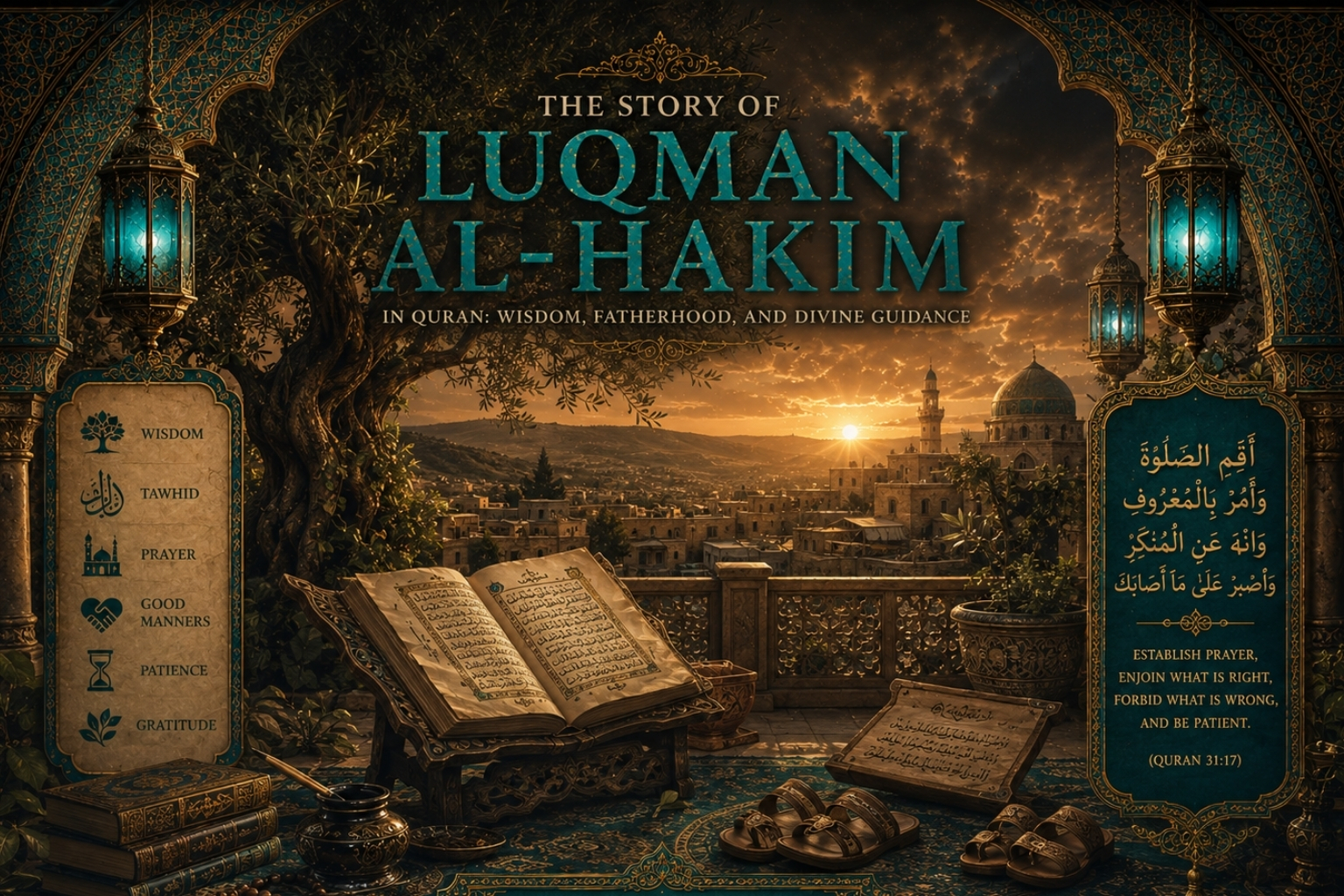

Among the most beautiful and character-building narratives recorded in the Holy Quran is the wisdom of Luqman al-Hakim (Luqman the Wise). Unlike many of the stories in the Quran that chronicle the struggles of kings, nations, or warriors, this profound chapter shifts the focus to the quiet, intimate space of a home. It captures a series of deeply moving pieces of advice passed from a loving father to his young son.
Named after him, Surah Luqman (the 31st chapter of the Quran) serves as an eternal educational blueprint. It teaches Muslims that true intellect is not measured by worldly status or academic degrees, but by Hakmah (wisdom)—the divine ability to recognize the truth and act upon it in accordance with the commands of Allah.
Who Was Luqman al-Hakim?
Islamic tradition notes that Luqman was not a prophet, but a highly righteous servant of Allah who was granted unparalleled insight and wisdom. Scholars differ on his exact background; some historical accounts state he was an Nubian or Abyssinian sage, working as a carpenter, a shepherd, or a judge during the time of Prophet Dawud (David).
Though he occupied a humble social standing in the eyes of materialistic societies, Allah elevated his status over kings by immortalizing his speech in the final revelation until the Day of Judgment.
The Root of All Wisdom: Absolute Monotheism
The Quran captures the exact moment Luqman sits down with his son to deliver his life-changing advice. He begins with the single most critical foundation of human existence: establishing a pure, unadulterated relationship with Allah and fiercely rejecting polytheism (Shirk).
“وَإِذْ قَالَ لُقْمَانُ لِابْنِهِ وَهُوَ يَعِظُهُ يَا بُنَيَّ لَا تُشْرِكْ بِاللَّهِ ۖ إِنَّ الشِّرْك285; لَظُلْمٌ عَظِيمٌ”
“And [mention, O Muhammad], when Luqman said to his son while he was advising him, ‘O my son, do not associate [anything] with Allah. Indeed, association [with Him] is great injustice.'” (— Surah Luqman, 31:13)
The Cosmic Surveillance of Allah
To build a strong moral conscience (Taqwa) within his son’s heart, Luqman uses a powerful, breathtaking analogy. He explains that nothing in this vast universe—no matter how microscopically small or deeply hidden—can escape the knowledge and sight of Allah.
“يَا بُنَيَّ إِنَّهَا إِن تَكُ مِثْقَالَ حَبَّةٍ مِّنْ خَرْدَلٍ فَتَكُن فِي صَخْرَةٍ أَوْ فِي السَّمَاوَاتِ أَوْ فِي الْأَرْضِ يَأْتِ بِهَا اللَّهُ ۚ إِنَّ اللَّهَ لَطِيفٌ خَبِيرٌ”
“[Luqman said], ‘O my son, indeed if a wrong should be the weight of a grain of mustard seed and should be within a rock or [anywhere] in the heavens or in the earth, Allah will bring it forth. Indeed, Allah is Subtle and Acquainted.'” (— Surah Luqman, 31:16)
By instilling this deep sense of mindfulness (Muraqabah), Luqman taught his son that righteousness is not just an outward show for people, but an inward reality lived when completely alone.
The Pillars of Public and Private Righteousness
Once the inner faith (Aqeedah) was firmly established, Luqman transitioned to practical, actionable steps. He outlined a complete spiritual checklist for living a meaningful life that balances individual worship with public social responsibility.
“يَا بُنَيَّ أَقِمِ الصَّلَاةَ وَأْمُرْ بِالْمَعْرُوفِ وَانْهَ عَنِ الْمُنكَرِ وَاصْبِرْ عَلَىٰ مَا أَصَابَكَ ۖ إِنَّ ذَٰلِكَ مِنْ عَزْمِ الْأُمُورِ”
“O my son, establish prayer, enjoin what is right, forbid what is wrong, and be patient over what befalls you. Indeed, [all] that is of the matters [requiring] determination.” (— Surah Luqman, 31:17)
Social Etiquette, Humility, and Personal Decorum
Wisdom must manifest in a person’s physical demeanor, body language, and daily interactions with fellow human beings. In the final part of his advice, Luqman addresses the diseases of arrogance, pride, and vanity, teaching his son how to carry himself with dignified grace.
“وَلَا تُصَعِّرْ خَدَّكَ لِلنَّاسِ وَلَا تَمْشِ فِي الْأَرْضِ مَرَحًا ۖ إِنَّ اللَّهَ لَا يُحِبُّ كُلَّ مُخْتَالٍ فَخُورٍ وَاقْصِدْ فِي مَشْيِكَ وَاغْضُضْ مِن صَوْتِكَ ۚ إِنَّ أَنكَرَ الْأَصْوَاتِ لَصَوْتُ الْحَمِيرِ”
“And do not turn your cheek [in contempt] toward people and do not walk through the earth exultantly. Indeed, Allah does not like everyone self-deluded and boastful. And be moderate in your pace and lower your voice; indeed, the most disagreeable of sounds is the voice of donkeys.” — (Surah Luqman, 31:18-19)
The Prophet Muhammad mirrored these exact core values throughout his entire life, consistently teaching Muslims that the weightiest element on a believer’s scale on the Day of Judgment is good character.
“مَا مِنْ شَيْءٍ أَثْقَلُ فِي مِيزَانِ العَبْدِ المُؤْمِنِ يَوْمَ القِيَامَةِ مِنْ حُسْنِ الخُلُقِ”
“Nothing is heavier on the believer’s scale on the Day of Judgment than good character.” — Sunan al-Tirmidhi
Core Spiritual Lessons from the Wisdom of Luqman
- Gentle and Compassionate Parenting: Luqman consistently addresses his child using the Arabic term “Ya Bunayya”—a highly affectionate diminutive form translating to “O my dear, beloved son.” He teaches us that effective moral guidance must be built on a foundation of warmth and deep emotional connection.
- The Interconnection of Faith and Character: A person’s theological belief cannot be separated from how they treat others. True belief in Allah must naturally produce humility, soft-spokenness, and respectful interactions with society.
- Prioritizing Prayer (Salah): Before telling his son to go out and change the world by enjoining good and forbidding evil, Luqman orders him to anchor himself through prayer. Outward activism will quickly burn out if it is not constantly fueled by private spiritual devotion to Allah.
- The Necessity of Patience (Sabr): Luqman realistically warns his son that standing up for truth, justice, and morality will inevitably invite pushback and trials. Therefore, patience is not optional—it is a vital requirement for success.
Conclusion
The legacy of Luqman al-Hakim remains an architectural masterpiece of Islamic development and holistic education. It proves that true wisdom is a divine gift, readily accessible to anyone who humbles themselves before Allah, regardless of their lineage or worldly status. By actively implementing Luqman’s timeless advice within our modern families, we protect our children from ideological confusion, anchoring their souls in the comforting light of absolute monotheism, humility, and unwavering faith.