

In the age of the internet, information has been completely democratized. With a single click, anyone can access translations of ancient medical journals, legal codes, or sacred scriptures. While this instant access is a massive blessing, it has created a dangerous modern illusion: the belief that having access to information is the same as having expertise.
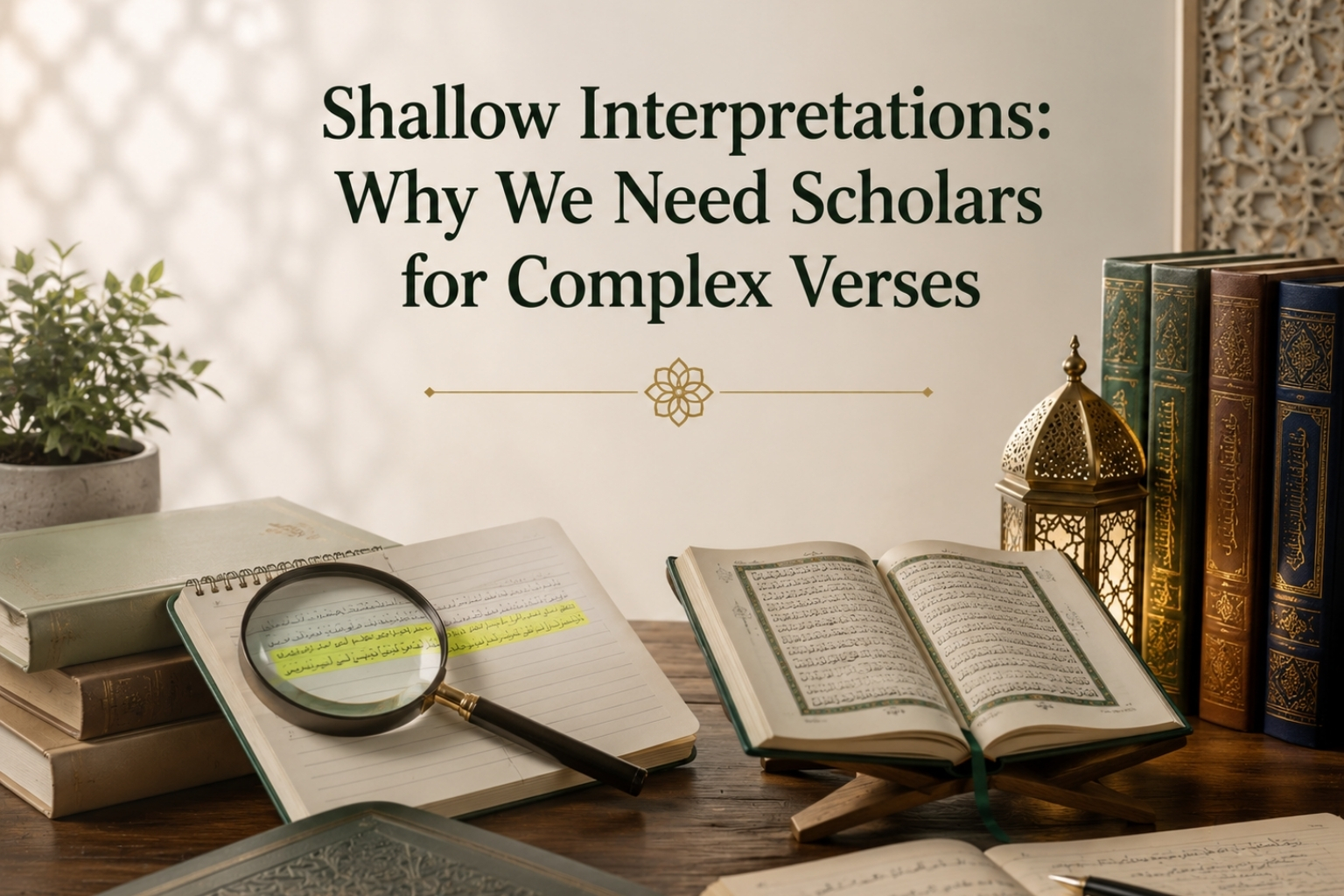
When it comes to studying the Holy Book, many readers fall into the trap of shallow interpretations. They open an English translation, read a single verse about law, history, or theology, and assume they fully understand its depths. However, just as you wouldn’t perform surgery on yourself simply because you read a medical article online, you cannot bypass the need for traditional Quranic scholars when dealing with complex verses. Understanding why we need specialized scholarship is essential to protecting your mind from misguided conclusions.
The Quran is Deep, Not Superficial
While the core message of the scripture—such as the oneness of God, the importance of honesty, and kindness to parents—is beautifully simple and clear to everyone, the text also contains layers of linguistic, historical, and legal complexities.
True scholarship is built upon a sound methodology that takes years to master, involving sciences like classical Arabic grammar (Nahu), rhetoric (Balagha), legal principles (Usul al-Fiqh), and historical contexts (Asbab al-Nuzul). When a person ignores this vast architecture and relies purely on their superficial understanding, they risk misrepresenting the divine intent.
The Holy Quran explicitly reminds us that when we face matters of deep knowledge or complexity that we are not qualified to analyze, our spiritual and intellectual duty is to consult those with verified expertise:
{فَاسْأَلُوا أَهْلَ الذِّكْرِ إِن كُنتُمْ لَا تَعْلَمُونَ}
“So ask the people of the message if you do not know.” [Surah Al-Anbiya, 7]
3 Reasons Why Specialized Knowledge is Mandatory
Without the guidance of traditional scholarship, navigating the text can lead to severe intellectual errors. Here are three main reasons why specialized knowledge is required:
1. Navigating the Abrogated and the Absolute (Al-Nasikh wal-Mansukh)
The Quran was revealed progressively over 23 years. Some verses introduced temporary laws to gradually transition society away from deeply ingrained pagan habits, which were later updated by final, permanent rulings. A shallow reader might pick up an early, temporary verse and try to apply it today, entirely unaware that a later verse modified it. Scholars spend lifetimes mapping these legal timelines.
2. The Nuances of Classical Arabic Words
Languages change drastically over centuries. A word used in modern Arabic might have had a completely different psychological or cultural meaning 1,400 years ago. Translating a text into English naturally strips away these linguistic layers. Scholars help us uncover the exact, rich definitions of words as they were understood by the direct audience of the Prophet.
3. Balancing Apparent Contradictions
To an untrained eye, two verses might look like they contradict one another. For example, one verse states that the Creator forgives all sins, while another warns of eternal punishment for certain actions. A shallow interpretation can lead to confusion or despair. Scholars possess the holistic view necessary to reconcile these passages, showing how one verse represents a general rule of mercy while the other defines a specific boundary of justice.
The Danger of Self-Appointed Expertise
The Islamic tradition heavily warns against speaking about the divine text without a verified foundation of knowledge. True humility means recognizing the limits of our own understanding.
The Prophet Muhammad (peace be upon him) issued a powerful warning regarding the spiritual dangers of intellectual arrogance, highlighting that interpreting the scripture based purely on personal opinion—without proper methodology—is a path to severe error:
عَنِ ابْنِ عَبَّاسٍ قَالَ: قَالَ رَسُولُ اللَّهِ صَلَّى اللَّهُ عَلَيْهِ وَسَلَّمَ: «مَنْ قَالَ فِي القُرْآنِ بِغَيْرِ عِلْمٍ فَلْيَتَبَوَّأْ مَقْعَدَهُ مِنَ النَّارِ»
Narrated by Ibn Abbas: The Messenger of Allah (peace be upon him) said: “Whoever speaks concerning the Quran without knowledge, let him prepare his seat in the Fire.” [Jami` at-Tirmidhi, 2950]
Conclusion: Standing on the Shoulders of Giants
Needing scholars doesn’t mean the Quran is a locked book meant only for an elite priesthood. It is a book of guidance for all of humanity. However, just as we trust scientists to explain the universe and doctors to heal our bodies, we must trust classical scholarship to safely guide us through the deepest oceans of divine wisdom.