

The word “Muslim” is one of the most widely recognized religious terms in the world. Yet despite hearing it frequently in conversations, news, and media, many people still do not fully understand what the word actually means.
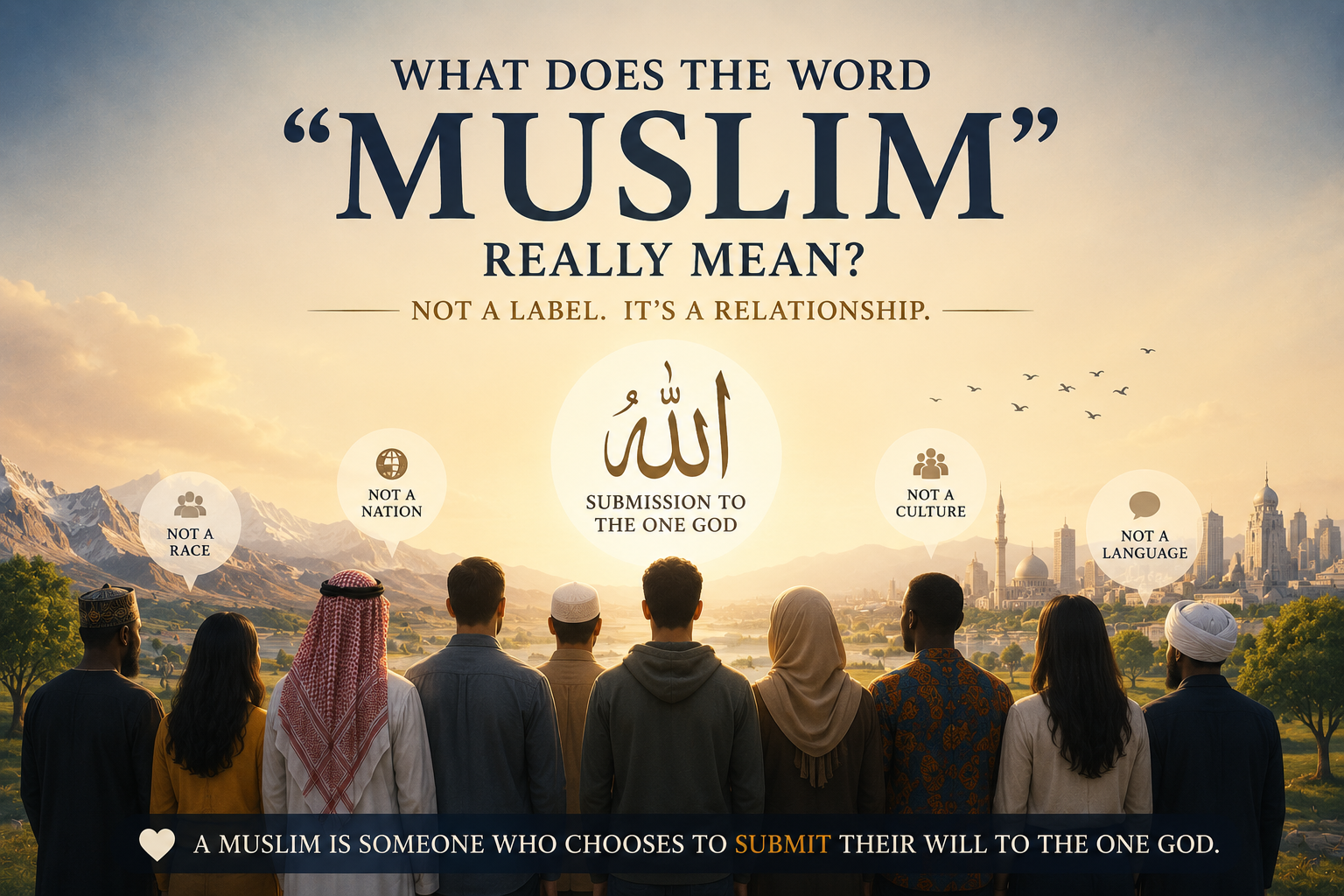
Contrary to common assumptions, the term “Muslim” is not connected to ethnicity, nationality, or race. A Muslim can come from any country, culture, or language background.
At its core, the word “Muslim” describes a person’s relationship with God.
The Linguistic 1 Meaning of “Muslim”
The word “Muslim” comes from the Arabic root:
س-ل-م (S-L-M)
This root is connected to meanings such as:
- Peace
- Submission
- Safety
- Surrender to God
A Muslim is someone who willingly submits to Allah — the Creator — and seeks peace through following His guidance.
The word is closely related to the word “Islam,” which refers to submission to Allah and living according to His guidance.
In Islam, true peace is believed to come not from wealth or worldly success alone, but from a sincere 2 relationship with the Creator.
Being Muslim Is More Than a Label
In Islam, being Muslim is not simply about carrying a religious title.
A Muslim is expected to:
- Believe in one God
- Worship Allah alone
- Strive for honesty and mercy
- Respect others
- Seek justice
- Develop good character
The Prophet Muhammad ﷺ said:
“الْمُسْلِمُ مَنْ سَلِمَ الْمُسْلِمُونَ مِنْ لِسَانِهِ وَيَدِهِ”
“A Muslim is the one from whose tongue and hand people are safe.”
— Sahih al-Bukhari (10), Sahih Muslim (40)
This famous hadith highlights an important idea:
Islam is not only belief — it is also behavior.
A true Muslim should bring safety, kindness, and integrity 3 to others.
Muslims Believe in All Prophets
Another misconception 4 is that Muslims believe only in Prophet Muhammad ﷺ.
In reality, Islam teaches belief in all prophets sent by Allah, including:
- Adam
- Noah
- Abraham
- Moses
- Jesus
- Muhammad
Peace be upon them all.
The Qur’an says:
“لَا نُفَرِّقُ بَيْنَ أَحَدٍ مِّن رُّسُلِهِ”
“We make no distinction between any of His messengers.”
— Surah Al-Baqarah (2:285)
Muslims believe all prophets carried the same essential message:
Worship Allah alone and live righteously.
Islam Is a Universal Religion
Many people incorrectly assume Islam belongs only to Arabs or people from the Middle East.
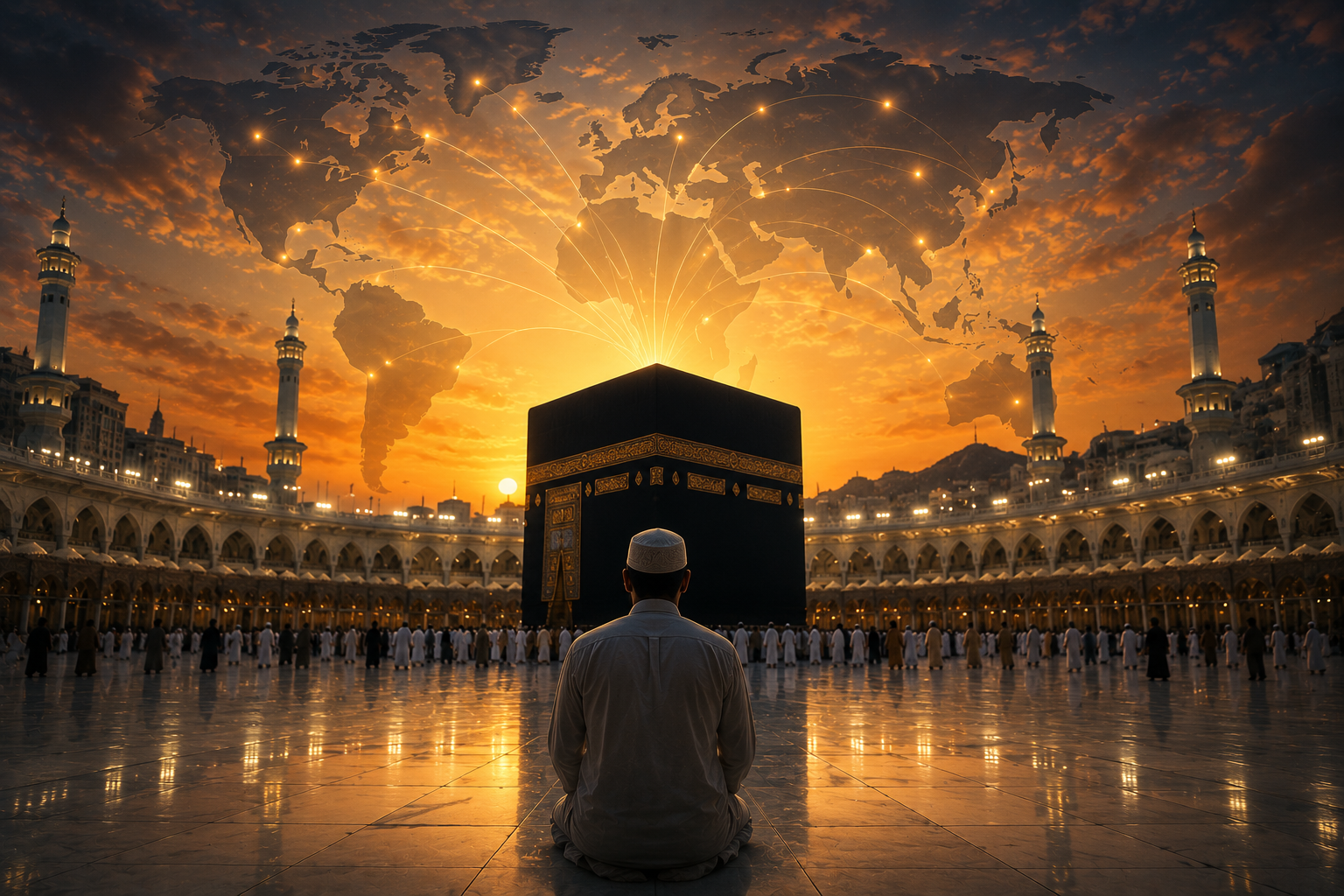
In reality, the majority of Muslims worldwide are not Arab.
Islam is practiced by people from:
- Asia
- Africa
- Europe
- North America
- South America
A Muslim may be:
- Indonesian
- Nigerian
- Turkish
- British
- American
- Egyptian
- Brazilian
or from any other background.
Islam teaches that all human beings are equal before Allah regardless of race, language, or nationality.
The Qur’an says:
“إِنَّ أَكْرَمَكُمْ عِندَ اللَّهِ أَتْقَاكُمْ”
“Indeed, the most honored of you in the sight of Allah is the most righteous among you.”
— Surah Al-Hujurat (49:13)
What Do Muslims Believe About Life?
Muslims believe human life has purpose.
According to Islam:
- Human beings were created by Allah
- Life is a test
- Every person is accountable for their actions
- This world is temporary
- There will be life after death
Islam encourages people to live with:
- Faith
- Responsibility
- Mercy
- Patience
- Gratitude
The Qur’an repeatedly reminds believers that success is not measured only by wealth or status, but also by sincerity, morality, and closeness to Allah.
The Daily Life of a Muslim
For many Muslims, faith is part of everyday life rather than something practiced only occasionally.
Muslims pray daily, read the Qur’an, give charity, and try to maintain awareness of Allah throughout their actions.
Simple acts such as:
- Helping someone
- Speaking kindly
- Feeding the poor
- Being honest in business
are considered acts of worship when done sincerely for Allah.
This spiritual connection between daily life and worship is one of the defining features of Islam.
The Relationship Between “Islam” and “Peace”
Because the word “Islam” shares roots with the Arabic word for peace (Salam), many scholars explain that Islam teaches inner and outer peace through submission to Allah.
The common Muslim greeting is:
“السلام عليكم”
“Peace be upon you.”
This greeting reflects the importance of peace, mercy, and goodwill within Islamic teachings.
More Than Stereotypes
Unfortunately, many people learn about Muslims through headlines, political conflicts, or social media stereotypes 5 rather than through authentic Islamic teachings.
As a result, misconceptions often replace understanding.
In reality, Muslims around the world are ordinary people seeking:
- Faith
- Family
- Purpose
- Stability
- Spiritual peace
Like followers of other religions, Muslims come from diverse cultures and personalities.
Islam itself teaches mercy, justice, humility, and compassion 6.
Conclusion
The word “Muslim” means far more than a religious identity. It describes a person who chooses to submit to Allah and seek peace through faith, worship, and righteous 7 living.
For Muslims, Islam is not only a belief system — it is a way of life centered around the relationship between the human being and the Creator.
At its heart, being Muslim means striving to live with sincerity, morality, compassion, and devotion 8 to Allah.