
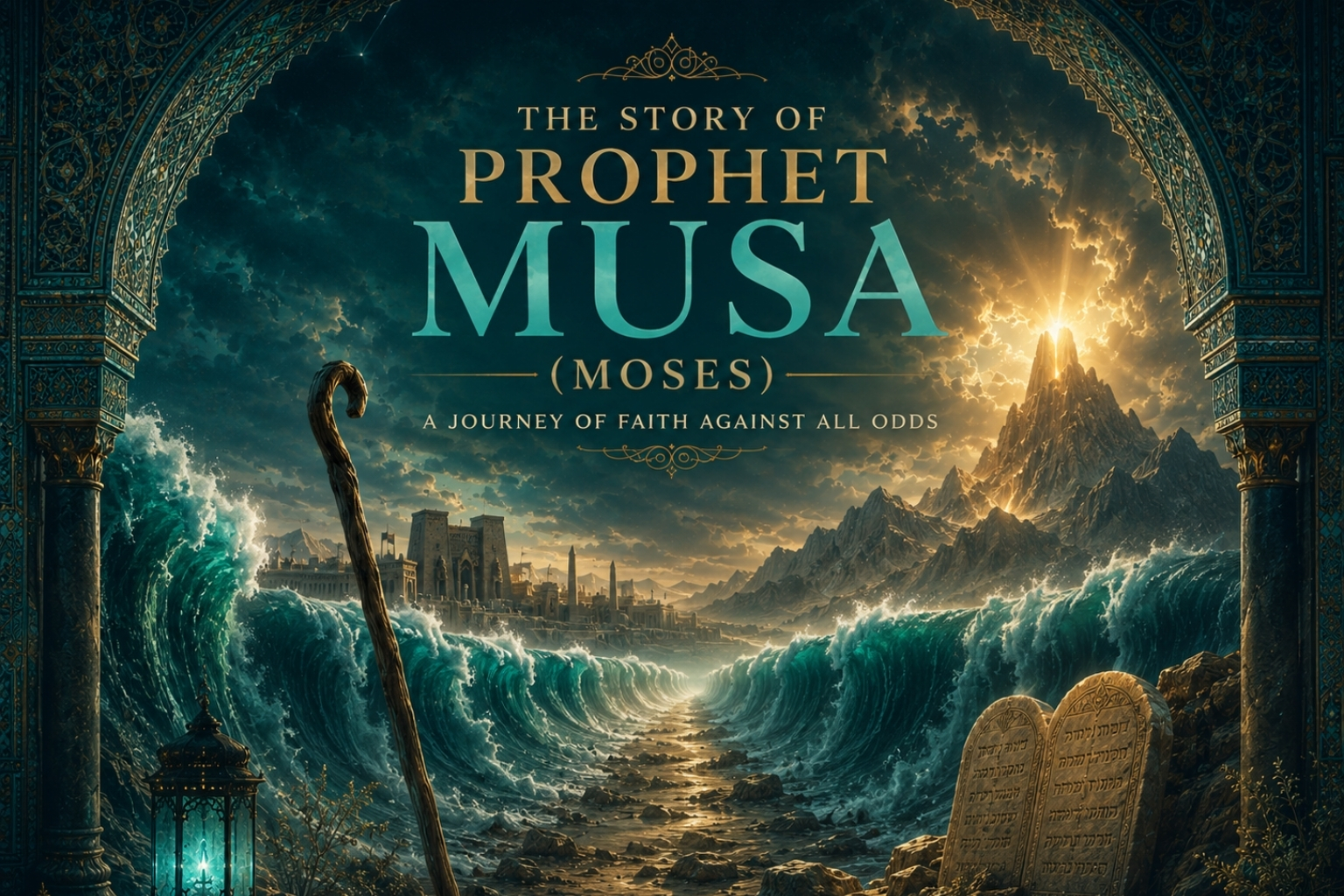

Of all the prophets mentioned in the Quran, none is spoken of more frequently than Prophet Musa (Moses), peace be upon him. His name appears in over 130 verses across 34 chapters — a testament to the profound weight his story carries for every believer and every seeker of truth.
His is not merely a historical account. It is a living mirror held up to every human soul that has ever felt oppressed, afraid, or unworthy of the mission placed before them. It is a story about what happens when a human being, broken and imperfect, chooses to trust Allah completely.
Chapter One — The Boy in the Basket: A Mother’s Impossible Trust
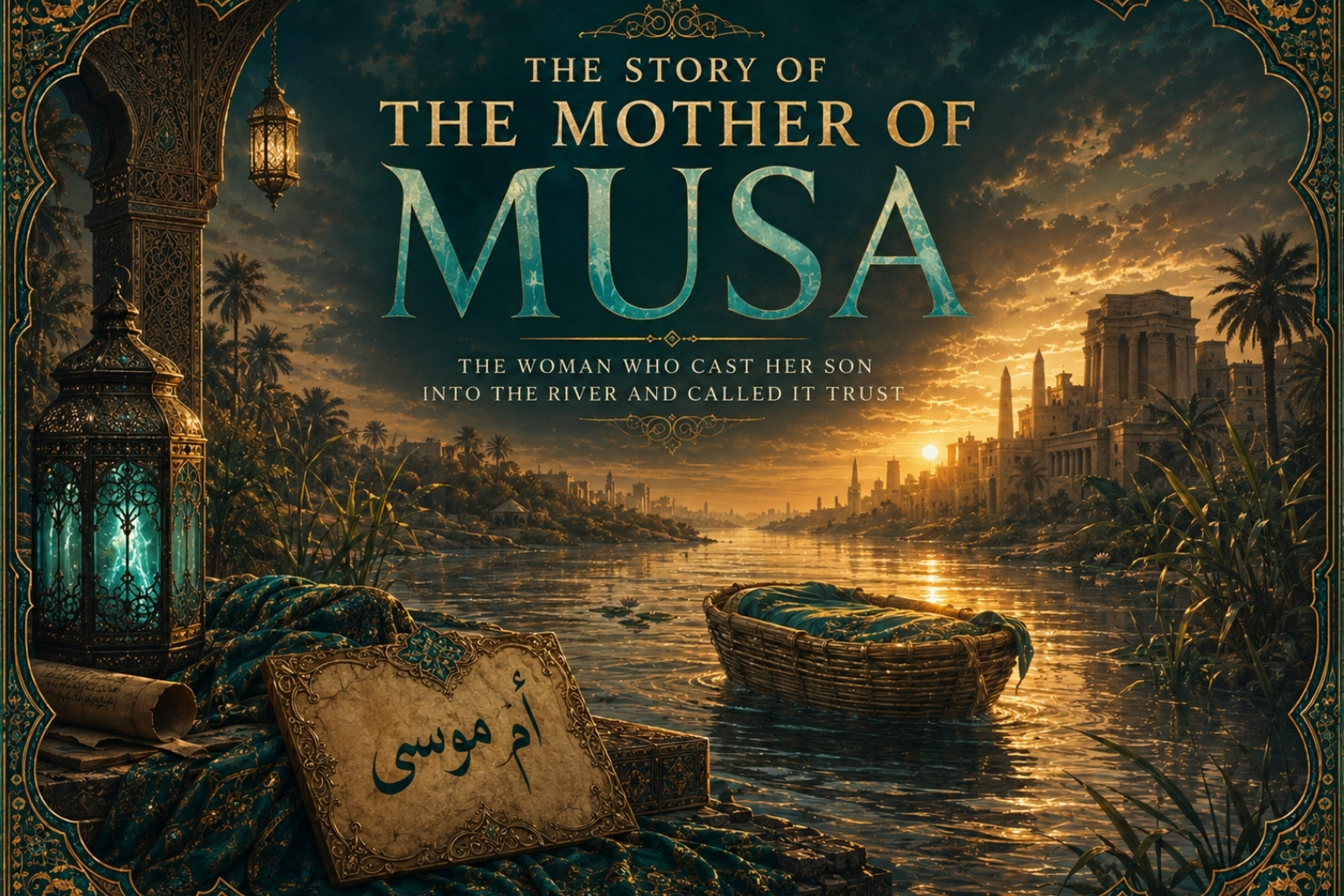
The story begins in a land of oppression. Pharaoh (Fir’awn), the tyrant of Egypt, had issued a decree of terror: every newborn boy among the Children of Israel (Bani Israel) was to be killed. Fear gripped every household. And yet, into this darkness, a child was born who would become the greatest enemy of Pharaoh’s empire.
When Musa’s mother held her newborn son, her heart trembled with both love and terror. Then came the divine command — one of the most breathtaking moments in all of Quranic narrative:
Quran Verse:
وَأَوْحَيْنَا إِلَىٰ أُمِّ مُوسَىٰ أَنْ أَرْضِعِيهِ ۖ فَإِذَا خِفْتِ عَلَيْهِ فَأَلْقِيهِ فِي الْيَمِّ وَلَا تَخَافِي وَلَا تَحْزَنِي ۖ إِنَّا رَادُّوهُ إِلَيْكِ وَجَاعِلُوهُ مِنَ الْمُرْسَلِينَ
“And We inspired the mother of Moses: ‘Nurse him, but when you fear for him, cast him into the river, and do not fear or grieve. Indeed, We will return him to you and will make him one of the messengers.'”
Surah Al-Qasas (28:7)
Consider the paradox in this verse: to save him, she must release him. To protect him, she must cast him into a river. This is the first lesson woven into Musa’s story — that trusting Allah sometimes means doing the very thing that terrifies you most. And the promise is threefold and emphatic: We will return him to you. We will make him a prophet.
The basket floated down the Nile — and directly into the hands of Pharaoh’s own household. The greatest irony in history: the very man who ordered the death of Hebrew boys would raise the one destined to end his reign.
Chapter Two — Raised in the Palace of the Enemy
When Pharaoh’s wife, Asiya (may Allah be pleased with her), saw the infant Musa, her heart opened immediately. She said words that preserved a prophet’s life:
Quran Verse:
وَقَالَتِ امْرَأَتُ فِرْعَوْنَ قُرَّتُ عَيْنٍ لِّي وَلَكَ ۖ لَا تَقْتُلُوهُ عَسَىٰ أَن يَنفَعَنَا أَوْ نَتَّخِذَهُ وَلَدًا وَهُمْ لَا يَشْعُرُونَ
“And the wife of Pharaoh said: ‘He will be a comfort to me and to you. Do not kill him; perhaps he will benefit us, or we will take him as a son.’ And they perceived not.”
Surah Al-Qasas (28:9)
Allah then guided baby Musa to refuse every wet nurse — until his own biological mother was brought to nurse him. In one extraordinary move, Allah fulfilled His promise: the mother who cast her son into the river held him in her arms again, this time inside the palace of the most powerful man on earth. Allah describes this reunion with remarkable tenderness:
Quran Verse:
فَرَدَدْنَاهُ إِلَىٰ أُمِّهِ كَيْ تَقَرَّ عَيْنُهَا وَلَا تَحْزَنَ وَلِتَعْلَمَ أَنَّ وَعْدَ اللَّهِ حَقٌّ وَلَٰكِنَّ أَكْثَرَهُمْ لَا يَعْلَمُونَ
“So We restored him to his mother that she might be comforted and not grieve, and that she would know that the promise of Allah is true — but most of them do not know.”
Surah Al-Qasas (28:13)
Chapter Three — The Burning Bush: When Allah Speaks Directly
Years passed. After an accidental killing, Musa fled Egypt and settled in Madyan, where he married and lived a quiet life as a shepherd. Then, one night while traveling with his family through the cold darkness of Sinai, he saw something impossible:
Quran Verse:
فَلَمَّا قَضَىٰ مُوسَى الْأَجَلَ وَسَارَ بِأَهْلِهِ آنَسَ مِن جَانِبِ الطُّورِ نَارًا قَالَ لِأَهْلِهِ امْكُثُوا إِنِّي آنَسْتُ نَارًا لَّعَلِّي آتِيكُم مِّنْهَا بِخَبَرٍ أَوْ جَذْوَةٍ مِّنَ النَّارِ لَعَلَّكُمْ تَصْطَلُونَ
“And when Moses had completed the term and was traveling with his family, he perceived from the direction of the mount a fire. He said to his family: ‘Stay here; indeed, I have perceived a fire. Perhaps I will bring you from there some information or burning wood from the fire that you may warm yourselves.'”
Surah Al-Qasas (28:29)
He approached a simple fire — and heard the Voice of God. Allah spoke directly to Musa. No angel intermediary. No vision. The direct, unmediated call of the Creator to His creation: “O Musa, I am Allah, Lord of the worlds.”
In that moment, a shepherd became a prophet. A fugitive became a messenger. And the man who had once fled Egypt was now commanded to return to it — to face the most powerful ruler on earth with nothing but a staff and the words of Allah.
Chapter Four — Face to Face with Pharaoh: Speaking Truth to Power
Musa returned to Egypt alongside his brother Harun (Aaron), peace be upon them both. Together, they walked into Pharaoh’s court with a message that threatened everything the tyrant held dear: Let the Children of Israel go. Worship Allah alone.
Pharaoh’s response was predictable. He mocked, he threatened, he summoned the greatest magicians in the land for a public showdown — a spectacle designed to humiliate these two men and silence their message forever.
Quran Verse:
قَالَ أَلْقِهْ يَا مُوسَىٰ ۖ فَأَلْقَاهَا فَإِذَا هِيَ حَيَّةٌ تَسْعَىٰ
“He said: ‘Throw it down, O Moses.’ So he threw it down, and suddenly it was a serpent, moving swiftly.”
Surah Ta-Ha (20:19–20)
The magicians — experts who had dedicated their lives to illusion — recognized immediately that what they witnessed was no trick. It was real. They fell to the ground in prostration, declaring their faith, even as Pharaoh threatened to cut off their hands and feet and crucify them. Their response is one of the most stirring declarations in the Quran:
Quran Verse:
قَالُوا لَن نُّؤْثِرَكَ عَلَىٰ مَا جَاءَنَا مِنَ الْبَيِّنَاتِ وَالَّذِي فَطَرَنَا ۖ فَاقْضِ مَا أَنتَ قَاضٍ
“They said: ‘Never shall we prefer you over the clear proofs that have come to us and over He who created us. So decree whatever you are to decree.'”
Surah Ta-Ha (20:72)
Chapter Five — The Parting of the Sea: The Greatest Escape in History
After years of plagues and divine signs, the hour of liberation finally came. Musa led the Children of Israel out of Egypt in the darkness of night. But Pharaoh, his pride wounded and his control slipping, pursued them with his army.
They reached the sea. The army of Pharaoh appeared behind them. The Israelites were trapped — water ahead, death behind. Many cried out in despair. But Musa’s response in that moment is perhaps his most defining statement:
Quran Verse:
قَالَ كَلَّا ۖ إِنَّ مَعِيَ رَبِّي سَيَهْدِينِ
“He said: ‘No! Indeed, with me is my Lord; He will guide me.'”
Surah Ash-Shu’ara (26:62)
Three words in Arabic — إِنَّ مَعِيَ رَبِّي — that contain the entire philosophy of a believer’s life: My Lord is with me. Not “my Lord will come.” Not “I hope my Lord helps.” Present tense. Absolute certainty.
Allah commanded him to strike the sea with his staff. The water split into twelve towering walls. An entire nation walked through on dry ground. And when Pharaoh and his army followed — the sea closed, and the most powerful empire in the ancient world drowned in its own arrogance.
Hadith:
قَدِمَ النَّبِيُّ ﷺ الْمَدِينَةَ فَرَأَى الْيَهُودَ تَصُومُ يَوْمَ عَاشُورَاءَ، فَقَالَ: «مَا هَذَا؟» قَالُوا: هَذَا يَوْمٌ صَالِحٌ، هَذَا يَوْمٌ نَجَّى اللَّهُ بَنِي إِسْرَائِيلَ مِنْ عَدُوِّهِمْ، فَصَامَهُ مُوسَى. قَالَ: «فَأَنَا أَحَقُّ بِمُوسَى مِنْكُمْ»، فَصَامَهُ وَأَمَرَ بِصِيَامِهِ
The Prophet ﷺ came to Madinah and found the Jews fasting on the day of Ashura. He asked: “What is this?” They said: “This is a righteous day. It is the day Allah saved the Children of Israel from their enemy, and Musa fasted on it.” He said: “I have more right to Musa than you,” and he fasted on it and commanded fasting on it.
Recorded in Sahih Al-Bukhari, Hadith No. 2004
Timeless Lessons from the Story of Musa
- Trust in Allah’s timing The basket in the river seemed like abandonment — but it was the beginning of a divine plan. What feels like loss is often Allah’s rerouting.
- Your weakness is not a disqualifier Musa had a speech impediment, a troubled past, and felt wholly unfit for his mission. Allah chose him anyway. Your imperfections do not limit Allah’s plan for you.
- Speak truth regardless of who’s listening Musa walked into the court of the most powerful ruler alive with nothing but the truth. Righteous courage does not wait for perfect conditions.
- The sea does not split before you step toward it Musa had to lift his staff and move first. Divine help often comes in motion, not in waiting.
- Even prophets feel fear — they act anyway Musa trembled when commanded to face Pharaoh. Allah’s response was not “don’t feel fear” — it was “go, for I am with you.”
- Oppression ends Pharaoh’s empire looked eternal. It lasted until it didn’t. No injustice in this world is permanent.
Closing Reflection
The story of Prophet Musa is not simply history — it is a handbook for the human condition. It is for every person who has felt powerless against a system, every heart that has feared the unknown, every soul that has questioned whether they are enough for the task before them.
The Quran does not tell us this story once and move on. It returns to it, circles back to it, adds new dimensions with each retelling — because Allah knows that in every generation, there will be people who need to hear it again. People who are standing at their own Red Sea. People who need to be reminded:
Quran Verse:
إِنَّ مَعِيَ رَبِّي سَيَهْدِينِ
“Indeed, with me is my Lord. He will guide me.”
Surah Ash-Shu’ara (26:62)
And that promise has never expired.