
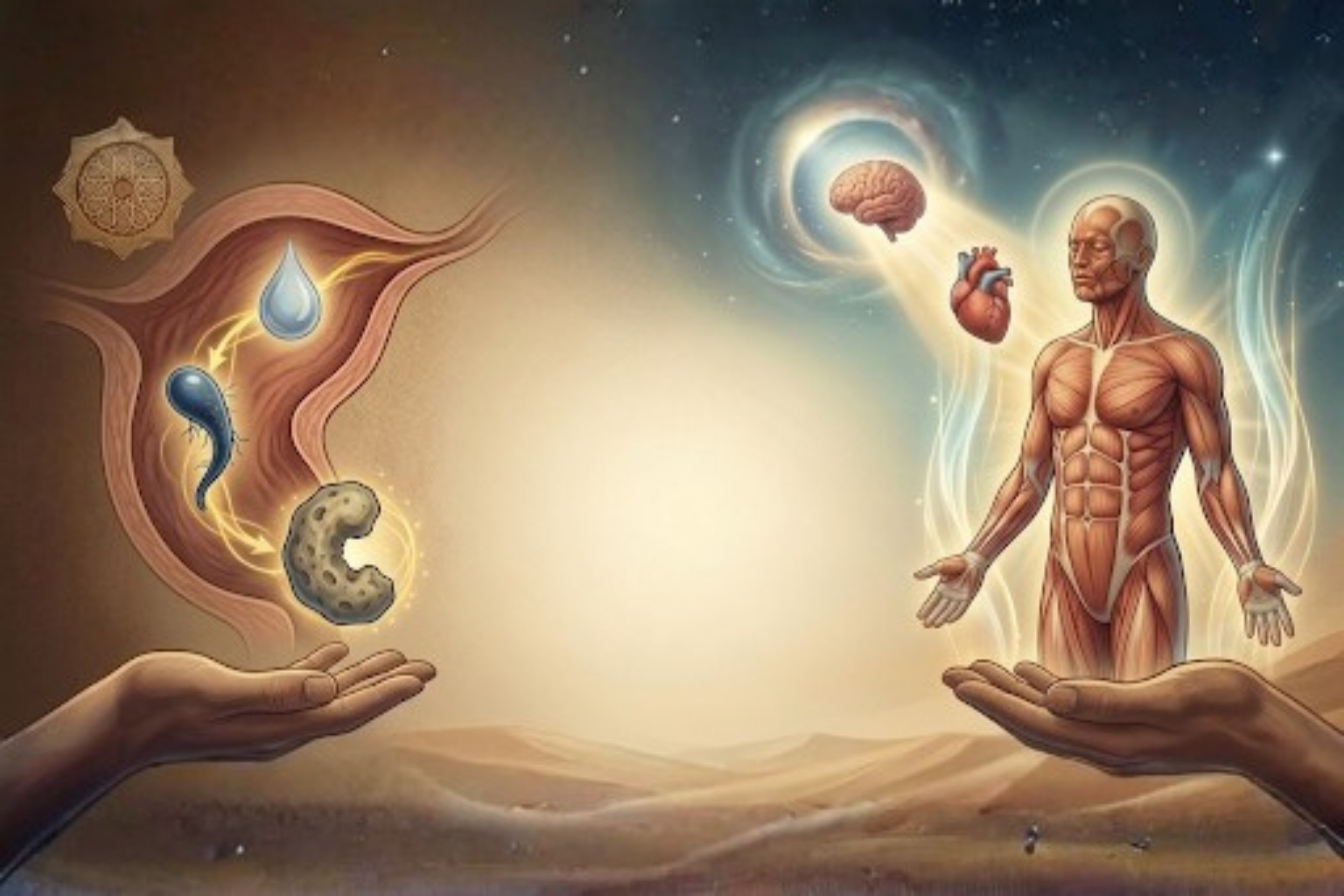

The Qur’an Invites Humanity to Reflect on Creation
The Qur’an does not casually speak about human creation. Instead, it presents evidence of Allah’s wisdom and power. Allah says:“أَوَلَا يَذْكُرُ الْإِنسَانُ أَنَّا خَلَقْنَاهُ مِن قَبْلُ وَلَمْ يَكُ شَيْئًا” “Does man not remember that We created him before, while he was nothing?” — Surah Maryam (19:67)This verse reminds human beings that their existence is a miracle. Before birth, before consciousness, before identity, human beings were nothing. However, Allah brought life into existence through a carefully designed process. Throughout the Qur’an, creation is presented not merely as biology but as a sign meant to awaken humility 3 , gratitude, and faith.
The First Stage: Nutfah (The Drop)
 One of the earliest stages mentioned in the Qur’an is Nutfah
4
, commonly translated as a drop or small quantity of fluid.
Allah says:
One of the earliest stages mentioned in the Qur’an is Nutfah
4
, commonly translated as a drop or small quantity of fluid.
Allah says:
“إِنَّا خَلَقْنَا الْإِنسَانَ مِن نُّطْفَةٍ أَمْشَاجٍ نَّبْتَلِيهِ” “Indeed, We created man from a sperm-drop mixture that We may test him.” — Surah Al-Insan (76:2)In another verse:
“أَلَمْ يَكُ نُطْفَةً مِّن مَّنِيٍّ يُمْنَىٰ” “Was he not a drop of emitted fluid?” — Surah Al-Qiyamah (75:37)The Qur’an repeatedly reminds humans of this humble beginning. No matter how advanced civilization becomes, every human life begins as something small, fragile, and entirely dependent on Allah. Classical Muslim scholars often reflect on the spiritual wisdom behind these verses. Human beings are reminded not to become arrogant because their beginning was weak and their existence depends completely on the Creator.
The Stage of Alaqah (The Clinging Form)
After the Nutfah stage, the Qur’an mentions another stage called Alaqah 5. Allah says:“ثُمَّ خَلَقْنَا النُّطْفَةَ عَلَقَةً” “Then We made the sperm-drop into a clinging form.” — Surah Al-Mu’minun (23:14)The Arabic word Alaqah has several meanings in classical Arabic, including something that clings, hangs, or attaches itself. What makes this especially fascinating for many readers is that the Qur’an described this stage centuries before the invention of modern medical tools that are capable of observing embryonic development in detail. During the 7th century, there were no microscopes, ultrasound technology, or scientific equipment capable of studying the hidden stages inside the womb with precision. However, the Qur’an describes human development as a gradual process unfolding in stages. For many Muslims, this is a sign that the Qur’an originates from divine knowledge rather than human observation.
The Stage of Mudghah (The Lump)
 The Qur’an then describes the next stage as mudghah
6
.
Allah says:
The Qur’an then describes the next stage as mudghah
6
.
Allah says:
“فَخَلَقْنَا الْعَلَقَةَ مُضْغَةً” “And We made the clinging form into a lump [of flesh].” — Surah Al-Mu’minun (23:14)The word Mudghah is often understood as a small lump or a chewed-like substance. The Qur’an continues presenting development as a sequence of transformation occurring step by step inside the womb. Another verse expands on this progression:
“يَا أَيُّهَا النَّاسُ إِن كُنتُمْ فِي رَيْبٍ مِّنَ الْبَعْثِ فَإِنَّا خَلَقْنَاكُم مِّن تُرَابٍ ثُمَّ مِن نُّطْفَةٍ ثُمَّ مِنْ عَلَقَةٍ ثُمَّ مِن مُّضْغَةٍ مُّخَلَّقَةٍ وَغَيْرِ مُخَلَّقَةٍ” “O mankind, if you are in doubt about the Resurrection, then indeed, We created you from dust, then from a sperm-drop, then from a clinging form, then from a lump [of flesh], formed and unformed.” — Surah Al-Hajj (22:5)The verse connects human creation with resurrection 7 . The Qur’an repeatedly argues that the One who created human beings from these stages is fully capable of bringing them back to life again.
Bones and Flesh: The Continuing Development
The Qur’an continues:“فَخَلَقْنَا الْمُضْغَةَ عِظَامًا فَكَسَوْنَا الْعِظَامَ لَحْمًا” “Then We made from the lump bones, and We covered the bones with flesh.” — Surah Al-Mu’minun (23:14)The verse concludes with one of the most powerful endings related to creation in the Qur’an:
“ثُمَّ أَنشَأْنَاهُ خَلْقًا آخَرَ ۚ فَتَبَارَكَ اللَّهُ أَحْسَنُ الْخَالِقِينَ” “Then We developed him into another creation. So blessed is Allah, the Best of creators.” — Surah Al-Mu’minun (23:14)The Qur’an shifts the reader from observation to awe. After describing the stages of development, it directs attention toward the greatness and perfection of Allah.
Human Creation as a Sign of Divine Power
 The Qur’an constantly encourages reflection upon creation.
Allah says:
The Qur’an constantly encourages reflection upon creation.
Allah says:
“وَفِي أَنفُسِكُمْ أَفَلَا تُبْصِرُونَ” “And in yourselves — will you not then see?” — Surah Adh-Dhariyat (51:21)This verse carries extraordinary depth. It reminds people that signs of Allah are not only found in mountains, oceans, or stars, but also within their own existence. Every heartbeat, every stage of growth, and every human life reflects divine wisdom.
How Could the Qur’an Describe This 1400 Years Ago?
One of the questions often asked by readers is simple yet profound: How could such descriptions exist in a 7th-century Arabian society with no scientific laboratories or modern medical technology? At the time of the Prophet Muhammad ﷺ:- There were no microscopes
- No ultrasound imaging
- No embryology laboratories
- No advanced anatomical science