
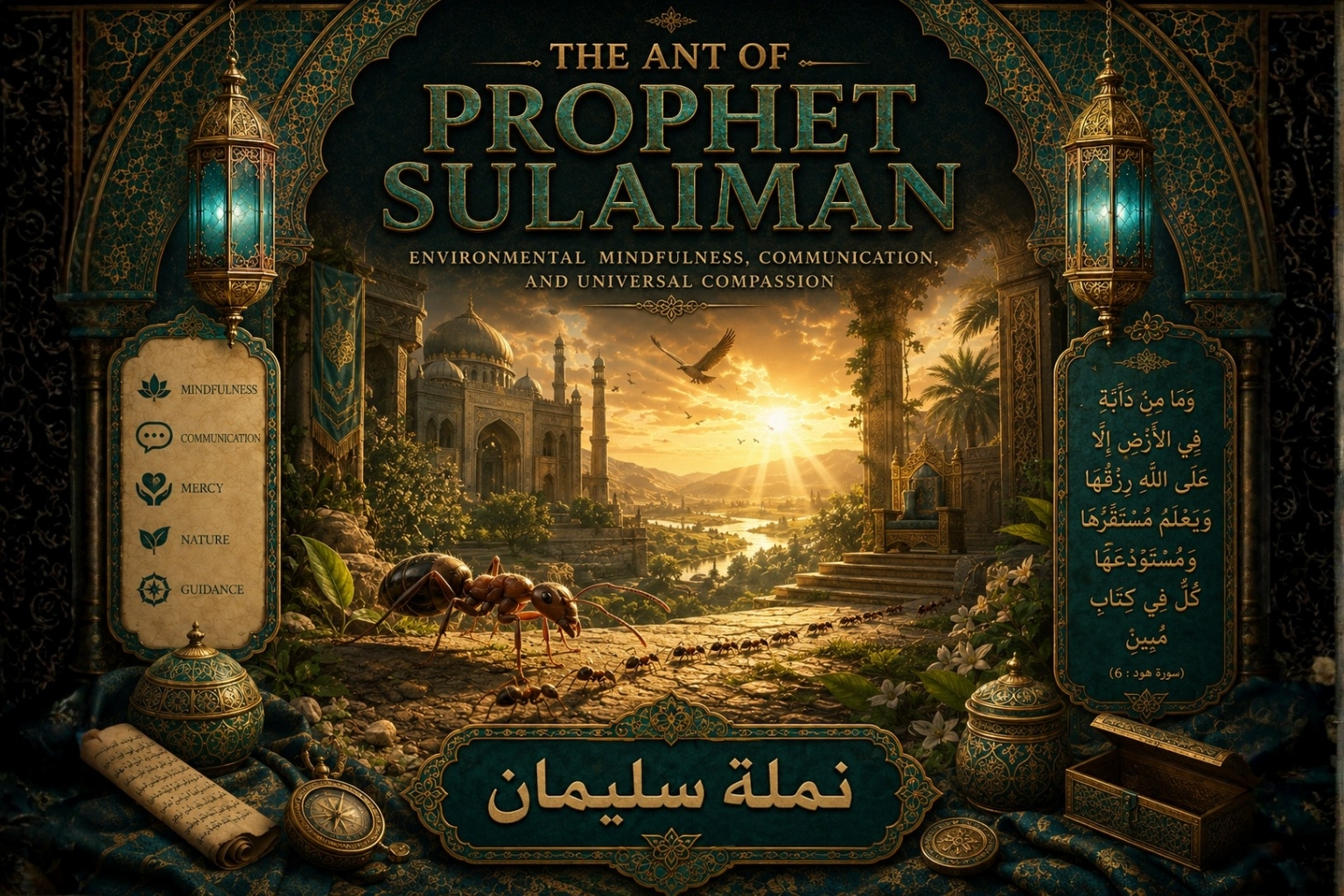

Among the most ecologically profound, linguistically subtle, and structurally beautiful narratives recorded in the Holy Quran is the brief encounter between Prophet Sulaiman (Solomon) and a single, unnamed ant. Located in the early sections of Surah An-Naml—the 27th chapter of the Quran, which is explicitly named “The Ants” in honor of this specific insect—this brief event opens a window into the sweeping, miraculous domain granted exclusively to Prophet Sulaiman.
Revealed by Allah to showcase the ultimate standards of empathy, environmental ethics, and macro-level governance, the story of the Ant in Islam provides an eternal blueprint on the value of life, the rights of the vulnerable, and how a truly righteous leader must remain humble enough to listen to the whispers of the smallest creatures on Earth.
The Imperial March and the Valley of the Ants
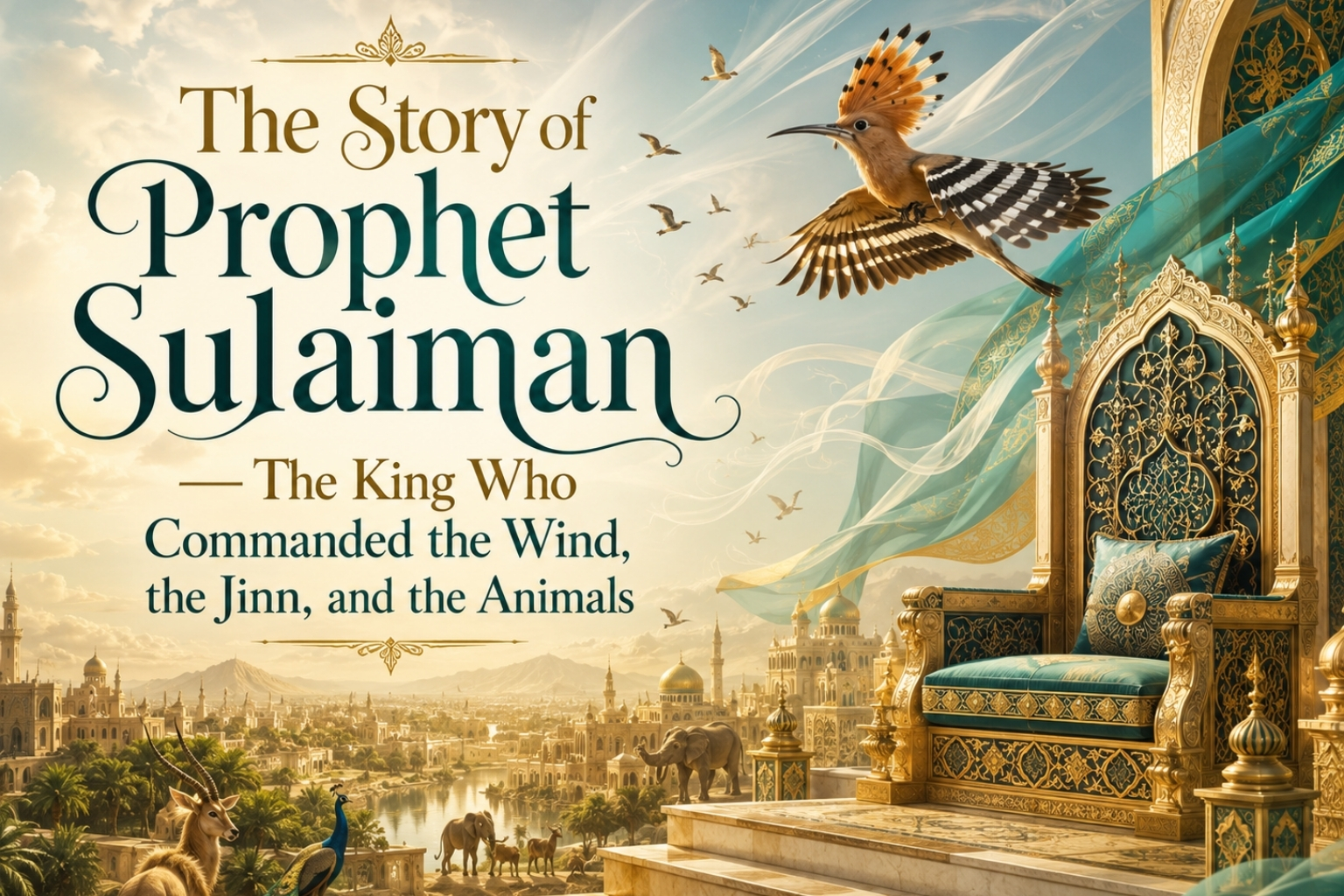
Prophet Sulaiman was blessed with a majestic, divinely unified empire that merged the physical and metaphysical realms. His massive imperial army was divided into distinct, highly disciplined battalions composed of humans, Jinn, and specialized animal forces.
The narrative captures a moment of high geopolitical mobilization, with Prophet Sulaiman marching his thunderous, multi-species legions through a vast valley. As the massive forces advanced, shaking the ground beneath them, they approached an area known as the Valley of the Ants.
The Strategic Warning of a Tiny Leader
Long before the human or Jinn soldiers noticed anything beneath their boots, a tiny female ant (indicated by the feminine Arabic verb Qalat) detected the seismic vibrations of the approaching army. Instead of panicking or fleeing selfishly to save herself, she demonstrated the profound leadership, tactical thinking, and deep empathy of a true community guardian.
She shouted a highly sophisticated, multi-layered command across the colony to protect thousands of her fellow ants from immediate destruction.
“حَتَّىٰ إِذَا أَتَوْا عَلَىٰ وَادِي النَّمْلِ قَالَتْ نَمْلَةٌ يَا أَيُّهَا النَّمْلُ ادْخُلُوا مَسَاكِنَكُمْ لَا يَحْطِمَنَّكُمْ سُلَيْمَانُ وَجُنُودُهُ وَهُمْ لَا يَشْعُرُونَ”
“Until, when they came upon the valley of the ants, an ant said, ‘O ants, enter your dwellings that you not be crushed by Sulaiman and his soldiers while they perceive not.'” — (Surah An-Naml, 27:18)
The Anatomy of Eloquence: Defending the Intentions of the Innocent
Islamic classical scholars and linguists have marveled at the immense eloquence packed into this single Arabic sentence uttered by the ant. Within just a few words, she successfully managed to:
- Call out to her people (Ya)
- Alert them specifically (Ayyuha)
- Name the target audience (An-Naml)
- Command them to take immediate action (Udkhulu)
- Specify the safe zone (Masakinakum)
- Warn them of the catastrophic threat (La Yahtimenna-kum)
- Identify the moving force (Sulaiman)
- Acknowledge the secondary force (Wa Junuduhu)
Most profoundly, the ant concluded her warning with a magnificent phrase of psychological defense: “while they perceive not” (Wa Hum La Yash’urun). Even in a moment of mortal danger, facing complete destruction under the boots of a massive army, the ant did not accuse Prophet Sulaiman or his soldiers of being malicious, cruel, or bloodthirsty tyrants. She explicitly exonerated them, recognizing that if they were to crush the colony, it would be an accidental tragedy born out of a simple lack of sensory perception, not deliberate cruelty.
The Response of the Emperor: Joy and Grateful Supplication
Prophet Sulaiman, who was blessed with the absolute miracle of understanding the complex vocalizations and frequencies of all animals (Mantiq at-Tayr), heard the tiny ant’s voice echoing from the ground.
An ordinary warlord or king might have brushed it off, completely indifferent to the survival of an insect colony. But Prophet Sulaiman was a Prophet of Allah. The ant’s extreme eloquence, her protective leadership, and her defense of his character touched his soul deeply. He smiled broadly, laughing with genuine joy and deep humility at her words.
“فَتَبَسَّمَ ضَاحِكًا مِّن قَوْلِهَا وَقَالَ رَبِّ أَوْزِعْنِي أَنْ أَشْكُرَ نِعْمَتَكَ الَّتِي أَنْعَمْتَ عَلَيَّ وَعَلَىٰ وَالِدَيَّ وَأَنْ أَعْمَلَ صَالِحًا تَرْضَاهُ وَأَدْخِلْنِي بِرَحْمَتِكَ فِي عِبَادِكَ الصَّالِحِينَ”
“So [Sulaiman] smiled, laughing at her speech, and said, ‘My Lord, enable me to be grateful for Your favor which You have bestowed upon me and upon my parents and to do righteousness of which You approve. And admit me by Your mercy among Your righteous servants.'” — (Surah An-Naml, 27:19)
Instead of succumbing to pride over his immense power, the event instantly triggered a wave of intense gratitude (Shukr) within his heart. He halted his entire imperial army, ordering them to pivot or tread carefully to ensure that the fragile dwellings of the ants remained completely untouched.
The Prophet Muhammad mirrored this profound respect for the smallest elements of life. He strictly forbade Muslims from killing ants unnecessarily or destroying their colonies, teaching believers that every creature forms an essential part of the tapestry of creation.
“نَهَى رَسُولُ اللَّهِ صَلَّى اللَّهُ عَلَيْهِ وَسَلَّمَ عَنْ قَتْلِ أَرْبَعٍ مِنَ الدَّوَابِّ: النَّمْلَةِ، وَالنَّحْلَةِ، وَالْهُدْهُدِ، وَالصُّرَدِ”
“The Messenger of Allah forbade the killing of four types of creatures: the ant, the bee, the hoopoe, and the shrike.” — (Sunan Abi Dawud)
Core Spiritual Lessons from the Ant of Sulaiman
- The Rights of the Weak in an Islamic State: The narrative establishes a foundational rule for governance. A true Islamic society is not judged solely by how it caters to its human citizens, but by how its leaders protect the environmental ecosystems and the most vulnerable, voiceless creatures inhabiting the land.
- Cultivating the Benefit of the Doubt (Husn al-Zann): The ant provided a massive psychological lesson for humans. She assumed the best intentions of the army, stating they would only crush them accidentally. If an ant can grant a massive human army the benefit of the doubt, humans should be far more eager to excuse and forgive the accidental mistakes of one another.
- No Leader is Too High to Listen: Prophet Sulaiman was at the apex of his worldly power, leading Jinn and human warriors. Yet, he actively listened to the feedback coming from the dirt beneath his feet. True power should never isolate a leader from the grassroots reality of the vulnerable.
- The Micro-Level Vision of Allah: The story reassures every individual believer that Allah hears, values, and records the speech of a single, tiny insect in a desolate valley. If Allah cares so deeply for the safety and expression of a single ant, He is fully aware of your hidden silent tears, your private struggles, and your unuttered supplications.
Conclusion
The beautiful, deeply moving encounter between Prophet Sulaiman and the Ant serves as an eternal testament to the harmony, compassion, and mindfulness embedded within the Islamic worldview. It challenges contemporary materialism, which frequently treats nature and small creatures as collateral damage in the pursuit of industrial progress. By embodying the community-focused leadership of the ant, the deep empathy of Prophet Sulaiman, and a fierce commitment to protecting the fragile elements of our world, we align our lives with the cosmic mercy of Allah, ensuring our worldly advancements are anchored in humility, sustainability, and absolute spiritual success.