
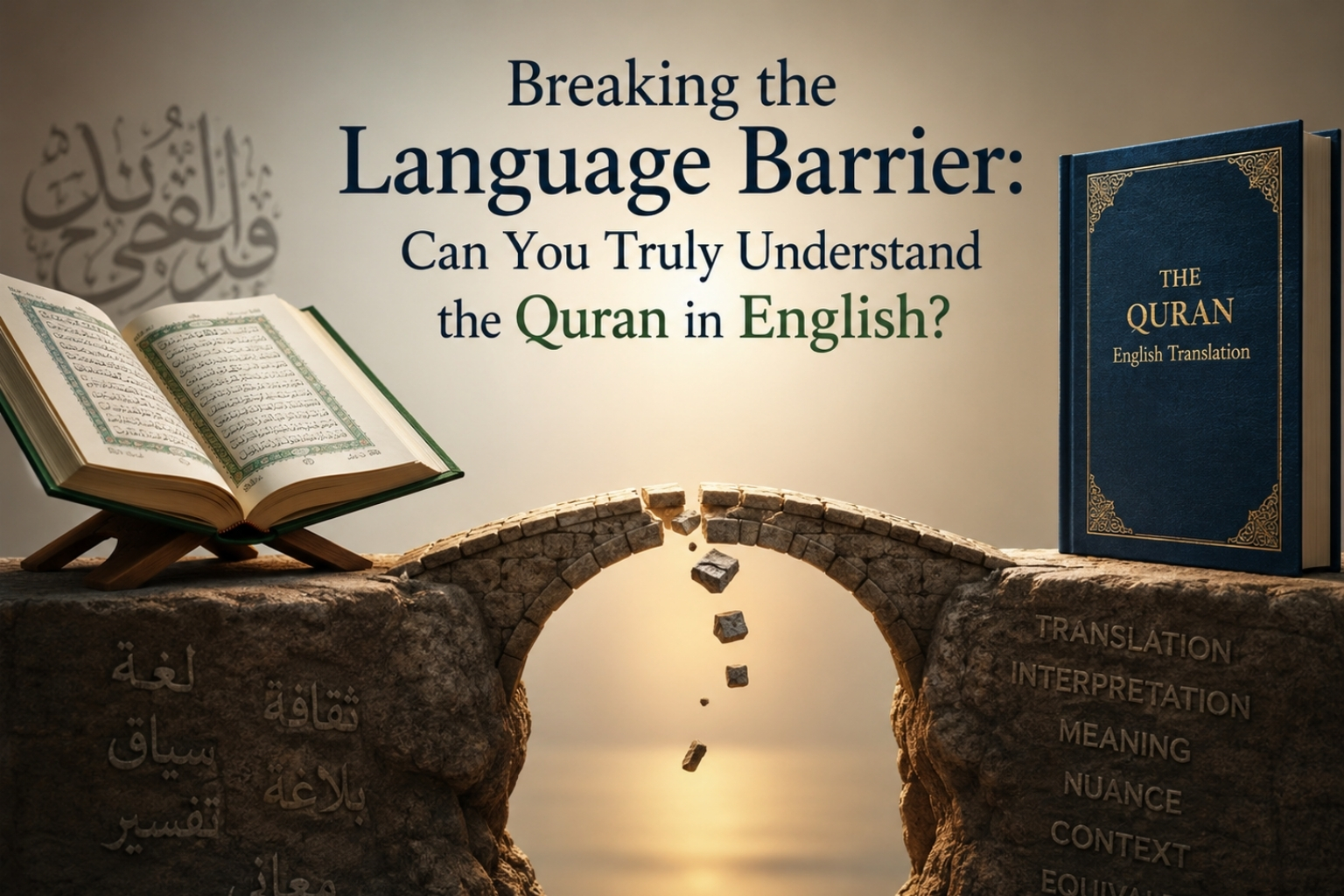

For English-speaking Muslims, converts, and spiritual seekers, approaching the Holy Quran often comes with a major hesitation: the language barrier. Since the text was revealed in classical Arabic, a common and valid question arises: Can you truly understand the Quran in English? Is it possible to capture the essence, depth, and divine guidance of the message without being fluent in the original Arabic language?
The short answer is yes, absolutely. While the linguistic miracle of the text belongs to its Arabic form, its universal guidance is meant for all of humanity. Breaking this barrier is not about becoming a linguist; it is about knowing how to approach a Quran translation effectively.
The Difference Between “The Quran” and a “Translation”
To begin this journey, it is important to understand a core concept in Islamic scholarship: an English version of the book is not technically “The Quran” itself. Rather, it is a translation of its meanings (Tarjamat al-Ma’ani).
Arabic is an exceptionally rich and multidimensional language. A single word can carry multiple layers of emotional, spiritual, and legal depth that cannot be captured by a single English equivalent. Acknowledge this limitation, but do not let it discourage you. A translation acts as a bridge. While you might miss the poetic rhyme and specific linguistic nuances of the Arabic Quran, the core message—the theology, the morals, the stories, and the spiritual guidance—remains completely intact and accessible in English.
How to Overcome the Language Barrier as an English Speaker
If you want to move past a surface-level reading and deeply understand the Quran in English, consider adopting these three essential strategies:
1. Use Multiple Translations for Comparative Reading
No single English translation is perfect. Some translations, like The Clear Quran by Dr. Mustafa Khattab, excel in modern, easy-to-read English. Others, like M.A.S. Abdel Haleem’s translations are excellent for capturing the smooth flow of the text. By reading the same verse across two or three different translations, you can get a much wider and more accurate grasp of the intended meaning.
2. Learn Essential Arabic Keywords
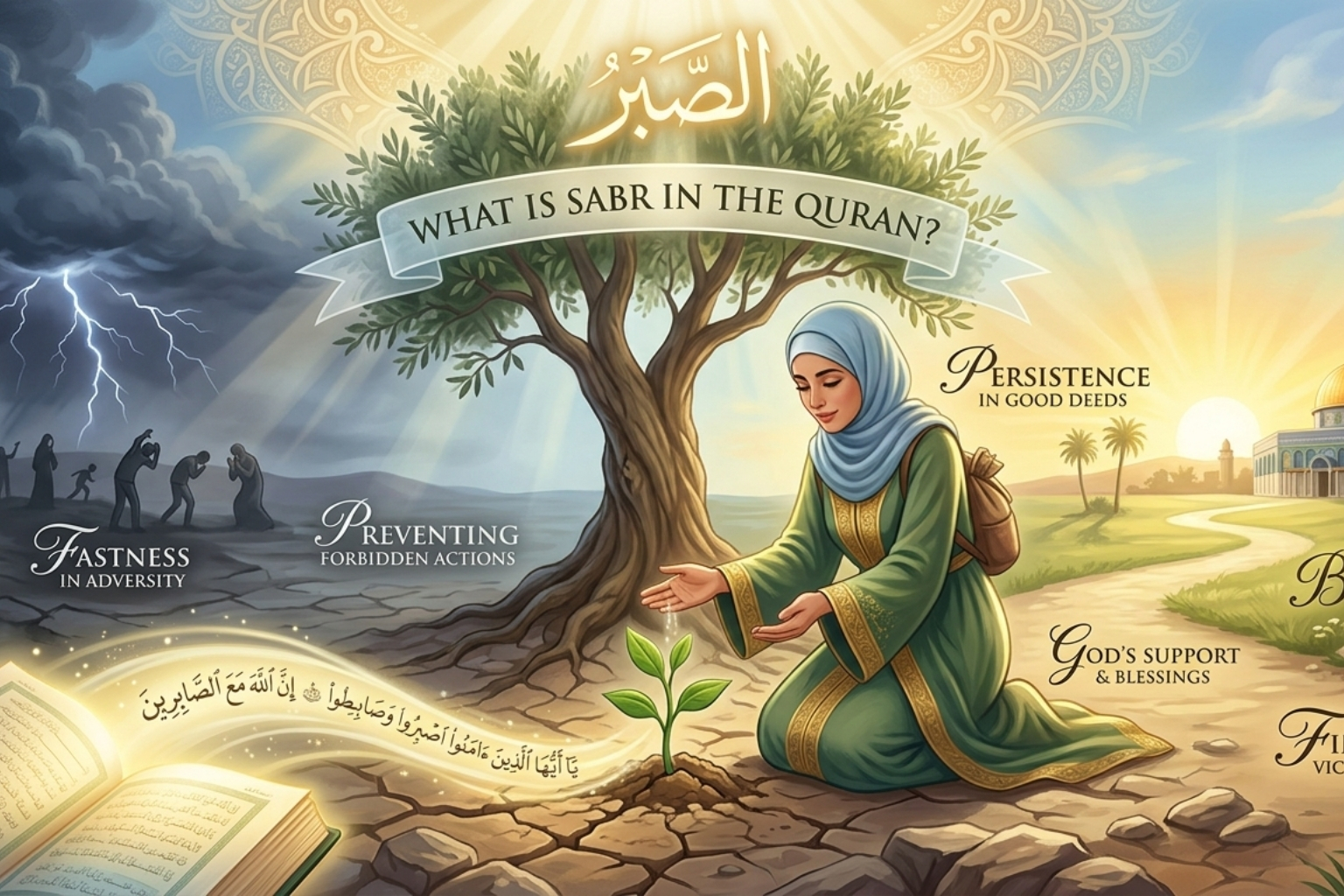
You do not need to learn the entire language to enrich your study. Focus on mastering key, recurring Quranic terms that frequently appear in commentaries. Understanding the deep roots of words like Taqwa (God-consciousness), Rahmah (divine mercy), Sabr (patience and constancy), and Qalb (the spiritual heart) will immediately elevate your comprehension of the English text.
3. Rely on Contextual Study Guides
When the language barrier creates ambiguity, historical context (Asbab al-Nuzul) provides clarity. Using brief, reliable English study guides or podcasts that explain why a verse was revealed helps fill the gaps that translation alone cannot bridge. It contextualizes the words, making them highly relevant to your intellect.
The Universal Message Belongs to You
The scripture itself explicitly states that it was sent as a “guidance for mankind”—not just for a specific race or linguistic group. God’s mercy and wisdom are not locked behind a language barrier.
Your sincere effort to understand the divine words in your native tongue is a highly spiritual act. In fact, struggling to comprehend, turning to commentaries, and spending time to unravel the meanings shows a deep level of devotion that is heavily rewarded.
Conclusion: Start Where You Are
Do not let the fact that you do not speak Arabic prevent you from experiencing the life-changing power of the revelation. Start exactly where you are today. Pick a clear, modern English translation, keep an open heart, and remember that the ultimate goal of the text is to guide your character and connect your soul to its Creator. The message is universal, and it is ready to speak to you.