

When we think about studying a book, we usually focus on intellectual tools. We gather dictionaries, look up historical contexts, and prepare our minds for critical thinking. However, when it comes to understanding revelation, intellectual capacity is only half of the equation. The Quran introduces a completely different prerequisite for true comprehension: the state of your spiritual heart.
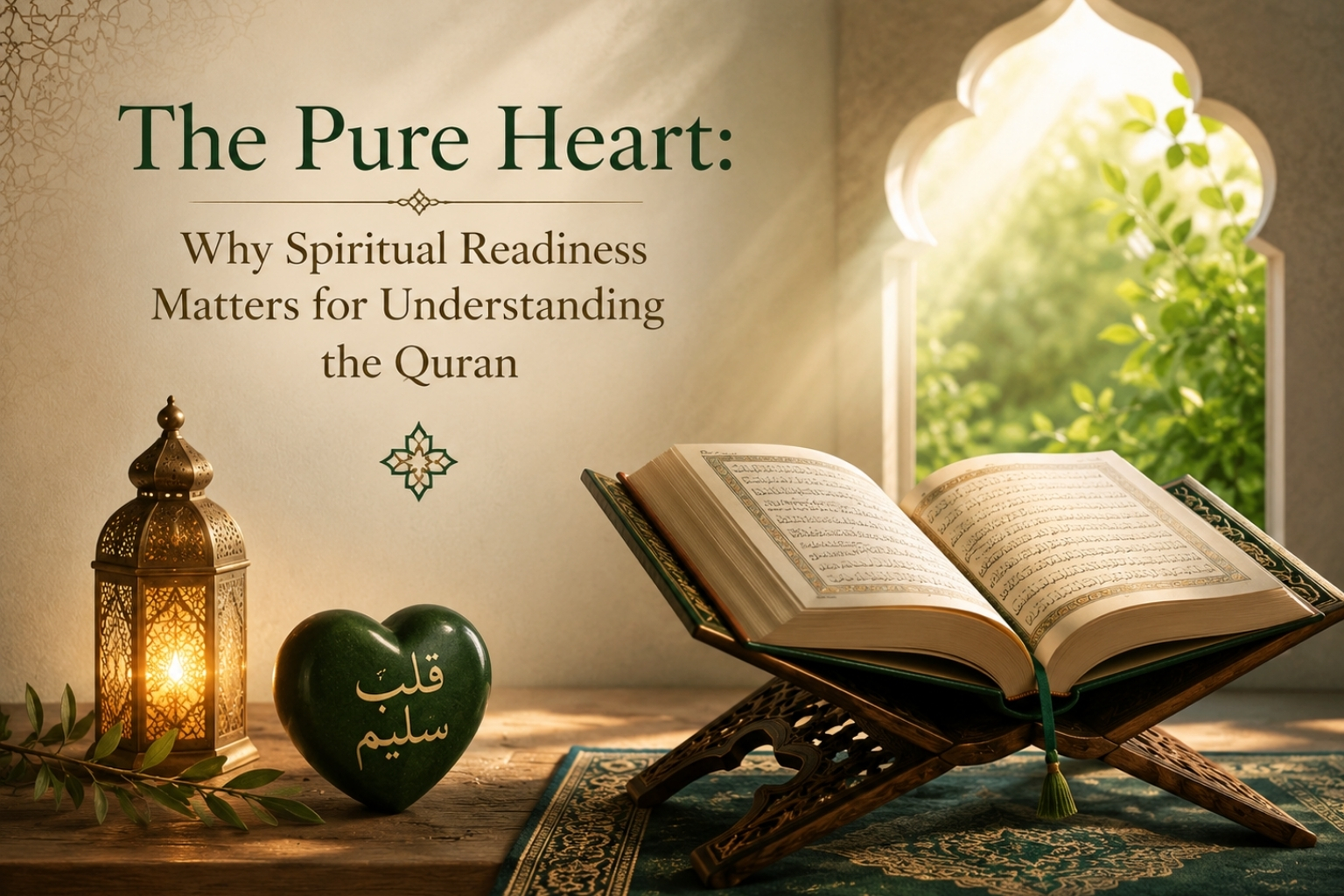
In the Islamic tradition, the heart (Al-Qalb) is not just an organ of emotion; it is the center of intellect, perception, and spiritual vision. To truly receive the depth of divine words, one must cultivate spiritual readiness. Without a pure heart, the verses remain mere words on a page, locked away from offering their deepest transformation.
The Quran as a Divine Light
The scripture frequently describes itself as Noor (Light) and Hudah (Guidance). By definition, light requires a clean surface to reflect upon. If a mirror is covered in thick dust, it cannot reflect the sun’s rays, no matter how brightly the sun shines.
Similarly, if the human heart is clouded by arrogance, persistent negativity, or a lack of sincere intention, it becomes desensitized to Quranic guidance. This is why two people can read the exact same verse: one is moved to tears and completely changes their life, while the other walks away entirely unaffected. The difference is not in their intellectual grasp of the language; the difference lies in their spiritual receptivity.
Cultivating Spiritual Readiness: How to Purify the Heart
Preparing yourself spiritually before engaging with the text is an ongoing practice. Here are three practical ways to develop the spiritual readiness needed to unlock the deeper meanings of revelation:
1. Approach with Sincerity (Ikhlas)
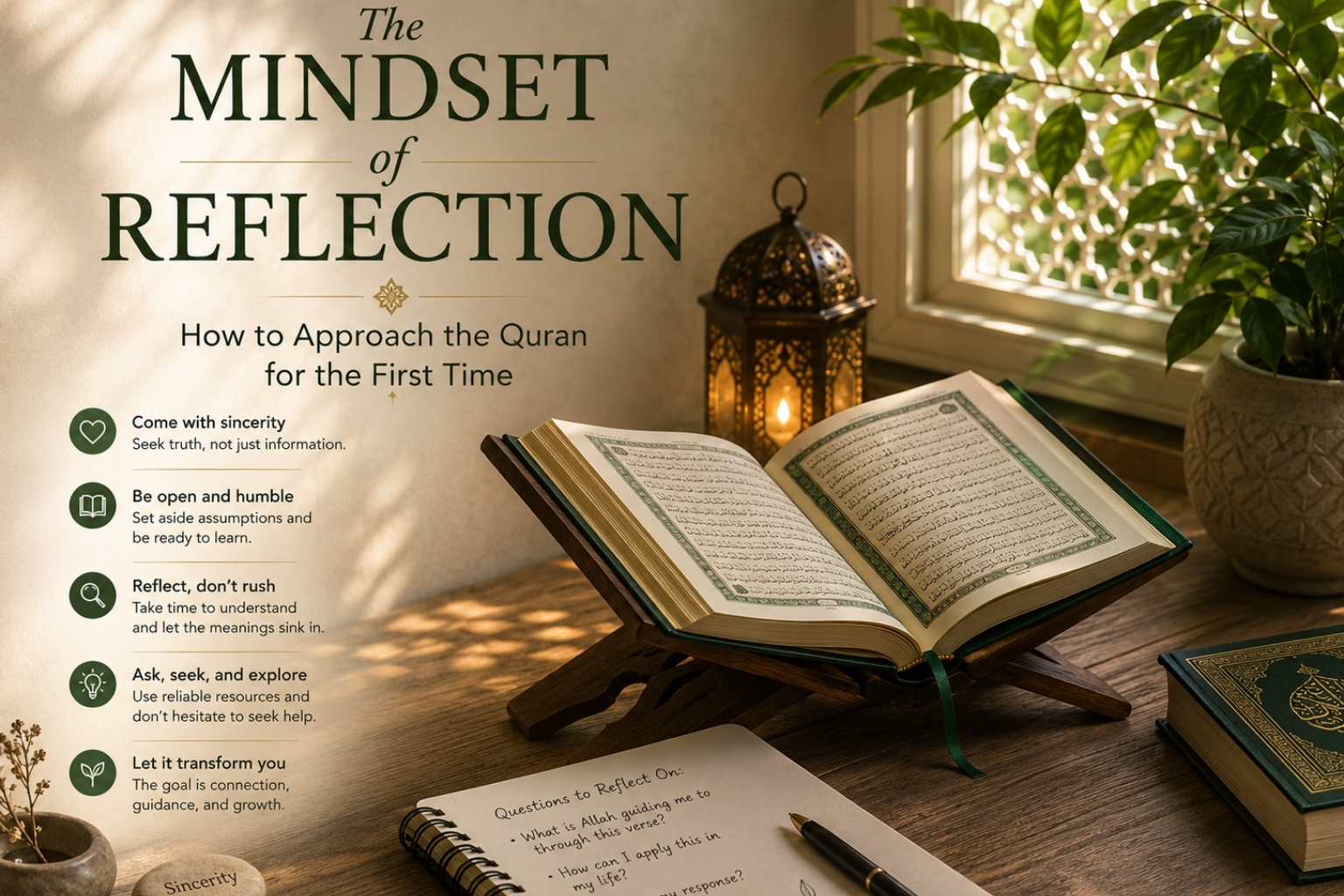
Before opening the text, ask yourself honestly: Why am I reading this today? Is it to win an argument, to fulfill a dry ritual, or to sincerely seek truth and self-improvement? Approaching the text with the sole intention of seeking drawing closer to the Divine instantly softens the heart and opens the mind to perceive meanings that arrogance blocks out.
2. Practice Mindful Repentance (Istighfar)
In spiritual terms, wrongdoing and persistent negative habits act like rust accumulating on the heart. Practicing mindfulness, acknowledging one’s shortcomings, and actively seeking forgiveness serves as a spiritual polish. A polished heart is a receptive heart—it quickly recognizes truth, feels deep empathy, and absorbs moral lessons effortlessly.
3. Embrace Humility over Arrogance
Arrogance is the ultimate barrier to learning. If a reader approaches the text with the mindset that they already know better than the Creator, the text will close itself off to them. True spiritual readiness means sitting before the revelation as a student willing to be guided, corrected, and elevated.
Moving Beyond Academic Study
An academic approach to the text can give you facts, dates, and linguistic structures. While these are incredibly valuable tools, they only touch the surface.
When you couple intellectual study with a pure heart, your reading transforms into an experiential reality. You no longer just analyze the concept of divine mercy; you actively feel it encompassing your anxieties. You don’t just read about patience; your heart finds the actual strength to endure your current life struggles.
Conclusion: Clean the Vessel First
If you want to fill a vessel with pure, life-giving water, you must first ensure the vessel is clean. The divine message is that pure water, and your heart is the vessel.
As you continue your Quranic journey on your website or in your personal life, remember to give your spiritual preparation just as much attention as your intellectual study. Take a few moments of silence before you read, clear your heart of worldly distractions, and pray for an open, pure mind. Only then will the revelation truly unveil its timeless secrets to your soul.