
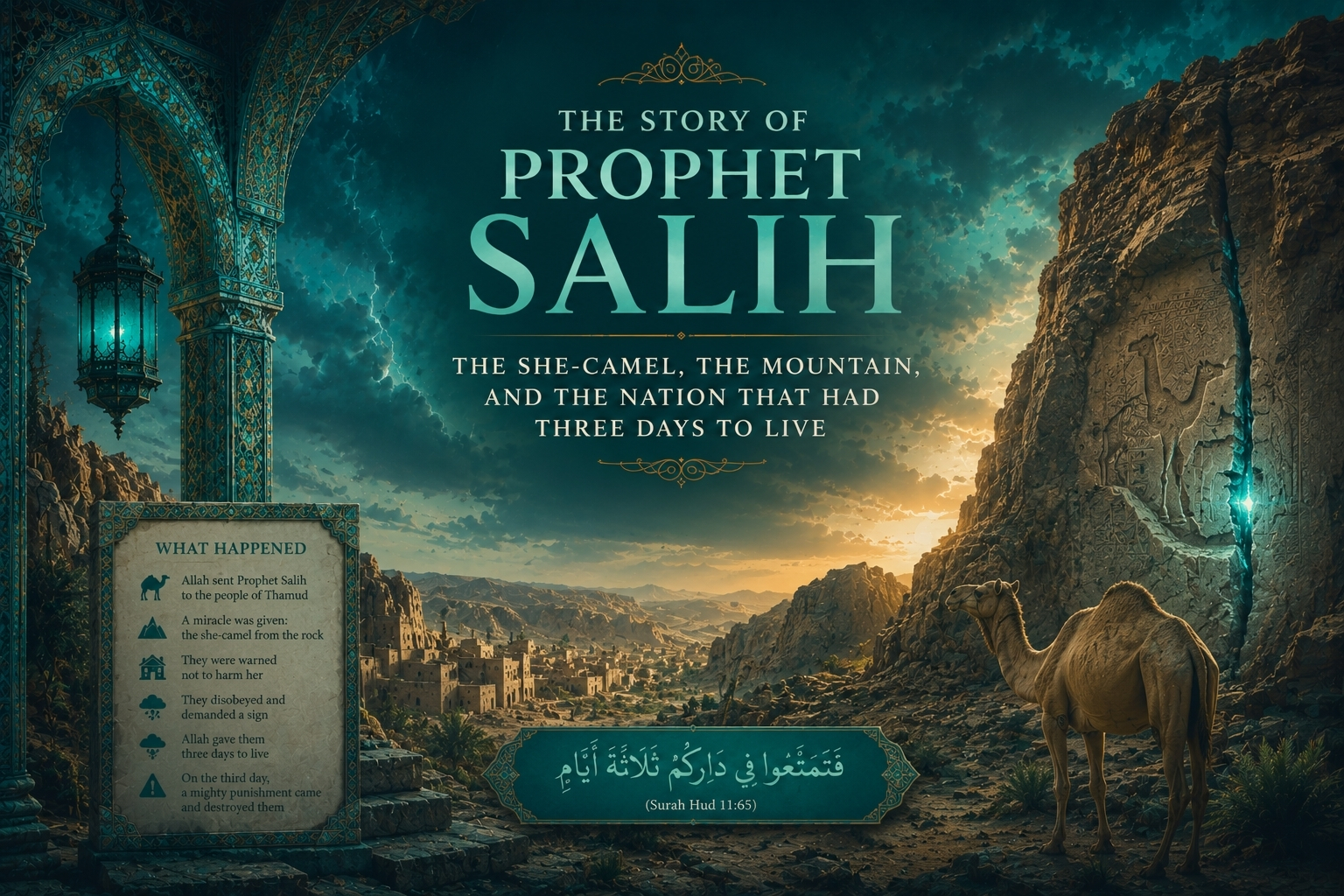

There are tests that come to nations in the form of armies. There are tests that come in the form of drought, of plague, of war. And then there is the test that came to the people of Thamud — a test that arrived in the most unexpected form imaginable: a single she-camel, walking freely among them, drinking from their water.
One camel. One command. One boundary.
And when they crossed it — three days’ warning. Then silence.
Prophet Salih, peace be upon him, was sent to one of the most geographically spectacular civilizations in history — a people who carved their homes directly into mountains, who transformed rock faces into palaces, and who looked at their own craftsmanship and forgot entirely who gave them the hands to create it.
His story is brief in the way that a lightning bolt is brief. But what it illuminates lasts far longer than the flash.
Chapter One — The People of Thamud: Masters of Stone Who Forgot the Maker
The people of Thamud came after ‘Ad — the civilization destroyed in the time of Prophet Hud. They knew what had happened to ‘Ad. They had inherited the earth after them. And yet, with the full knowledge of what arrogance had cost their predecessors, they chose the same path.
Allah describes them with a detail that is both impressive and deeply ironic:
Quran Verse:
وَتَنْحِتُونَ مِنَ الْجِبَالِ بُيُوتًا فَارِهِينَ
“And you carve from the mountains, homes, with skill.”
Surah Ash-Shu’ara (26:149)
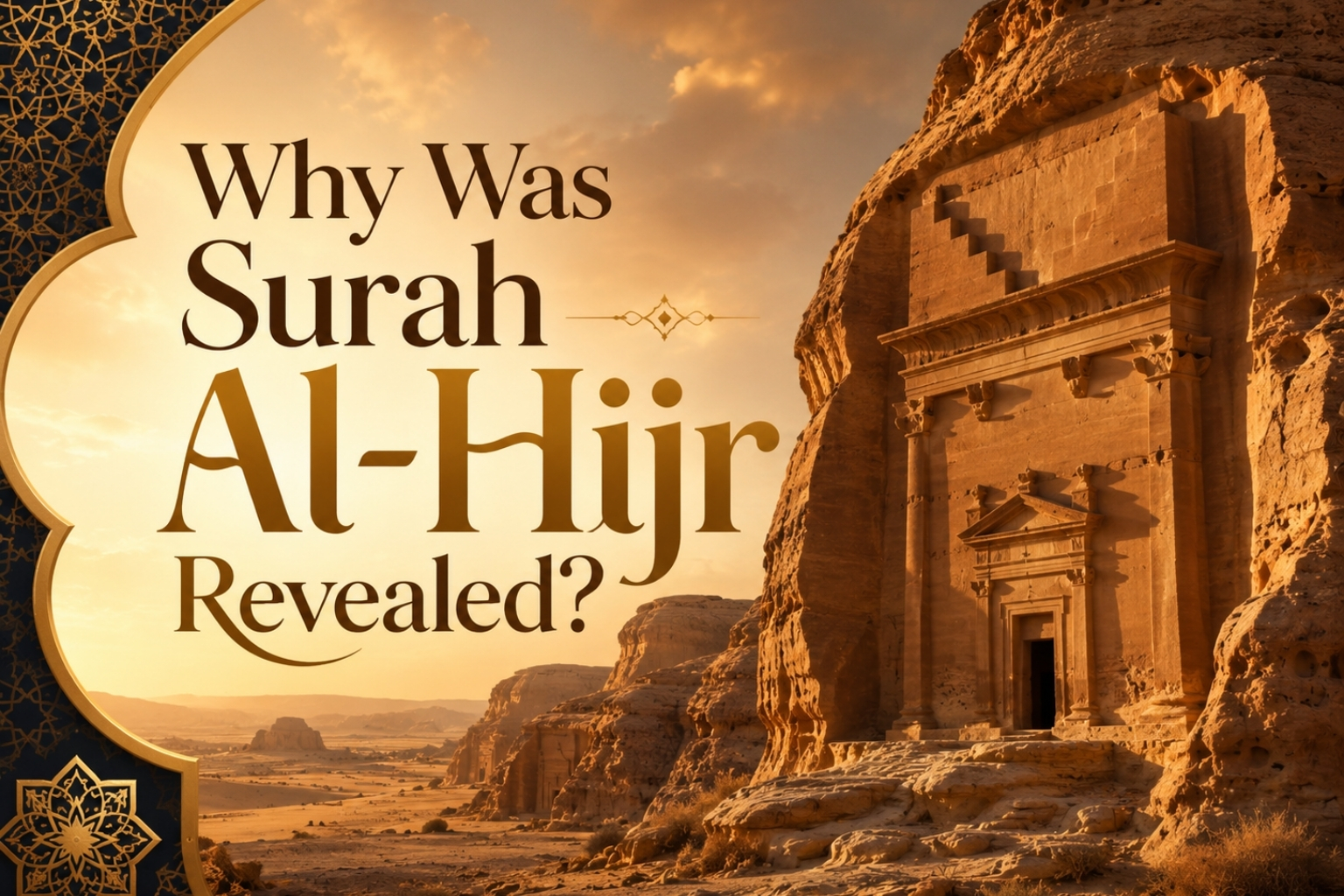
They did not build with bricks or wood. They carved directly into mountains — creating entire cities of rock architecture that stood as monuments to human ingenuity. Archaeological evidence suggests the ancient city of Mada’in Salih in northwestern Saudi Arabia, with its stunning carved rock facades, is connected to this civilization.
They were extraordinary. They were gifted. They were prosperous. And they had completely redirected the worship that belonged to Allah toward idols of stone — which is particularly remarkable, given that they spent their lives working with stone and knew better than anyone that rock does not create itself.
Into this world of carved mountains and forgotten gratitude, Allah sent Prophet Salih, peace be upon him — one of their own.
Chapter Two — Salih Among His People: Trusted Until He Spoke
Like Hud before him, Salih was not a stranger to his people. He was one of them — respected, trusted, admired. The Quran hints at this when it describes their shock at his message:
Quran Verse:
وَإِلَىٰ ثَمُودَ أَخَاهُمْ صَالِحًا ۚ قَالَ يَا قَوْمِ اعْبُدُوا اللَّهَ مَا لَكُم مِّنْ إِلَٰهٍ غَيْرُهُ
“And to Thamud We sent their brother Salih. He said: ‘O my people, worship Allah; you have no deity other than Him.'”
Surah Al-A’raf (7:73)
His people’s response reveals how much they had trusted him before his prophethood:
Quran Verse:
قَالُوا يَا صَالِحُ قَدْ كُنتَ فِينَا مَرْجُوًّا قَبْلَ هَٰذَا
“They said: ‘O Salih, you were among us a man of promise before this.'”
Surah Hud (11:62)
A man of promise. They had seen greatness in him. They had expected him to be a leader among them — a source of pride for their civilization. His call to Allah felt, to them, like a betrayal of everything they had hoped he would become.
This is one of the most human moments in the entire story of the prophets: the pain of watching someone you admired become someone you cannot follow. And Salih’s response carries within it a quiet heartbreak — the grief of a man who understands what his people are choosing to lose:
Quran Verse:
قَالَ يَا قَوْمِ لِمَ تَسْتَعْجِلُونَ بِالسَّيِّئَةِ قَبْلَ الْحَسَنَةِ ۖ لَوْلَا تَسْتَغْفِرُونَ اللَّهَ لَعَلَّكُمْ تُرْحَمُونَ
“He said: ‘O my people, why are you impatient for evil before good? Why do you not seek forgiveness of Allah that you may receive mercy?'”
Surah An-Naml (27:46)
Chapter Three — The Miracle They Demanded: The She-Camel of Allah
The people of Thamud were not simply dismissive of Salih’s message — they were demanding. They wanted proof. They wanted a miracle so specific, so impossible, that no human being could produce it.
Their demand: bring a she-camel out of this mountain rock, alive, before our eyes.
What happened next is one of the most extraordinary miracles recorded in the Quran:
Quran Verse:
وَيَا قَوْمِ هَٰذِهِ نَاقَةُ اللَّهِ لَكُمْ آيَةً فَذَرُوهَا تَأْكُلْ فِي أَرْضِ اللَّهِ وَلَا تَمَسُّوهَا بِسُوءٍ فَيَأْخُذَكُمْ عَذَابٌ قَرِيبٌ
“And O my people, this is the she-camel of Allah — a sign for you. So let her feed in Allah’s earth and do not touch her with harm, lest there seize you a punishment that is near.”
Surah Hud (11:64)
A she-camel, born miraculously from solid rock, now walking among them as a living, breathing sign from Allah. And with this miracle came one single condition — one boundary, one test:
Do not harm her.
She could graze freely. She could drink from their water on her designated days. She was to be left completely alone. That was all. One command. In exchange for continued existence and continued mercy.
Allah even specified the terms clearly through Salih:
Quran Verse:
قَالَ هَٰذِهِ نَاقَةٌ لَّهَا شِرْبٌ وَلَكُمْ شِرْبُ يَوْمٍ مَّعْلُومٍ
“He said: ‘This is a she-camel. For her is a day of drink, and for you is a day of drink, on a known day.'”
Surah Ash-Shu’ara (26:155)
One day for her. One day for them. A schedule. A structure. A mercy built into the very terms of the test.
They agreed. The camel walked among them. Days passed, then months. And slowly, the resentment built.
Chapter Four — The Nine Who Chose Destruction
Not everyone in Thamud was indifferent to the camel. There was an active, organized faction — nine men specifically — who plotted not just to kill the camel but to kill Salih himself:
Quran Verse:
وَكَانَ فِي الْمَدِينَةِ تِسْعَةُ رَهْطٍ يُفْسِدُونَ فِي الْأَرْضِ وَلَا يُصْلِحُونَ
“And there were in the city nine family heads causing corruption in the land and not amending.”
Surah An-Naml (27:48)
Nine men. A small fraction of an entire civilization. And yet their action would bring the punishment of Allah down upon everyone who had consented to the corruption or failed to stop it.
This is one of the most sobering truths in the story of Thamud — collective silence in the face of evil is not neutrality. It is participation.
The most wicked among them was selected for the act itself:
Quran Verse:
فَنَادَوْا صَاحِبَهُمْ فَتَعَاطَىٰ فَعَقَرَ
“But they called their companion, and he dared and hamstrung her.”
Surah Al-Qamar (54:29)
One man. One act. The she-camel of Allah — the living sign, the miracle they had demanded, the proof that had been given to them — was killed.
Chapter Five — Three Days: The Mercy Within the Warning
What happened next reveals something extraordinary about Allah’s character that is easy to overlook in the drama of the punishment itself.
After the she-camel was killed, Allah did not destroy Thamud immediately. He gave them three more days — three days of warning, three days of opportunity, three days in which any one of them could have turned back:
Quran Verse:
فَقَالَ تَمَتَّعُوا فِي دَارِكُمْ ثَلَاثَةَ أَيَّامٍ ۖ ذَٰلِكَ وَعْدٌ غَيْرُ مَكْذُوبٍ
“Then Salih said: ‘Enjoy yourselves in your homes for three days. That is a promise not to be denied.'”
Surah Hud (11:65)
Three days. Allah did not owe them three days. They had received the miracle they demanded. They had been given the boundary clearly. They had killed the sign deliberately.
And still — three more days.
This is the mercy of Allah operating even within His punishment. The door of return was open until the last possible moment. The question was whether anyone would walk through it.
The Quran tells us that Salih and the believers were saved before the punishment fell:
Quran Verse:
فَلَمَّا جَاءَ أَمْرُنَا نَجَّيْنَا صَالِحًا وَالَّذِينَ آمَنُوا مَعَهُ بِرَحْمَةٍ مِّنَّا وَمِنْ خِزْيِ يَوْمِئِذٍ ۗ إِنَّ رَبَّكَ هُوَ الْقَوِيُّ الْعَزِيزُ
“So when Our command came, We saved Salih and those who believed with him, by mercy from Us, and from the disgrace of that day. Indeed, your Lord is the Powerful, the Exalted in Might.”
Surah Hud (11:66)
Chapter Six — The Punishment: A Cry That Left Nothing Standing
When the three days ended, the punishment came in a form the Quran describes with two words that carry the weight of total annihilation:
Quran Verse:
وَأَخَذَ الَّذِينَ ظَلَمُوا الصَّيْحَةُ فَأَصْبَحُوا فِي دِيَارِهِمْ جَاثِمِينَ
“And the wrongdoers were seized by the blast and they became within their homes corpses fallen prone.”
Surah Hud (11:67)
A single cry — Al-Sayhah — a divine blast of sound so overwhelming that it left the entire civilization of Thamud dead in their homes. The people who had carved palaces into mountains, who had asked “who is greater than us in strength?” — were silenced by a sound.
Allah then adds a verse of almost unbearable irony:
Quran Verse:
كَأَن لَّمْ يَغْنَوْا فِيهَا ۗ أَلَا إِنَّ ثَمُودَ كَفَرُوا رَبَّهُمْ ۗ أَلَا بُعْدًا لِّثَمُودَ
“As if they had never prospered therein. Unquestionably, Thamud denied their Lord; then away with Thamud.”
Surah Hud (11:68)
As if they had never prospered therein. The carved mountains remained. The architecture survived. But the people — gone. Their civilization erased so completely that the Quran marks their absence with the word “away” — a finality that echoes across the centuries.
Chapter Seven — The Prophet Muhammad ﷺ and the Valley of Thamud
One of the most remarkable connections between this ancient story and Islamic history comes from the account of the Prophet Muhammad ﷺ himself passing through the valley where Thamud once lived during the Tabuk expedition.
Hadith:
لَمَّا نَزَلَ النَّاسُ الْحِجْرَ فِي غَزْوَةِ تَبُوكَ، أَخَذُوا مِنْ مِيَاهِ الآبَارِ وَعَجَنُوا بِهِ، فَأَمَرَهُمُ النَّبِيُّ ﷺ أَنْ يُهَرِيقُوا مَا أَخَذُوا مِنْ مِيَاهِهَا وَيَعْلِفُوا الإِبِلَ الْعَجِينَ، وَأَمَرَهُمْ أَنْ يَسْتَقُوا مِنَ الْبِئْرِ الَّتِي كَانَتْ تَرِدُهَا النَّاقَةُ
“When the people stopped at Al-Hijr during the expedition of Tabuk, they drew water from its wells and kneaded dough with it. The Prophet ﷺ commanded them to pour out what they had drawn from its waters and to feed the kneaded dough to the camels. Then he commanded them to draw water from the well which the she-camel used to drink from.”
Recorded in Sahih Al-Bukhari, Hadith No. 3378
The Prophet Muhammad ﷺ passed through the ruins of Thamud’s civilization and treated the place with solemn gravity — not as a tourist site, not as a curiosity, but as a warning made physical. He hurried through it and instructed his companions not to enter the ruins of the wrongdoers except in a state of weeping — lest what befell them befall others.
The ruins still stand today. The people are long gone.
Timeless Lessons from the Story of Salih
- Knowing the fate of those before you is not enough — you must learn from it Thamud came after ‘Ad. They knew what arrogance had cost their predecessors. They repeated the same choices anyway. Knowledge without action is not wisdom — it is evidence against you.
- The test is always proportional to the blessing Thamud was given a living miracle — a she-camel born from rock, walking among them daily. The test that accompanied this miracle was proportionally simple: leave her alone. The greater the gift, the clearer the boundary, the more serious the accountability.
- One act by a few can bring consequences for many Nine men plotted. One man struck. An entire civilization was destroyed. Collective silence in the face of wrong is not neutrality — it is a choice that carries its own weight before Allah.
- Allah’s punishment is always preceded by exhausted mercy Three days. After the miracle was killed, after the boundary was crossed, after the warning had been given for years — three more days. Allah does not punish without warning. He does not warn without mercy. He does not show mercy without giving it time to be received.
- What you build with your hands cannot save you from what you choose with your heart The carved palaces of Thamud are still visible in the rock faces of Mada’in Salih today. Their architecture survived. They did not. No amount of worldly achievement, craftsmanship, or civilization is a substitute for the one relationship that actually matters.
- The places of punishment deserve solemnity, not curiosity The Prophet Muhammad ﷺ passed through Thamud’s ruins weeping and hurrying. There is wisdom in how we relate to the places and stories of divine punishment — not with detached fascination, but with the trembling awareness that the same tests are always available to the same human nature.
Closing Reflection
The she-camel of Allah walked among them for months — perhaps years. Every day she grazed, every day she drank, every day she lived was a day the mercy of Allah was visibly present among the people of Thamud.
They saw her. They knew what she represented. They killed her anyway.
And Salih — the man they had called “a man of promise”, the brother they had hoped would lead them to greatness — stood among the ruins of everything he had loved and warned, and walked away saved by the same mercy that had given his people every chance to choose differently.
Allah says of Salih and every prophet who delivered the message and was rejected:
Quran Verse:
فَتَوَلَّىٰ عَنْهُمْ وَقَالَ يَا قَوْمِ لَقَدْ أَبْلَغْتُكُمْ رِسَالَةَ رَبِّي وَنَصَحْتُ لَكُمْ وَلَٰكِن لَّا تُحِبُّونَ النَّاصِحِينَ
“So he turned away from them and said: ‘O my people, I had certainly conveyed to you the message of my Lord and advised you, but you do not like advisors.'”
Surah Al-A’raf (7:79)
“But you do not like advisors.”
Seven words that summarize one of the oldest and most persistent human tendencies — the rejection of the truth not because it is unclear, but because it is unwelcome.
The camel is gone. The civilization is gone. The warning remains.
Tags: Prophet Salih · Salih in Islam · People of Thamud Quran · She-Camel of Allah · Thamud Story Islam · Destroyed Nations Quran · Prophets of the Quran · Mada’in Salih Islam · Islamic Articles English · Quran Route · Prophets Series 05