
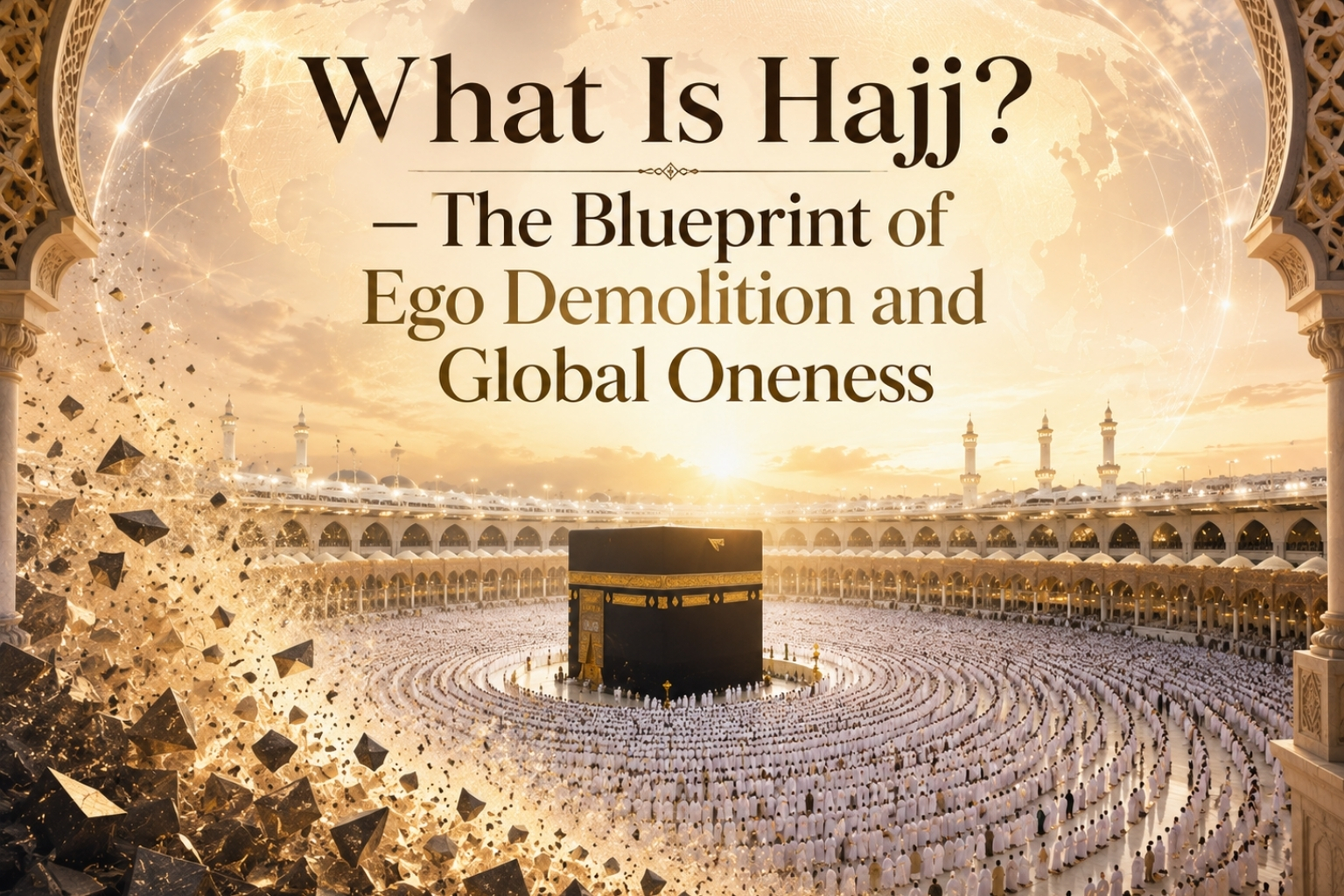

We live in a culture deeply fragmented by tribalism, socioeconomic division, and hyper-individualism. Modern society continuously prompts us to look at our differences—sorting ourselves by nationality, race, wealth, and social status. This endless hyper-categorization creates an implicit state of alienation, loneliness, and a lack of belonging. It breeds a unique strain of modern anxiety, leaving the mind trapped in the exhausting cycle of overthinking in Islam as we constantly fight to secure our identity, protect our status, and defend our personal borders.
To foster a sense of connection, the modern secular world offers corporate networking events, massive music festivals, or nationalistic gatherings. Yet, these events often heighten our focus on status. VIP sections, exclusive tiers, and expensive branding serve only to reinforce the exact barriers that keep human beings isolated from one another.
However, when we engage in Tadabbur (deep Quranic reflection), we find that Islam provides a magnificent, annual antidote to this alienation: Hajj (the pilgrimage to Mecca). Hajj is not simply an ancient historical ritual or a demanding physical journey. In the framework of Islamic psychology, it represents the ultimate demolition of the human ego (Nafs) and the greatest manifestation of human equality on earth. It is a profound catalyst for healing anxiety with the Quran, reminding the soul of its true, unburdened origin and unlocking a deep state of permanent, internal peace of mind.
The Core Blueprint: A Mandatory Universal Appointment
Hajj is the fifth and final pillar of Islam—a mandatory, once-in-a-lifetime obligation for every adult Muslim who possesses the physical and financial capacity to undertake the journey. Unlike daily or weekly worship, Hajj takes place during a highly specific window in the Islamic lunar calendar: from the 8th to the 12th (or 13th) of Dhu al-Hijjah.
Allah outlines the cosmic invitation to this gathering directly in the divine text, calling humanity back to an ancient house built purely for monotheism:
“وَأَذِّن فِي النَّاسِ بِالْحَجِّ يَأْتُوكَ رِجَالًا وَعَلَىٰ كُلِّ ضَامِرٍ يَأْتِينَ مِن كُلِّ فَجٍّ عَمِيقٍ”
“And proclaim to the people the Hajj [pilgrimage]; they will come to you on foot and on every lean camel; they will come from every distant pass.”
— Surah Al-Hajj, 22:27
To understand the scale and precision of this journey, the core rites of Hajj are organized below into a clear, highly scannable framework:
The Core Station of Hajj | The Physical Location | The Spiritual & Psychological Transformation |
1. The State of Uniformity (Iḥrām) | The boundary lines (Miqāt) outside Mecca. | Pilgrims shed their worldly clothes, perfumes, and markers of wealth, wrapping themselves in two simple pieces of unstitched white cloth. All class distinctions vanish instantly. |
2. The Cosmic Orbit (Tawāf) | The Sacred Mosque (Al-Masjid al-Harām). | Circling the Kaaba seven times counter-clockwise. This movement mimics the cosmic orbit of the planets, signaling that Allah is the absolute, singular gravity center of your life. |
3. The Climax of Mercy (Wuqūf ‘Arafah) | The Plain of Arafat (9th of Dhu al-Hijjah). | The absolute apex of Hajj. Millions of pilgrims stand from noon until sunset, weeping and begging for forgiveness. It is a literal dress rehearsal for the Day of Judgment. |
4. The Defiance of Evil (Ramy al-Jamarāt) | The valley of Mina. | Throwing small pebbles at stone pillars that symbolize the temptations of Satan. It represents a physical vow to systematically stone your internal demons and bad habits. |
5. The Sacrifice of Gratitude (Hady) | The surrounding areas of Mina. | Sacrificing an animal to feed the poor globally. It honors the absolute obedience of the Prophet Ibrahim and marks the transition into the festive days of Eid al-Adha. |
The Ultimate Ego Demolition: The Psychology of Ihram
The human ego thrives on external ornamentation. We use our clothing, watches, brands, and titles to project power, command respect, or separate ourselves from those we deem “beneath” us. This continuous performance keeps the nervous system on a frantic treadmill of status maintenance.
Hajj completely short-circuits this survival mechanism through the law of Ihram. The moment a billionaire executive and a penniless laborer cross the Miqāt boundary, they are stripped of everything that separates them in the worldly marketplace. They stand shoulder-to-shoulder, wearing the exact same white sheets, dusty sandals, and disheveled hair.
The Prophet Muhammad beautifully described the absolute erasure of social leverage during this sacred window:
“All humanity is from Adam, and Adam was created from dust. An Arab has no superiority over a non-Arab, nor a non-Arab has any superiority over an Arab; also a white has no superiority over a black, nor a black has any superiority over a white except by piety (Taqwa).” — The Farewell Sermon of the Prophet
Through Tadabbur, we realize that Ihram is a radical form of exposure therapy for the soul. By forcing millions of diverse human beings into absolute visual uniformity, Hajj breaks the rigid, defensive walls of your ego. It teaches your overthinking intellect that your ultimate value has nothing to do with your bank balance, your lineage, or your career milestones—it rests entirely on the sincerity, purity, and softness of your heart.
Psychological Liberation: The Clear Slate and the Power of Arafat
When a believer stands on the plain of Arafat during the blistering heat of the day, their relationship with past guilt and trauma undergoes a radical, permanent shift.
Anxiety is frequently driven by the heavy, suffocating baggage of past mistakes—the haunting feeling of: “I am too broken, too compromised, or too full of flaws to ever be truly accepted or clean.”
Arafat is designed by Al-Ghaffar (The Repeatedly Forgiving) to systematically obliterate this trap. The Prophet explicitly anchored the entire value of the pilgrimage to this single afternoon:
“Hajj is Arafat.”
— Sunan An-Nasa’i, 3016
Standing on this plain, completely exposed to the elements, you pour out your deepest confessions directly to your Lord. The divine promise attached to this sincere vulnerability is nothing short of a total spiritual rebirth. The Prophet taught: “Whoever performs Hajj… will return as pure as the day their mother gave birth to them.” (Sahih al-Bukhari).
When you internalize this reality, the lingering ghosts of your past errors completely evaporate. You walk away from Arafat with an absolute, unshakeable confidence in trusting Allah’s plan, knowing that your ledger has been entirely wiped clean, granting you an unassailable sense of mental clarity and peace of mind.
The Pilgrimage Re-Entry Protocol: Bringing Hajj into Your Living Room
You do not have to wait until you purchase a plane ticket to Mecca to benefit from the profound psychological architecture of Hajj. Use this structured sequence during the upcoming ten days of Dhu al-Hijjah to experience an internal pilgrimage right where you are.
1.The Digital Ihram (Stripping Discrepancies):Step 1.
Select one day this week to declare a total lifestyle simplification. Turn off all social media notifications, put away luxury accessories, and wear your simplest, plainest attire. Force your mind to disconnect from the consumerist matrix and sit purely in your raw identity as a servant.
2.The Home Arafat (The Deep Unburdening):Step 2.
On the 9th day of Dhu al-Hijjah (the Day of Arafat), isolate yourself in a quiet room during the two hours preceding sunset (Maghrib). Turn off your phone, raise your hands, and spend that entire window making a meticulous, vocal confession of your mistakes, followed by begging for your absolute needs under how to trust Allah.
3.The Internal Stoning (Targeting Vulnerabilities):Step 3.
Identify your primary spiritual or psychological toxic trait—whether it is destructive jealousy (Hasad), chronic overthinking, or a specific addiction. Write it down on a piece of paper, and consciously intend that you are going to systematically “stone” and eliminate this behavior from your life, just as the pilgrims stone the pillars.
4.The Celebration of Oneness (Global Cohesion):Step 4.
Attend the local Eid al-Adha prayer with the explicit intention of building radical community connection. Intentionally seek out, smile at, and greet individuals who are from different cultural, racial, or economic backgrounds than yourself, embodying the universal brotherhood of the Farewell Sermon.
Actionable Steps to Cultivate Universal Contentment
- Implement a “Status Fast” Once a Month: Choose one weekend every month where you intentionally refuse to speak about your professional achievements, your financial gains, or your material acquisitions to family or friends. Force your social interactions to rely entirely on empathy, active listening, and spiritual exchange, systematically starving the ego of validation.
- Practice the Art of “Low-Scanning” in Daily Commutes: The next time you find yourself in a crowded public transit station, airport, or market, refuse the urge to pull out your phone. Instead, look slowly around at the sea of diverse human faces. Remind your intellect: “Every single one of these travelers is a profound creation of my Lord, carrying their own hidden pains and hopes. We are all walking back to the exact same soil.” This habit expands your capacity for deep empathy.
- Transform Financial Anxiety into Abundance Focus: If the current economic climate triggers feelings of scarcity or panic in your heart, look closely at the reality of the Hajj funding system. Millions of poor believers save pennies for decades, and Al-Razzaq (The Provider) opens doors for them that defy standard economics. Re-anchor your security entirely in the boundless storehouses of the Creator rather than the volatile metrics of the stock market.
Conclusion
The vast, luminous, and deeply transformative gathering of Hajj in Islam stands as an essential spiritual compass for a human generation completely fractured by tribalism, superficial status chasing, and existential dread. Islam reminds you that your human soul was never engineered to live in a permanent state of frantic competition and structural isolation from the rest of humanity. You do not have to navigate this worldly wilderness as a solitary, defensive island. You are a highly valued member of an expansive, universal family of faith, operating under the direct, loving custody of Al-Wadud (The Loving). When you choose to internalize the ego-shattering lessons of the white cloth, honor the absolute equality of your fellow travelers, and anchor your ultimate confidence in trusting Allah’s plan, the suffocating weight of modern anxiety completely dissolves—leaving your mind beautifully wrapped in an unshakeable state of profound safety, cosmic belonging, and everlasting spiritual success.