

When individuals experience periods of deep spiritual burnout, personal failure, or moral mistakes, a heavy cloud of guilt often settles over their minds. In these moments of vulnerability, the human subconscious tends to form a warped perception of the Creator. We easily view Allah strictly through the lens of justice, calculation, and punishment. We think: “If I am a broken, flawed servant, how could the Creator look at me with anything other than disappointment?”
Within the profound practice of Tadabbur (deep Quranic reflection), there is a specific divine name that completely shatters this cold, transactional view of faith. It is a name that acts as a soothing balm for healing anxiety with the Quran, yet it remains a title that many believers completely forget to invoke during their darkest trials. That name is Al-Wadud (The Loving).
The Divine Conjunction: Surah Al-Buruj, Verse 14
To understand the breathtaking nature of this attribute, we must examine the specific textual neighborhood where Allah chooses to introduce it. In Surah Al-Buruj, amidst a powerful historical discourse on cosmic justice, patience, and accountability, Allah states:
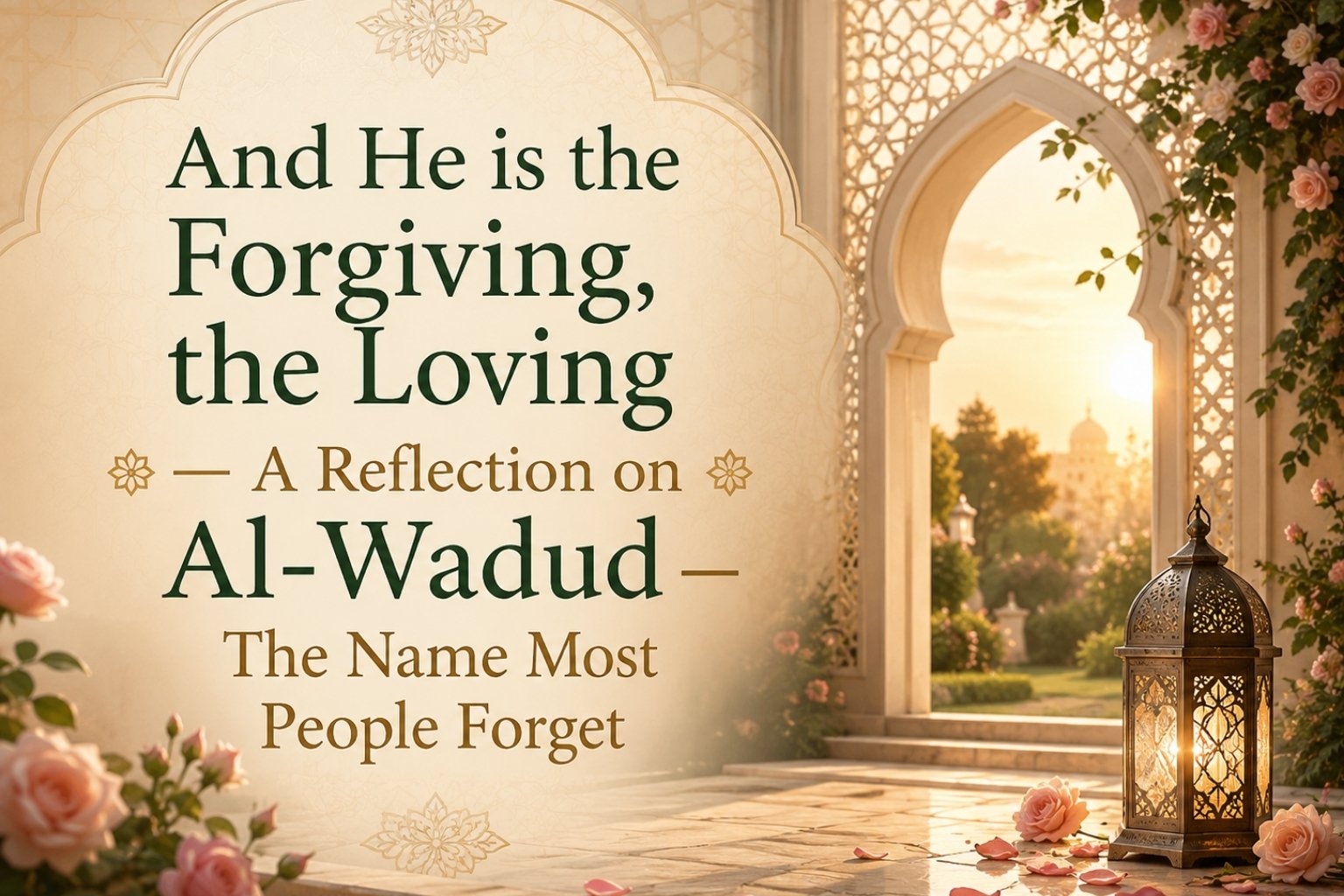
“وَهُوَ الْغَفُورُ الْوَدُودُ”
“And He is the Forgiving, the Loving.” — (Surah Al-Buruj, 85:14)
The structural placement of these two specific names—Al-Ghafur (The Forgiving) and Al-Wadud (The Loving)—sitting side-by-side contains an immense goldmine of Islamic psychology that can radically alter your perspective on trusting Allah’s plan.
THE SECRETS OF THE DIVINE CONJUNCTION |
Human Concept of Forgiveness: Clean slate, but awkward distance. Divine Concept (Al-Ghafur + Al-Wadud): Complete erasure + Added Love. |
The Ultimate Result: You are not just tolerated; you are cherished. |
The Core Difference Between “Hubb” and “Wud”
In the Arabic language, there are multiple layers of vocabulary used to describe affection. The most common word for love is Hubb. However, Allah did not merely call Himself Al-Habib (The One who loves); He chose the intensive, active form: Al-Wadud.
Scholars of classical linguistics and Tafsir note a beautiful, critical distinction between these two root words:
- Hubb (Internal Love): This represents the silent, emotional feeling of love that resides hidden inside a person’s heart. You can love someone deeply in your mind without ever showing it to them outwardly.
- Wud (Expressed Love): This represents the active, visible manifestation of love. It is love translated directly into warm actions, gentle gifts, protective care, and affectionate behavior.
Therefore, when Allah reveals Himself as Al-Wadud, He is informing you that He does not just love you silently from above the heavens. He actively shows His love to you every single day through the tangible blessings embedded in your life. The cool breeze on a hot afternoon, the unexpected comfort of a loyal friend, the heartbeat keeping you alive while you sleep, and the protective doors closed to shield you from harm—these are all the physical signatures of Al-Wadud actively courting your heart.
The Healing Psychology of Al-Ghafur Al-Wadud
When a human being wrongs another person in this world and seeks their pardon, a healthy reconciliation can take an immense amount of time. Even if that person completely forgives you, the relationship often changes. They might say, “I forgive you for what you did, but I can no longer sit with you, talk to you, or trust you the way I used to.” The forgiveness is granted, but the intimate love is completely extinguished.
Surah Al-Buruj (85:14) completely isolates divine mercy from this human limitation. When you return to Allah in sincere repentance (Tawbah), He does not merely offer a cold, bureaucratic clearance of your record. He does not just wipe your slate clean while keeping you at a safe, awkward distance.
Instead, the moment He acts as Al-Ghafur (The Forgiving) and erases the sin, He instantly activates Al-Wadud (The Loving). He restores your spiritual standing completely, enveloping you in an active, protective embrace of affection as if the mistake had never occurred. This realization is a monumental weapon for conquering overthinking in Islam, reminding us that our mistakes do not define our standing with the King of kings.
Prophetic Proof: The Return of the Wayward Servant
The Prophet Muhammad spent his entire mission anchoring the companions’ hearts into this exact reality of divine affection. He constantly fought against the toxic theological narrative that God is a distant tyrant waiting for humanity to slip.
In a famous narration, the Prophet Muhammad was sitting with his companions when he pointed to a frantic mother who had been separated from her infant child during a chaotic rush. When she finally found her baby, she threw herself upon the dusty ground, pulled the child tightly to her chest, and began nursing it in absolute tears of joy. The Prophet Muhammad turned to his companions and asked: “Do you think this woman could ever throw her child directly into a blazing fire?”
The companions responded: “No, by Allah, not if she has the power to prevent it!” The Prophet Muhammad then delivered an unshakeable spiritual anchor:
“اللَّهُ أَرْحَمُ بِعِبَادِهِ مِنْ هَذِهِ بِوَلَدِهَا”
“Allah is surely more merciful and affectionate to His servants than this mother is to her own child.” — (Sahih al-Bukhari & Sahih Muslim)
This prophetic masterclass illuminates why understanding Al-Wadud is so crucial for gaining true peace of mind. If you can sleep peacefully knowing a loving mother has your back, how can you allow your heart to drown in anxiety when the Source of all motherhood is looking after your life?
Practical Steps to Activate Al-Wadud in Your Daily Life
- Read the Love Letters of the Universe: Change how you view nature and daily provisions. When you eat a piece of fresh fruit, look at a beautiful sunset, or find unexpected relief after a tight financial crunch, do not see them as mere coincidences. Look at them as personalized, custom-designed expressions of love sent straight to you from Al-Wadud.
- Repent with Active Hope, Not Crippling Fear: The next time you slip up or feel spiritually disconnected, do not run away from the prayer mat out of shame. Run directly toward it. Say: “O Al-Ghafur, forgive my negligence, and O Al-Wadud, fill the void in my heart with Your active love.” Expect affection, not hostility.
- Become a Conduit of Wud: If you desire to be close to the Source of love, you must embody that attribute within your own terrestrial sphere. The Prophet Muhammad taught that Allah shows mercy to those who are merciful to others. Treat your parents with gentleness, speak words of validation to your spouse, feed a stray animal, and smile at a stranger. Let your presence on Earth be a living reflection of divine warmth.
Conclusion
The spectacular depth of Al-Wadud serves as an eternal antidote to spiritual alienation, reminding us that the baseline of our relationship with Allah is rooted in deep, unshakeable affection. You are not an accidental speck of dust navigating a cold, uncaring cosmos; you are an intentionally created servant whose guidance, protection, and comfort are actively managed by the Lord of the worlds. When you firmly integrate this single name into your daily life and prayers, the heavy chains of anxiety melt away, replaced by a profound, radiant tranquility that safely steers your soul toward its ultimate peace and eternal spiritual success.