

We live in a culture that treats the human soul like a machine that must run continuously without a pause. Modern life demands that we stay permanently plugged into a matrix of corporate deadlines, social media expectations, and economic pressures. This continuous hyper-loading forces the brain into a state of chronic hyper-vigilance, directly fueling severe overthinking in Islam. We sprint through our days trying to stay ahead of our schedules, yet we remain entirely estranged from long-term peace of mind.
When the stress becomes unbearable, modern wellness culture offers temporary escapes: a weekend getaway, a digital detox, or a sensory meditation retreat. While these interventions can quiet your physical surroundings for a brief moment, they rarely heal the deep spiritual exhaustion that accumulates within the heart. They change your scenery, but they cannot change your internal state.
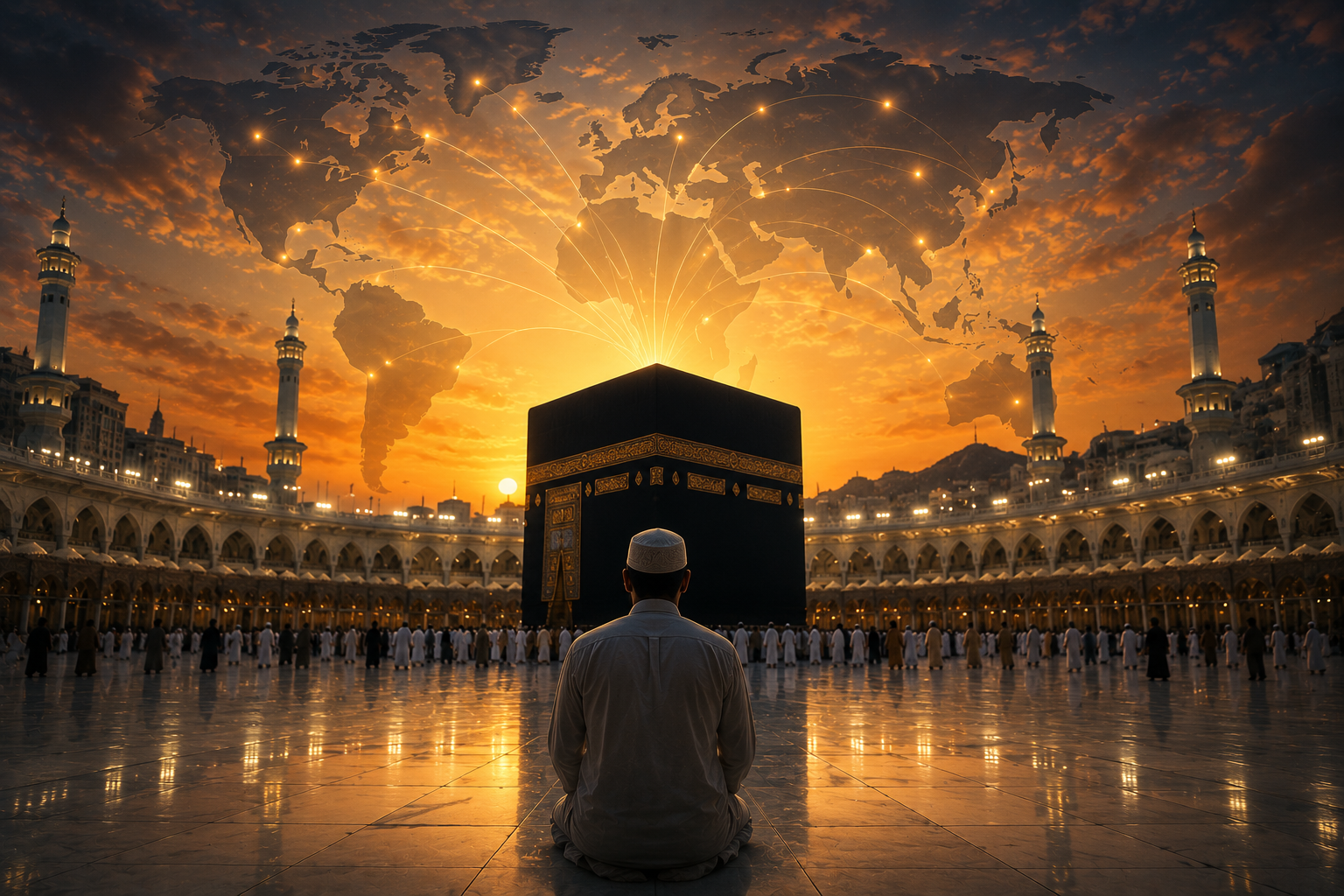
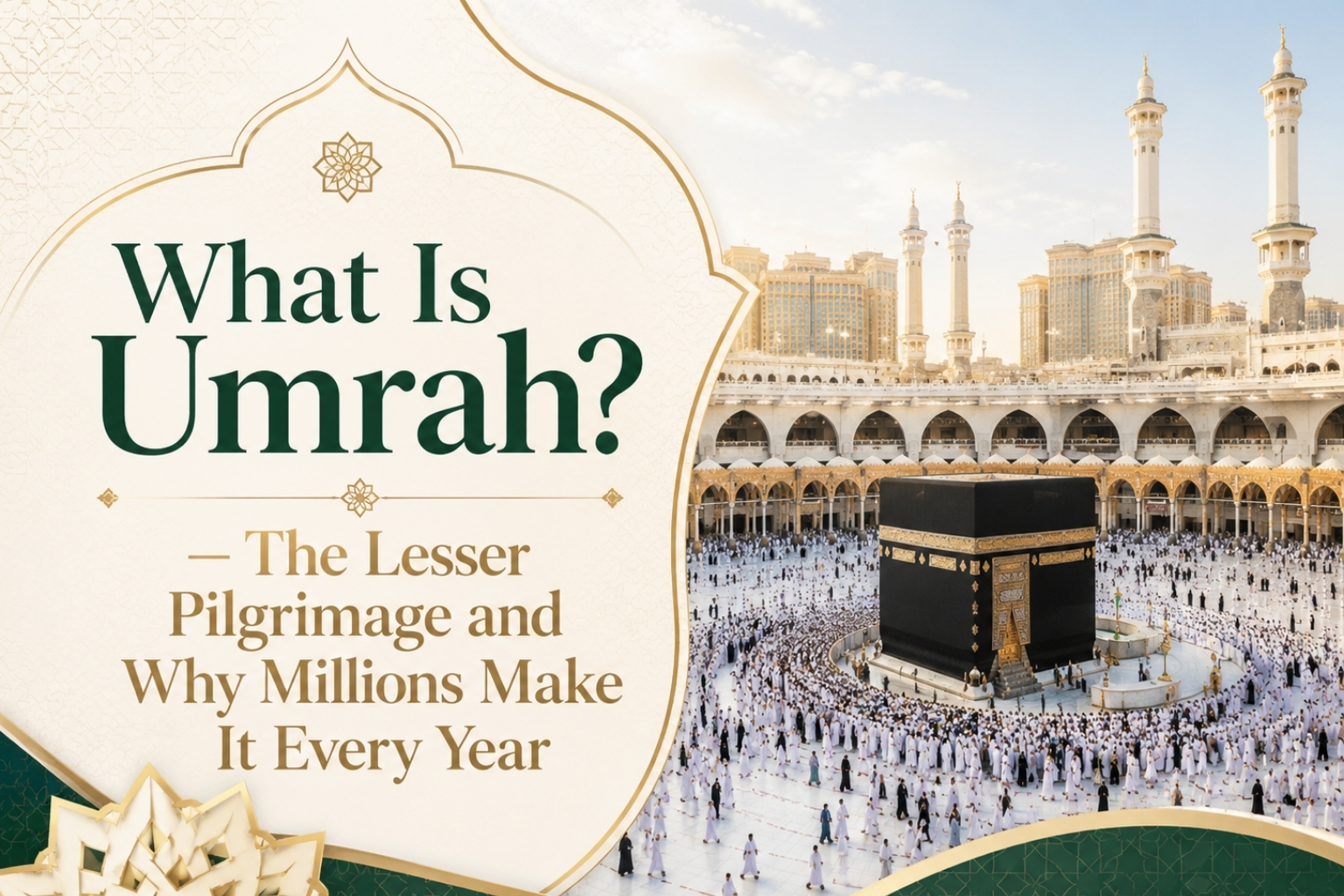
However, when we apply Tadabbur (deep Quranic reflection) to the spiritual geography of the world, we discover that Islam provides an extraordinary, year-round sanctuary for total psychological renewal: Umrah (the lesser pilgrimage). Umrah is not a rigid historical chore or a mere tourist excursion. In the framework of Islamic psychology, it functions as a deliberate spiritual intervention—an intentional escape from the noise of the worldly marketplace designed by Al-Khaliq (The Creator) to dismantle your anxieties, wash away your sins, and anchor your soul in trusting Allah’s plan.
The Core Blueprint: The Open Door of Mercy
The word Umrah linguistically stems from the Arabic root I’timar, which means to visit an inhabited place, or to intentionally journey toward a thriving site of devotion. Unlike Hajj (the major pilgrimage), which is highly restricted to a specific five-day window in the Islamic lunar calendar once a year, Umrah can be performed at any time, during any month, on any day of the year.
While Hajj is a strict legal obligation for those who are capable, Umrah is a highly emphasized voluntary sunnah—an open invitation to step out of your regular life whenever your soul feels fractured or compromised. Allah joins the two journeys together in the Quran when emphasizing the absolute purity of their intent:
“وَأَتِمُّوا الْحَجَّ وَالْعُمْرَةَ لِلَّهِ”
“And complete the Hajj and ‘Umrah for Allah.”
— Surah Al-Baqarah, 2:196
To understand the elegant, minimalist structure of this spiritual journey, the entire sequence of the rites of Umrah is organized below into a clear, scannable ledger:
The Core Station of Umrah | The Physical Boundary | The Rites & Sacred Movements | The Psychological & Spiritual Target |
1. The State of Ihram | The boundary lines (Miqāt) outside Mecca. | • Making the internal intention. • Changing into two unstitched white sheets (for men). • Reciting the Talbiyah. | The Stripping of Status. Rips away all worldly markers of wealth, class, and prestige. It forces the ego to stand raw, vulnerable, and completely equal to millions of fellow servants. |
2. The Tawaf | The Sacred Mosque (Al-Masjid al-Harām). | • Circling the Kaaba seven times counter-clockwise. • Beginning and ending at the Black Stone (Al-Hajar al-Aswad). | The Cosmic Realignment. Walking in uniform orbits teaches the overthinking intellect that Allah is the absolute gravity center of your life, pulling your focus out of daily anxieties. |
3. The Sa’i | The historic hills of Safa and Marwa. | • Walking and running seven times between the two hills. • Replicating the frantic search for water by Hajar (Hagar). | The Validation of Effort. A powerful lesson in Islamic psychology: you are commanded to exert your maximum physical effort while leaving the ultimate outcome completely to Allah. |
4. The Halq / Taqsir | The barbershops surrounding the sanctuary. | • Shaving the head entirely (Halq) or cutting the hair evenly (Taqsir). | The Total Unburdening. Shaving or clipping the hair symbolizes the final completion of the ritual and a physical manifestation of a clean slate. |
The Spiritual Mechanics: Eliminating the Burden of Poverty and Sin
One of the most profound drivers of contemporary anxiety is the dual weight of financial stress and subconscious guilt. We worry continuously about our economic security in a volatile marketplace, while simultaneously carrying the quiet, heavy baggage of our past moral mistakes and failures.
Umrah functions as a direct, divinely guaranteed antidote to both of these psychological burdens at once. The Prophet Muhammad revealed an extraordinary spiritual law that defies standard material economics:
“Perform Hajj and Umrah consecutively, for they remove poverty and sin just as the bellows remove impurity from iron, gold, and silver.” — Sunan At-Tirmidhi, 810
Through Tadabbur, we realize that Umrah is an intensive course in healing anxiety with the Quran. When you invest your hard-earned money and physical energy to make this journey solely for your Lord, Al-Razzaq (The Absolute Provider) removes the spiritual frequency of scarcity from your life. You return home with a deep, unshakeable confidence in your provisions and a pristine spiritual slate, unlocking a permanent sense of internal clarity.
The Lessons of Sa’i: Re-Learning the Architecture of Trust
The ritual of Sa’i—walking the 450-meter path between Safa and Marwa seven times—holds an incredible therapeutic secret for the modern overthinking mind.
When Hajar was left alone in the barren valley of Mecca with her infant son Ismail, their water supply ran completely dry. She did not sit down in despair or succumb to panic. Instead, she ran frantically between the two high points of Safa and Marwa, scanning the horizon for any sign of caravan life or resources. She completed her maximum physical effort, and only after her seventh trip did the miraculous water of Zamzam bubble up—not from the hills she ran between, but from beneath the feet of her crying child.
This is the ultimate blueprint for learning how to trust Allah. Sa’i teaches your anxious intellect a vital distinction: You are responsible for the effort, but you are never responsible for the outcome. Modern stress is caused by the arrogant, exhausting illusion that our labor creates the result. Umrah teaches you to run with your limbs while keeping your heart entirely still, anchored in the reality that your relief will arrive from places you could never predict or calculate.
The Umrah Re-Entry Protocol: Bringing Mecca Into Your Living Room
You do not have to wait until your plane lands in Jeddah to benefit from the ego-shattering and anxiety-healing mechanics of this pilgrimage. Use this structured sequence to practice the internal shifts of Umrah right where you are:
1.The Micro-Ihram (Voluntary Simplification):Step 1.
Choose one evening this week to declare a total digital and lifestyle lockdown. Step away from your luxury items, turn off your screens, put on your simplest clothing, and voice a quiet, firm internal intention (Niyyah): “O Allah, I am stepping out of the worldly marketplace for the next two hours to stand purely as your servant.”
2.The Internal Tawaf (Centering the Mind):Step 2.
Sit quietly on your prayer mat and engage in a slow, focused session of Dhikr (remembrance). Recite Subhanallah, Alhamdulillah, and Allahu Akbar with deep deliberation. Force your racing thoughts to stop orbiting your career goals or financial bills, and let your intellect circle the singular majesty of Al-Wakil.
3.The Daily Sa’i (Action Without Anxiety):Step 3.
Identify the most stressful, overwhelming task currently pending on your professional or domestic schedule. Approach it with the mindset of Safa and Marwa: execute your steps with absolute diligence, but mentally declare that you have completely handed the outcome over to the Creator under trusting Allah’s plan.
4.The Renewal Reset (The Fresh Start):Step 4.
Conclude your session by making a long, emotionally vulnerable Du’a in your native language, followed by a sincere prayer of Istighfar (seeking forgiveness). Stand up from your mat feeling physically unburdened, treat your past errors as entirely wiped away, and step back into your home with a clean, light heart.
Actionable Steps to Cultivate Unshakeable Balance
- Establish a “Zamzam Sanctuary” of Hydration: Keep a supply of water readily available in your daily workspace. Whenever you take a drink, pause for five seconds, face the direction of prayer (Qiblah), and make a silent, focused request for mental clarity and physical health. Transforming a basic biological necessity into an act of conscious devotion grounds your nervous system.
- Practice the Art of “Visual De-Cluttering”: The architectural beauty of the Sacred Mosque in Mecca rests in its immense, white, minimalistic spaces—free from commercial advertisements or visual noise. Replicate this environmental boundary by aggressively clearing the clutter from your bedroom and primary desk. A pristine, minimalist physical environment dramatically reduces cognitive load and protects your peace of mind.
- Utilize the “Talbiyah” Mantra to Stop Panic Loops: The foundational anthem of the pilgrim is the Talbiyah: “Labbayk Allahumma Labbayk” (Here I am, O Allah, at Your service). Whenever an unexpected crisis, financial shock, or intrusive thought begins to spark a panic loop in your mind, interrupt the momentum instantly by whispering this phrase. It signals to your subconscious mind that your ultimate loyalty and security belong to the King of kings, not the variables of the world.
Conclusion
The beautiful, timeless, and deeply restorative journey of Umrah in Islam stands as an essential spiritual compass for a human generation completely drowning in over-consumption, mental fragmentation, and existential dread. Islam reminds you that your precious life was never meant to be spent running on a frantic, never-ending treadmill of worldly validation. You are an honorable creation built for a much higher purpose—capable of absolute internal stillness, deep cosmic alignment, and direct communion with your Creator. When you choose to internalize the ego-shattering lessons of the white cloth, honor the perfect rhythm of the sacred steps, and anchor your daily lifestyle firmly in trusting Allah’s plan, the suffocating weight of modern anxiety completely dissolves—leaving your soul beautifully wrapped in an unshakeable state of absolute safety, clean energy, and everlasting spiritual success.