
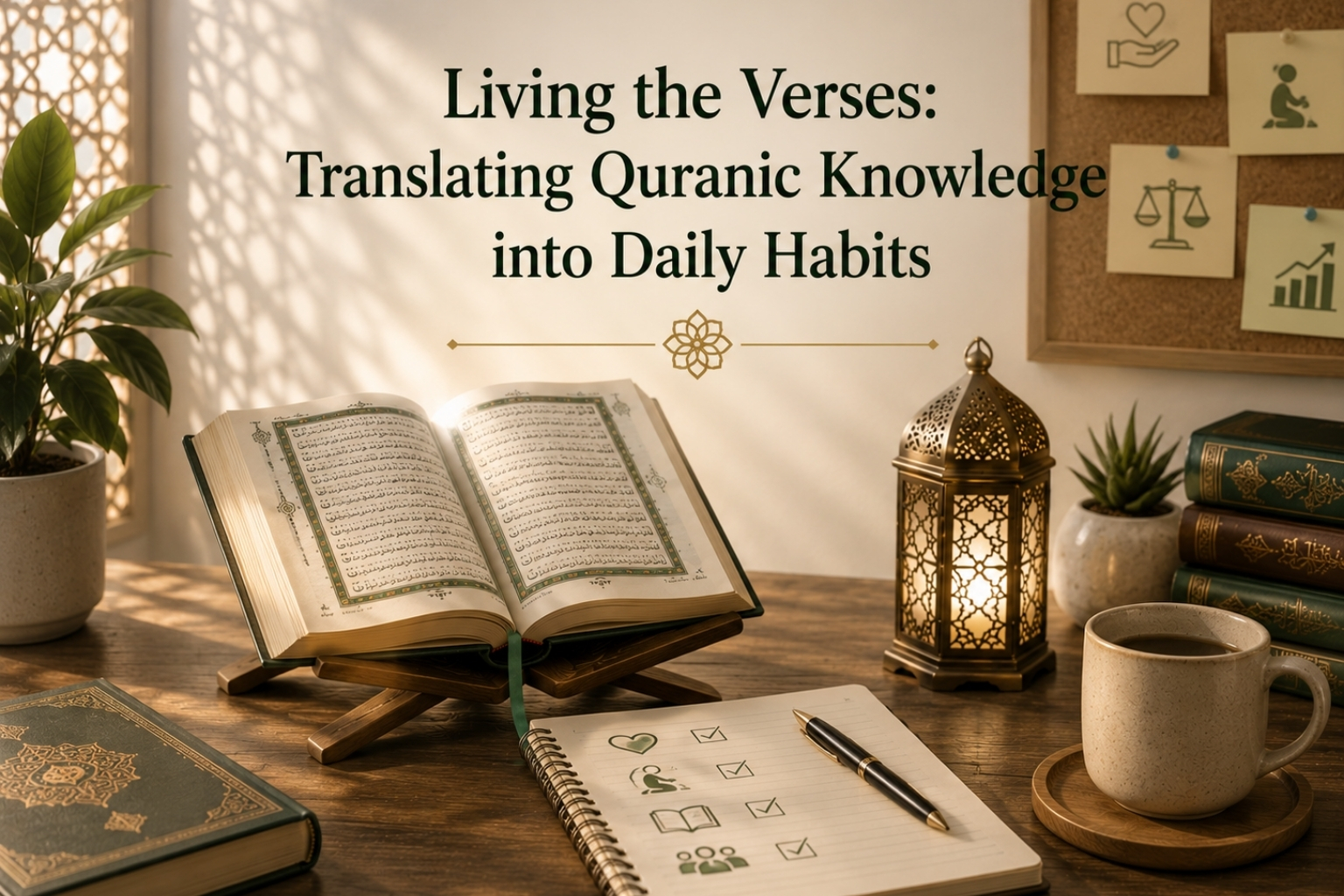

Knowledge without action is like a tree that bears no fruit. In our modern information age, it is incredibly easy to become a collector of facts. We can read books, listen to lectures, and memorize verses of the Holy Book, accumulating a vast amount of intellectual data. But the ultimate test of our relationship with the scripture is not how much we know; it is how much we live.
The concept of Practical Islam is built upon a simple foundation: transforming Quranic knowledge into daily habits. The earliest generation of Muslims understood this deeply; they famously wouldn’t memorize more than ten verses until they had fully implemented their moral and practical lessons into their behavior.
If you want to move past passive learning and begin living the verses, here is a practical guide to turning divine wisdom into sustainable, everyday habits.
The Trap of Intellectual Hoarding
When we read the text, it is easy to fall into the trap of treating it as a purely academic exercise. We might analyze the grammar of a verse, study its historical context, or admire its poetic rhythm. While these are essential steps, they are only the preparation.
The revelation itself challenges those who acquire knowledge but fail to apply it. True spiritual and character development occurs when the words jump off the page and begin to dictate how you speak to your family, how you manage your business, and how you behave when no one is watching. To experience the text’s real transformative power, every piece of knowledge must be paired with an immediate actionable habit.
A Practical Strategy to Build Quranic Habits
Building new habits can be challenging, but by using modern habit-building frameworks aligned with spiritual routines, you can easily bridge the gap between knowledge and action:
1. Implement the “One Verse, One Habit” Rule
Do not try to change your entire life overnight. When doing your daily reading or Tadabbur (reflection), isolate just one single verse that commands a specific ethical behavior or mindset. Commit to focusing entirely on that one verse for a full week.
- Example: If you read Surah Al-Isra (Verse 53), “And tell My servants to say those words that are best,” your goal for the week is to build the habit of pausing before you speak, removing sarcasm, and ensuring your words are kind.
2. Practice Habit Stacking
“Habit stacking” is a proven psychological technique where you anchor a new habit to an already established daily routine. You can beautifully apply this to your spiritual routine.
- The Formula: After I finish [Current Established Habit], I will practice [New Quranic Habit].
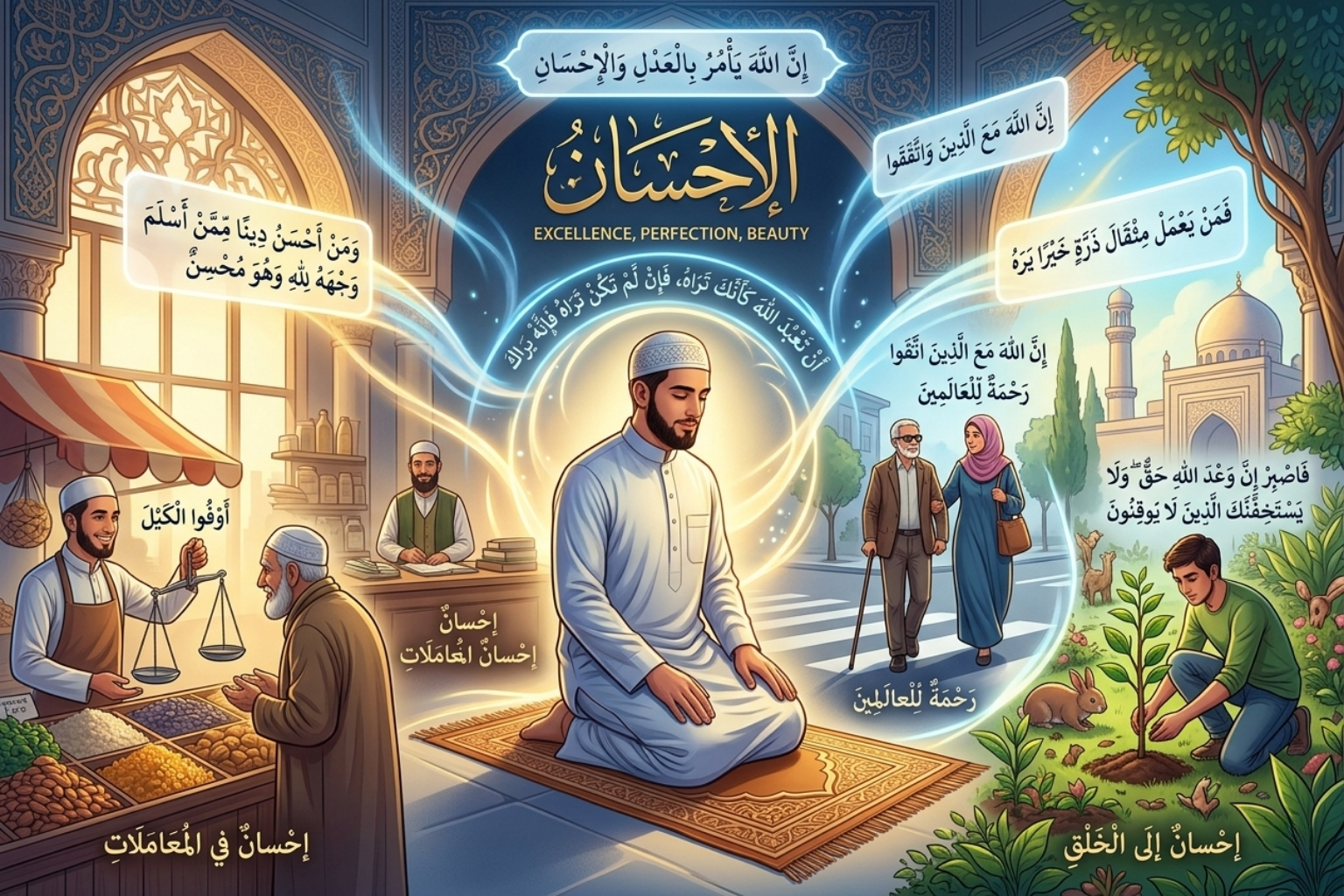
- Application: “After I finish my morning coffee, I will write down three things I am grateful for (applying the Quranic command of Shukr/Gratitude).” Or, “Before I open my work emails, I will take three deep breaths and make an intention to work with absolute honesty (applying the command of Ihsan/Excellence).”
3. Track Your Character Development
Keep a small section in your journal dedicated to tracking your behavioral changes. Don’t just track your ritual acts of worship; track your moral transactions. Ask yourself every evening:
- Did I manage my anger today as the text praises?
- Was I completely transparent and honest in my financial dealings today?
- Did I avoid speaking ill of others behind their backs?
Small, Consistent Habits Win the Race
When translating divine wisdom into daily life, remember the foundational rule of spiritual growth: consistency beats intensity. The Prophet Muhammad (peace be upon him) famously taught that the most beloved actions to the Creator are those that are continuous and consistent, even if they are very small.
You don’t need to perform massive, heroic acts to be a person who lives the revelation. A small habit of smiling at strangers, controlling your tongue during a disagreement, or spending five minutes in silent gratitude every morning is far more impactful than a massive spiritual sprint that leaves you exhausted and burnt out after a week.
Conclusion: Becoming a Walking Mirror of the Text
The ultimate goal of your Quranic journey is to become a living, walking mirror of the divine message. When people look at your manners, your integrity, your kindness, and your resilience, they should be seeing the practical reality of the Holy Book in action.