

The Kaaba Is the Holiest Site in Islam
The Kaaba is located inside المسجد الحرام (Al-Masjid Al-Haram) in the city of Makkah, Saudi Arabia.
It is considered the holiest place in Islam because it is connected to the worship of Allah dating back to Prophet Ibrahim عليه السلام (Abraham) and his son Ismail عليه السلام (Ishmael).
The Qur’an says:
“وَإِذْ يَرْفَعُ إِبْرَاهِيمُ الْقَوَاعِدَ مِنَ الْبَيْتِ وَإِسْمَاعِيلُ”
“And when Abraham and Ishmael were raising the foundations of the House…”
— Surah Al-Baqarah (2:127)
According to Islamic tradition, the Kaaba was established as a place dedicated entirely to the worship of one God.
Over time, however, idol worship entered Makkah, and hundreds of idols were eventually placed around the Kaaba by Arabian tribes before Islam.
When Prophet Muhammad ﷺ later conquered Makkah peacefully, the idols were removed, and the Kaaba was restored as a center of pure monotheistic 1 worship.
Muslims Do Not Worship the Kaaba
One of the most common misconceptions about Islam is the belief that Muslims worship the Kaaba.
In reality, Muslims worship Allah alone.
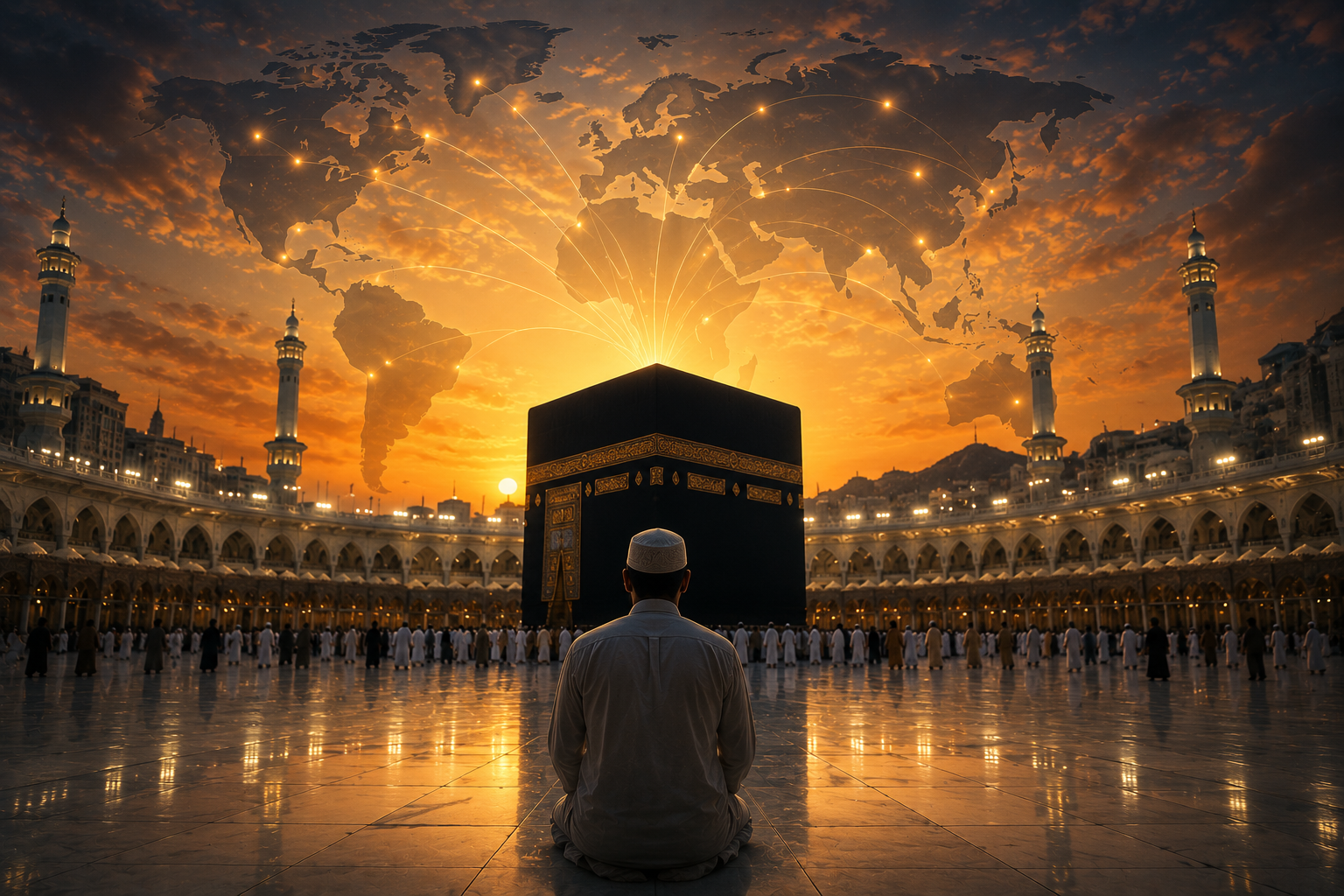
The Kaaba simply acts as the Qiblah — the direction Muslims face during prayer.
Without a unified 2 direction, people praying together across the world would face different directions randomly. The Kaaba creates spiritual unity among believers worldwide.
The Qur’an says:
“فَوَلِّ وَجْهَكَ شَطْرَ الْمَسْجِدِ الْحَرَامِ”
“So turn your face toward Al-Masjid Al-Haram.”
— Surah Al-Baqarah (2:144)
This command established the Kaaba as the permanent direction of Islamic prayer.
No matter where Muslims are located geographically, they face the same sacred 3 point while worshipping Allah.
The Kaaba Unites Millions of People
Few religious symbols unite people globally the way the Kaaba does.
Five times every day, millions of Muslims pray facing the same direction:
- Rich and poor
- Arab and non-Arab
- Black and white
- Leaders and ordinary people
All stand equally before Allah.
This unity becomes even more visible during Hajj — the annual pilgrimage 4 to Makkah.
Every year, millions of pilgrims gather around the Kaaba wearing simple white garments, removing visible signs of wealth, status, and nationality.
The scene powerfully reflects one of Islam’s central teachings:
all human beings are equal before Allah.
The Kaaba and the History of Prophets
The Kaaba is deeply connected to several prophets mentioned in the Qur’an.
Islamic tradition links the site to:
- Prophet Ibrahim (Abraham)
- Prophet Ismail (Ishmael)
- Prophet Muhammad ﷺ
The story of Hajar (Hagar), the mother of Ismail, is also closely tied to Makkah. According to Islamic history, she searched desperately for water in the desert until Allah provided the well of Zamzam — a well that still exists today near the Kaaba.
These stories remain central parts of Islamic worship during Hajj and Umrah.
For many believers, visiting the Kaaba creates a strong emotional connection with centuries of prophetic history.
Why Is the Kaaba Covered in Black Cloth?
The Kaaba is covered with a black cloth known as the Kiswah.
The cloth is decorated with embroidered 5 Qur’anic verses written in gold-colored Arabic calligraphy.
The Kiswah is replaced annually and has become one of the most recognizable symbols associated with Islam.
Despite its beauty and sacred status, Islam teaches that holiness belongs ultimately to Allah, not to objects themselves.
The Kaaba is honored because Allah honored it.
The Emotional Experience of Seeing the Kaaba
For many Muslims, seeing the Kaaba for the first time becomes one of the most emotional moments of their lives.
After years of praying toward it daily, standing before the Kaaba in person often creates overwhelming feelings of:
- Humility 6
- Gratitude
- Peace
- Reflection
- Spiritual closeness
Many people become emotional or cry upon first seeing it.
The experience is not connected to worshipping a structure, but to the spiritual meaning the Kaaba represents — devotion to Allah and connection to generations of worshippers before them.
Why the Direction of Prayer Matters
Some may wonder why direction matters in worship at all.
Islam teaches that humans benefit from structure, unity, and discipline in worship. Facing one direction creates order and collective identity 9.
The direction itself is not magical. What matters is obedience to Allah and unity among believers.
This principle can be seen clearly in congregational prayer, where rows of worshippers stand side by side facing the same point together.
The Kaaba symbolizes unity of purpose:
millions of people worship one Creator.
Conclusion
The Kaaba is the holiest place on Earth and the direction Muslims face during prayer. It is not worshipped, nor is it viewed as divine. Rather, it serves as a sacred symbol of unity and devotion 10 established for the worship of Allah alone.
Its history connects believers to the prophets Ibrahim, Ismail, and Muhammad عليهم الصلاة والسلام, while its presence continues to unite millions of people around the world every single day.
For Muslims, the Kaaba is far more than a structure made of stone and cloth. It is a reminder that despite differences in language, culture, and nationality, humanity ultimately turns toward one Creator.