
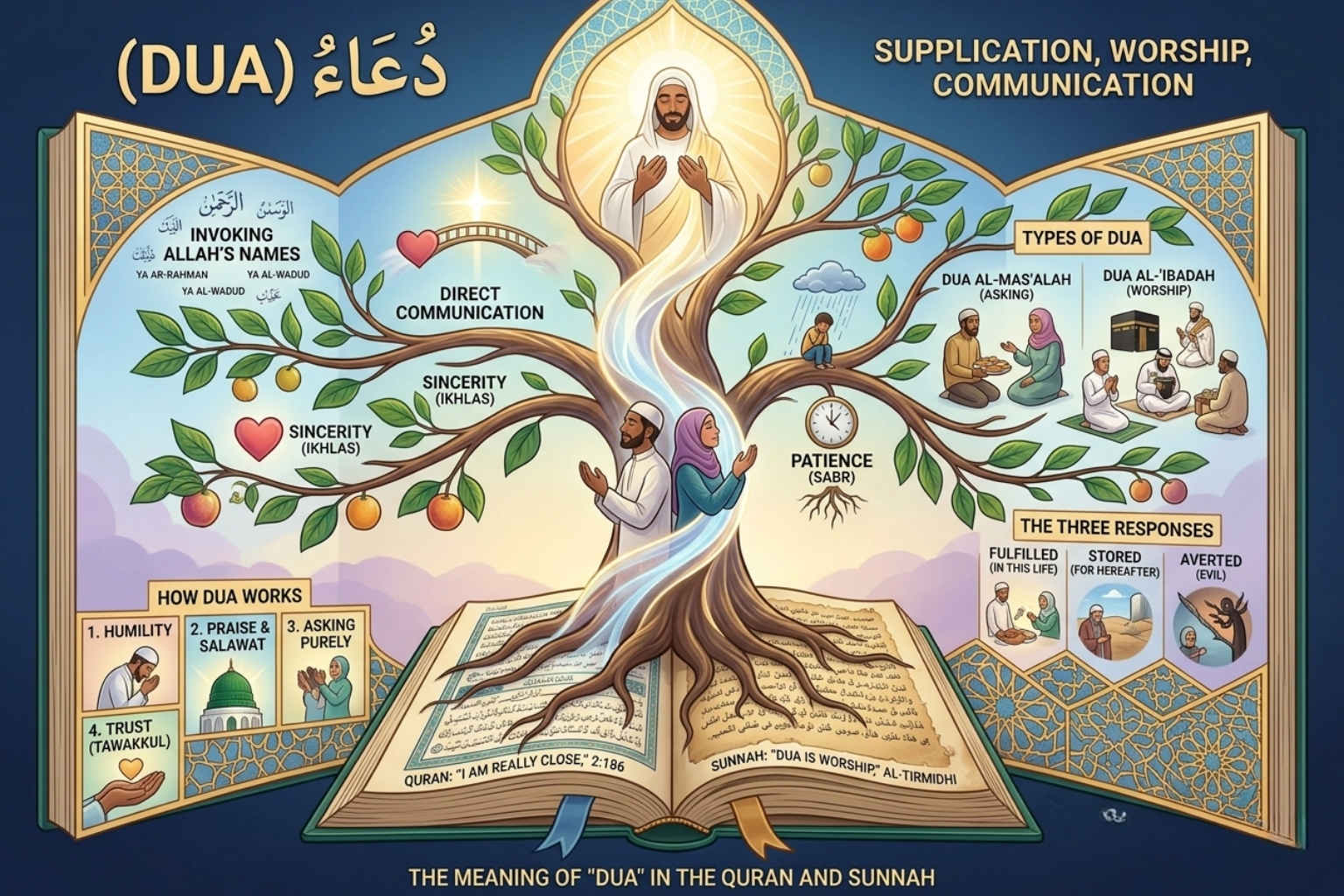

One of the most powerful and personal acts of worship in Islam is Dua 1 (الدعاء), which means supplication 2, calling upon Allah, or asking Him for help, mercy, and guidance.
The Quran and the Sunnah teach that Dua is a direct connection between a servant and Allah.
Through Dua, believers express their hopes, fears, gratitude, needs, and trust in their Creator.
Dua is not limited to times of hardship alone.
It is an act of worship that strengthens faith and reminds believers that Allah is always near and responsive.
What Does “Dua” Mean?
The Arabic word Dua comes from a root meaning “to call,” “to request,” or “to invoke.”
In Islamic teachings, Dua refers to:
- Calling upon Allah
- Asking Allah for help
- Seeking forgiveness and mercy
- Requesting guidance and blessings
- Speaking to Allah with sincerity
Dua can be made for both worldly needs and spiritual matters.
Dua Is an Act of Worship
The Prophet Muhammad ﷺ described Dua as one of the greatest forms of worship.
He ﷺ said:
الدُّعَاءُ هُوَ الْعِبَادَةُ
“Dua is worship.”
— Jami‘ At-Tirmidhi, Hadith 3247
This is because Dua reflects humility 3, dependence upon Allah, and belief in His power and mercy.
Allah Encourages Believers to Make Dua
The Quran repeatedly invites believers to call upon Allah.
Allah says:
وَقَالَ رَبُّكُمُ ادْعُونِي أَسْتَجِبْ لَكُمْ
“And your Lord says: Call upon Me; I will respond to you.”
— Surah Ghafir (40:60)
This verse shows Allah’s mercy and willingness to hear the prayers of His servants.
Allah Is Near
One of the most comforting verses about Dua in the Quran says:
وَإِذَا سَأَلَكَ عِبَادِي عَنِّي فَإِنِّي قَرِيبٌ ۖ أُجِيبُ دَعْوَةَ الدَّاعِ إِذَا دَعَانِ
“And when My servants ask you concerning Me — indeed I am near. I respond to the call of the caller when he calls upon Me.”
— Surah Al-Baqarah (2:186)
This verse teaches believers that Allah hears every sincere prayer.
Dua of the Prophets
The Quran contains many beautiful supplications made by the prophets.
Dua of Prophet Adam عليه السلام
رَبَّنَا ظَلَمْنَا أَنفُسَنَا وَإِن لَّمْ تَغْفِرْ لَنَا وَتَرْحَمْنَا لَنَكُونَنَّ مِنَ الْخَاسِرِينَ
“Our Lord, we have wronged ourselves, and if You do not forgive us and have mercy upon us, we will surely be among the losers.”
— Surah Al-A‘raf (7:23)
Dua of Prophet Yunus عليه السلام
لَا إِلَٰهَ إِلَّا أَنتَ سُبْحَانَكَ إِنِّي كُنتُ مِنَ الظَّالِمِينَ
“There is no god except You; glory be to You. Indeed, I was among the wrongdoers.”
— Surah Al-Anbiya (21:87)
These Dua teach humility, repentance 4, and trust in Allah.
The Etiquette of Du’a
Islamic teachings encourage believers to make Dua with sincerity 4 and good manners.
Important étiquettes include:
- Praising Allah before making requests
- Sending blessings 5 upon the Prophet ﷺ
- Asking with humility
- Having certainty that Allah hears
- Being patient and not giving up
The Prophet ﷺ said:
يُسْتَجَابُ لِأَحَدِكُمْ مَا لَمْ يَعْجَلْ
“A person’s Dua continues to be answered as long as he is not impatient.”
— Sahih al-Bukhari, Hadith 6340
Dua During Hardship 6
The Quran encourages believers to turn to Allah during difficulty and sadness.
Allah says:
أَمَّن يُجِيبُ الْمُضْطَرَّ إِذَا دَعَاهُ وَيَكْشِفُ السُّوءَ
“Who responds to the desperate one when he calls upon Him and removes harm?”
— Surah An-Naml (27:62)
Dua brings comfort, hope, and spiritual strength during trials.
The Power of Dua
The Prophet Muhammad ﷺ emphasized the importance of constantly calling upon Allah.
He ﷺ said:
لَيْسَ شَيْءٌ أَكْرَمَ عَلَى اللَّهِ مِنَ الدُّعَاءِ
“There is nothing more honorable to Allah than Dua.”
— Jami‘ At-Tirmidhi, Hadith 3370
Dua strengthens the believer’s connection with Allah and increases reliance 7 upon Him.
Conclusion
Dua in the Quran and Sunnah means calling upon Allah with sincerity, hope, humility, and faith.
The Quran teaches that Allah is near, listens to His servants, and responds to sincere supplications.
Through Dua, believers seek guidance, forgiveness, mercy 8, strength, and blessings while building a close and personal relationship with Allah.