

In an era defined by unparalleled material comfort, hyper-individualism, and endless digital connectivity, western society is quietly facing a massive psychological crisis. Beneath the surface of a highly optimized, affluent lifestyle lies a deep, pervasive epidemic of existential dread, loneliness, and chronic burnout. Modern culture tells us that freedom means having zero boundaries, that happiness is found in relentless self-optimization, and that our worth equals our digital footprint.
For millions of people, this endless treadmill has led directly to an exhausting state of chronic anxiety and a profound, aching void of meaning.
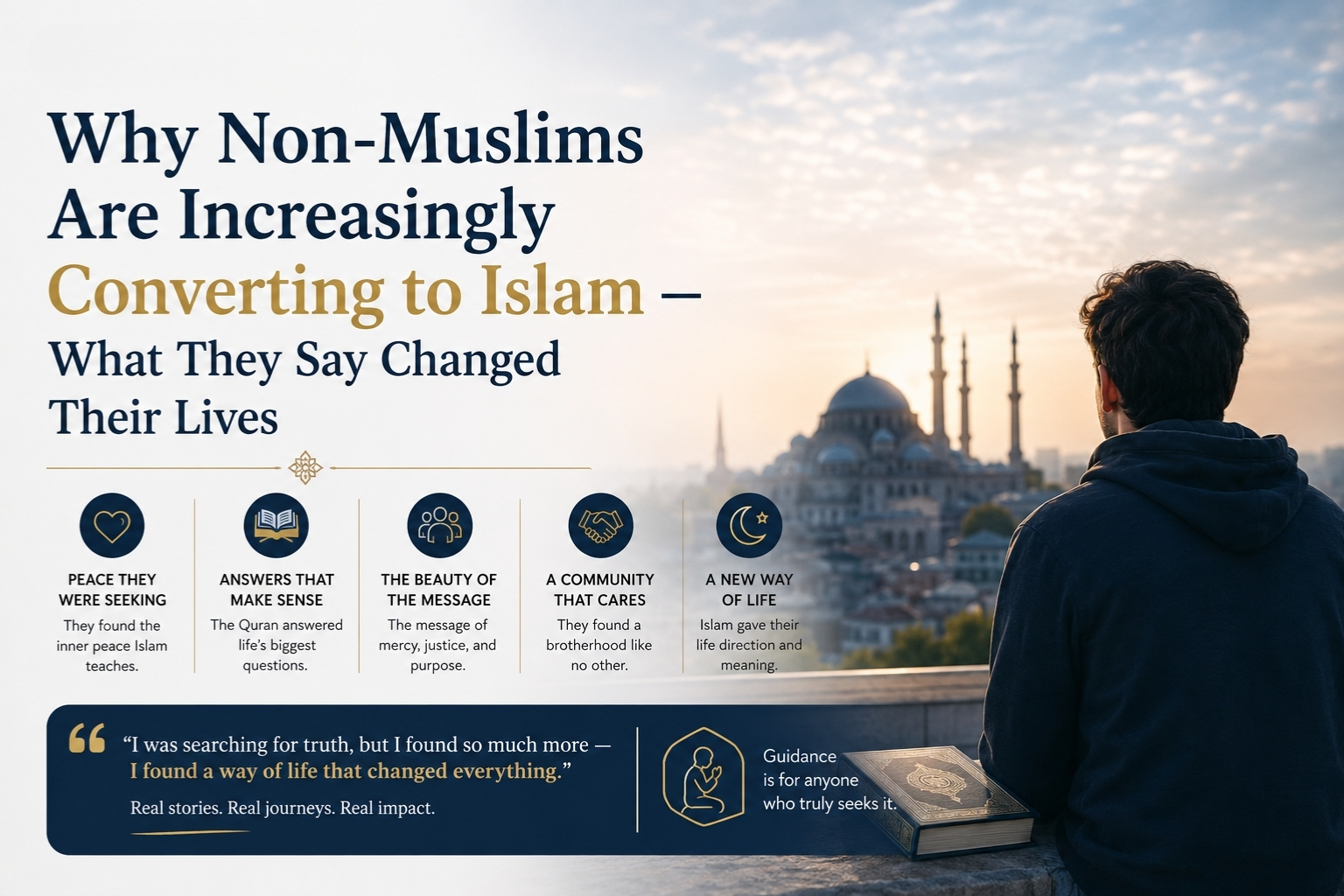
Surprisingly, an increasing number of individuals from non-Muslim backgrounds are stepping off this secular treadmill and choosing a path that modern media often portrays as rigid or restrictive: Islam.
When we listen directly to the raw, unscripted testimonies of converts worldwide, we find that their decisions have nothing to do with political trends or cultural pressure. Instead, they describe a profound psychological and spiritual awakening. By approaching the faith through Tadabbur (deep Quranic reflection), they discovered a pristine framework for healing anxiety with the Quran, structural boundaries that shield the psyche, and a direct, unmediated path to ultimate peace of mind.
The Intellectual Liberation of Absolute Monotheism (Tawhid)
For many converts, the journey to Islam begins as an intellectual rescue mission. Having grown up either in highly complex theological systems involving multi-layered mythologies, or in the bleak, random universe of materialist atheism, the human mind naturally craves structural clarity.
When they read the Quran for the first time, they are struck by the uncompromising, pristine simplicity of Tawhid (the absolute oneness of God).
THE COGNITIVE SHIFT: FROM CHAOS TO TAWHID | |
THE SECULAR PAIN: | Constantly serving multiple shifting “gods”— corporate validation, beauty standards, social algorithms, and financial anxiety. |
THE QURANIC REVELATION: | One Sovereign Creator. One ultimate source of judgment. One divine anchor. |
THE PSYCHOLOGICAL OUTCOME: | Complete internal integration. The mind is freed from pleasing a chaotic, fickle world. |
Converts frequently note that learning how to trust Allah as the singular, all-wise, all-merciful Director of the universe immediately cures the exhausting fragmentation of the modern mind. In Islamic psychology, realizing that you answer to only One Creator completely strips away the pressure to perform for a judgmental society. It allows an individual to breathe, consolidate their fragmented identity, and anchor their self-worth to an unshakeable, loving divine baseline.
The Shield of Divine Boundaries (Haram and Halal)
One of the most profound ironies of modern conversion stories is that westerners are falling in love with Islam’s boundaries. While modern secularism champions absolute, boundaryless autonomy, converts are openly testifying that this lack of structure is precisely what was making them sick.
Without boundaries, human beings easily become trapped in toxic dopamine loops, consumerist addictions, and exploitative relational dynamics.
When new Muslims discover the concepts of Halal (the wholesome) and Haram (the protected/prohibited), they don’t experience it as a cage. They experience it as a sanctuary.
“وَيَضَعُ عَنْهُمْ إِصْرَهُمْ وَالْأَغْلَالَ الَّتِي كَانَتْ عَلَيْهِهِمْ”
“And He unburdens them of their heavy loads and the shackles which were upon them.”
— Surah Al-A’raf, 7:157
Converts consistently report that walking away from alcohol culture, hyper-sexualized environments, interest-based debt traps, and superficial social hierarchies feels like an incredible unburdening. By stepping inside the clean, safe boundaries of trusting Allah’s plan, they find their mental health, their bodies, and their self-respect beautifully insulated from the systemic exploitation of the modern marketplace.
Reclaiming Identity: From Consumer Asset to Divine Trustee (Khalifah)
In a hyper-capitalist world, human beings are continuously conditioned to view themselves as commodities. Your value is determined by your utility, your youth, your corporate output, or your aesthetic appeal. This constant objectification turns the inner world into a battlefield of deep inadequacy and identity crises.
Islam completely subverts this degradation by handing the human being an unassailable, noble cosmic title: Khalifah (a divine steward/trustee on earth).
“Indeed, I am making upon the earth a successive authority (Khalifah).” — Surah Al-Baqarah, 2:30
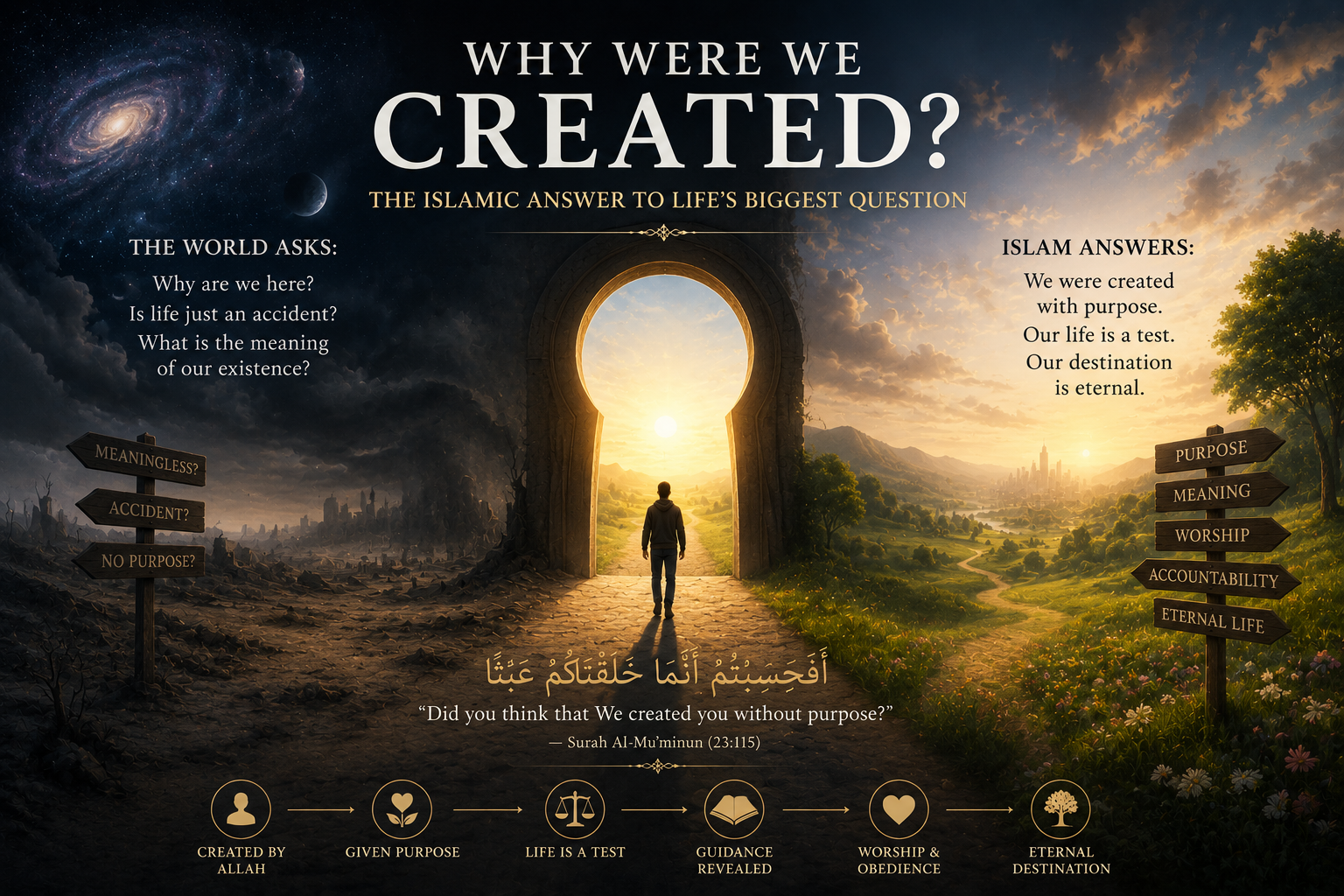
When a person accepts Islam, their worldview instantly shifts from self-centered consumption to divinely backed stewardship. They realize they are not a random accident of evolution, nor are they a corporate cog. They are an authorized ambassador of the Almighty, engineered to bring justice, mercy, and excellence (Ihsan) into their unique sphere of influence.
This profound shift in Islamic psychology provides an immediate antidote to existential dread—giving new Muslims a rock-solid sense of cosmic purpose that no economic recession or social media trend can ever take away.
The Therapeutic Rhythm of the Five Daily Prayers (Salah)
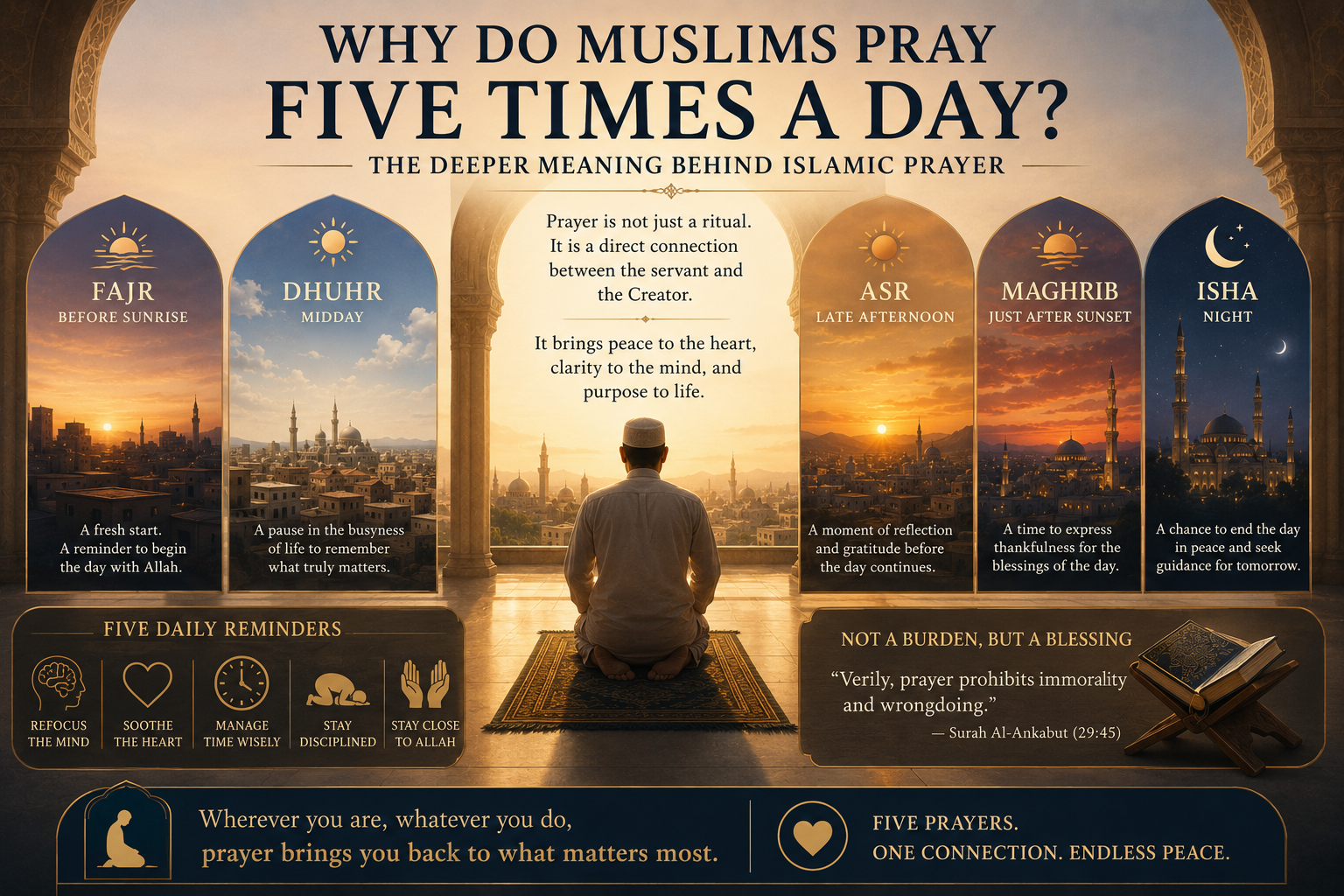
When asked what specific practice structurally changed their day-to-day lives, almost every convert points to the Salah (the five daily ritual prayers). In a frantic, non-stop world where our attention spans are continuously commodified, the human nervous system is kept in a permanent state of fight-or-flight.
Salah acts as a mandatory, divinely scheduled nervous system reset.
Attribute | Modern Mindfulness Trends | The Quranic Reality of Salah |
Frequency | Sporadic, optional, or easily skipped | 5 Strategically timed alignments per day |
Physicality | Static sitting or stretching | Dynamic prostration (Sujud) dropping stress hormones |
Cognitive Core | Blanking the mind or looking inward | Direct, loving dialogue with the Creator of reality |
Social Aspect | Deeply individual and isolated | Side-by-side communal equality, zero hierarchy |
New Muslims frequently describe the act of Sujud (prostration)—placing their forehead flat upon the ground—as the most physically and emotionally liberating experience of their lives. It is the ultimate physical manifestation of leaving the weight of the universe to Al-Wakeel (The Ultimate Trustee), allowing them to step back onto the pavement of daily life with total mental clarity, spiritual alignment, and unmatched emotional resilience.
Conclusion
The remarkable, accelerating wave of people converting to Islam across the western world is a powerful, living testament to the human soul’s natural thirst for divine alignment. These individuals are not searching for a new cultural identity; they are searching for reality. They are discovering that Islam is not a foreign, media-skewed political ideology, but a breathtaking, deeply therapeutic manual for optimal human flourishing. Through the restorative practices of Istighfar, the mental liberation of Tawhid, and the calming rhythms of prophetic mindfulness, they are successfully finding a sanctuary from the frantic, exhausting storm of modern life. When a human heart bravely strips away cultural distortions, chooses to submit to its true Creator, and rests securely within the profound safety of Allah’s plan, all the artificial anxieties and existential shadows of this world instantly evaporate—leaving the mind beautifully wrapped in an unshakeable state of profound safety, enduring tranquility, and everlasting spiritual success.