

What Does “Halal” Mean in Islam? Understanding One of Islam’s Most Important Concepts
One of the most recognized Arabic words in the world today is the word Halal.
Many people first hear it in connection with food labels, restaurants, or meat products. But in Islam, the meaning of Halal goes far beyond what a person eats.
Halal is a complete way of living based on morality, purity, honesty, and obedience to Allah.
The Arabic word Halal simply means:
permissible 1, lawful, or allowed.
Its opposite is Haram, which means forbidden.
These concepts shape many areas of life, including:
- Food and drink
- Business and finance
- Clothing
- Relationships
- Speech
- Entertainment
- Personal behavior
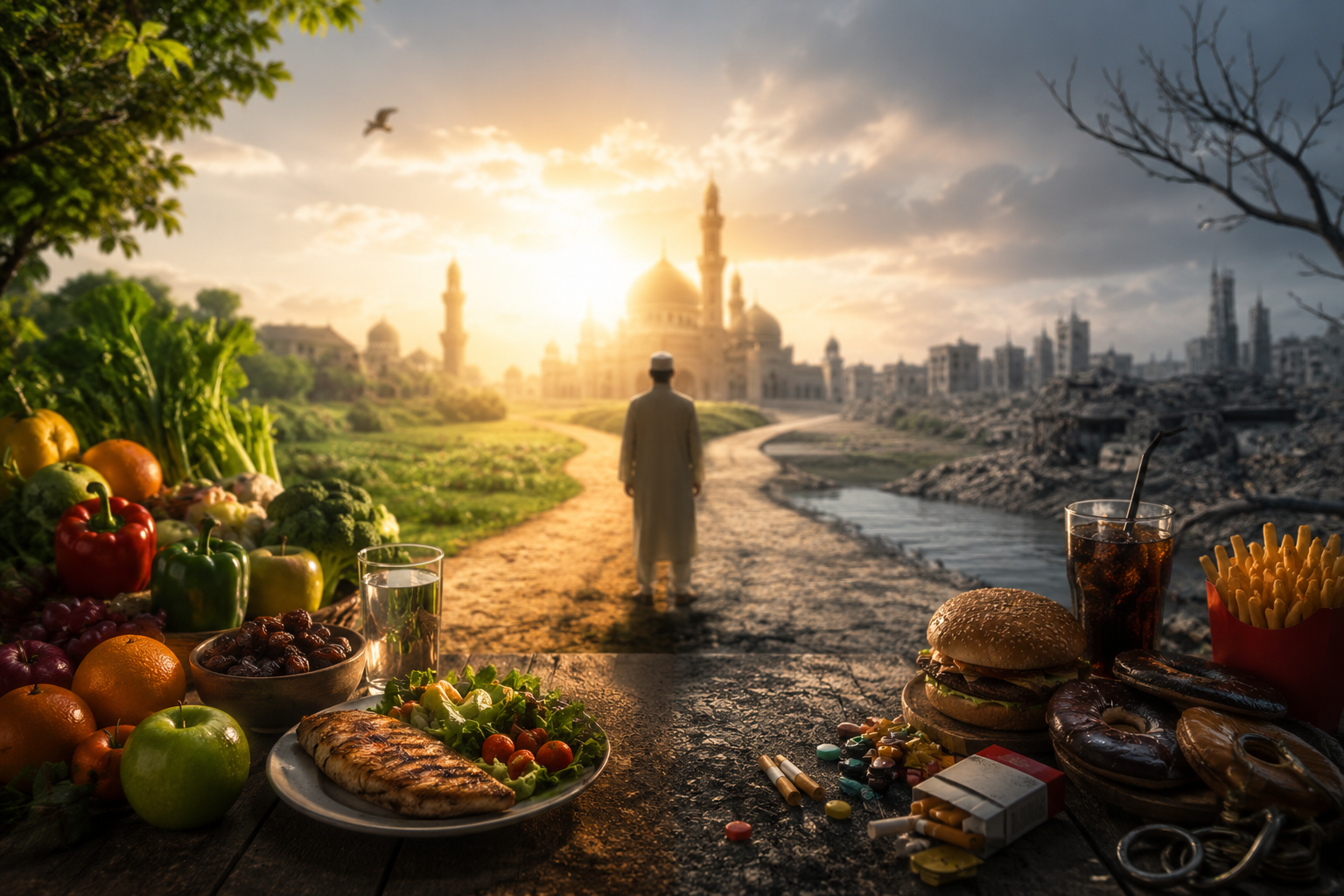
Islam teaches that human beings should not live only according to desire or impulse 2. Instead, life should be guided by principles established by Allah for the benefit of humanity.
Halal Is About More Than Food
Outside the Muslim world, Halal is often associated only with food.
While food is certainly part of it, the concept itself is much broader.
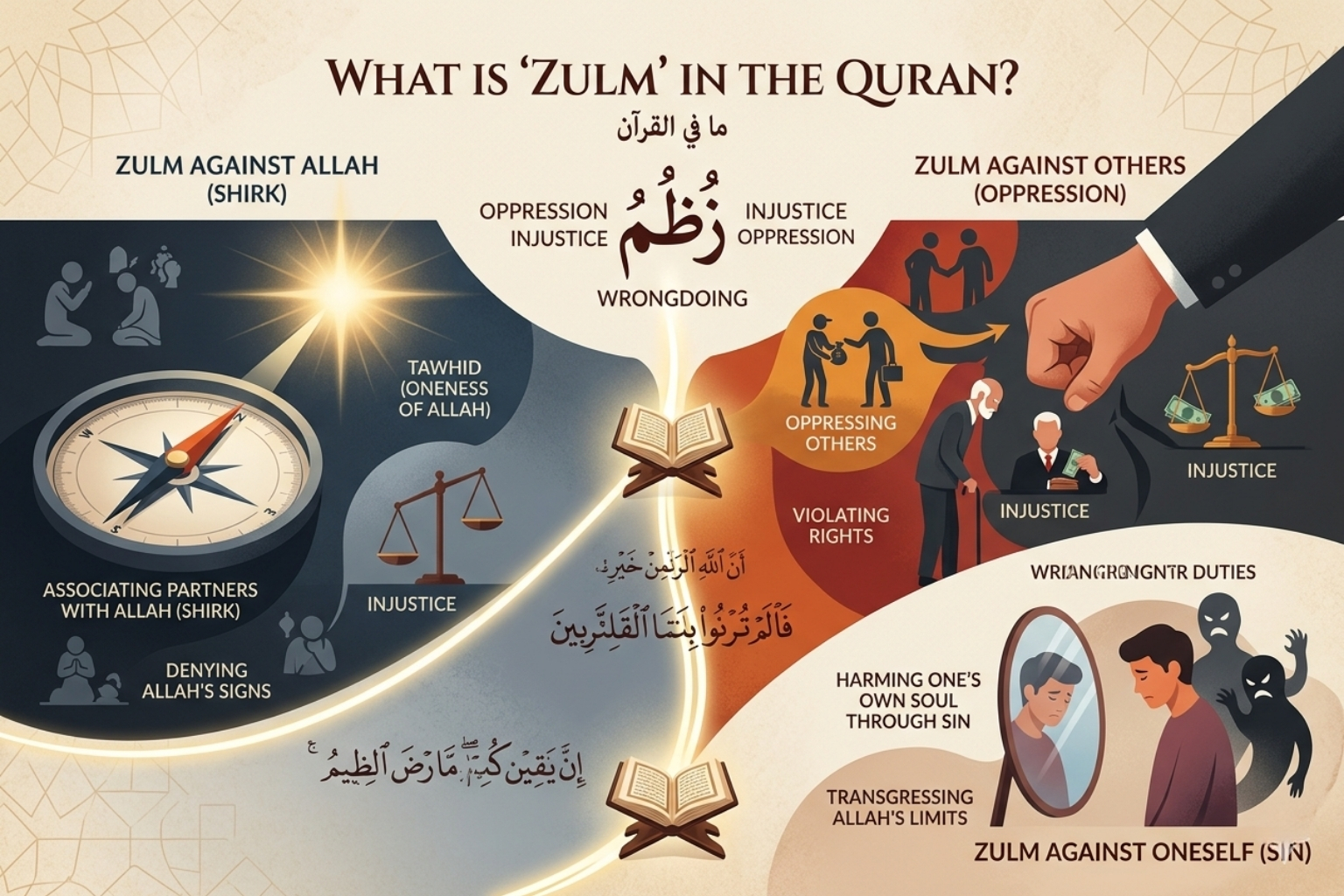
A person can eat Halal food while still engaging in dishonest business, ظلم (oppression), or harmful behavior. Islam therefore treats Halal as a complete ethical framework 3 rather than a dietary label alone.
For example:
- Earning money honestly is Halal
- Speaking truthfully is Halal
- Treating parents kindly is Halal
- Cheating, stealing, and oppression are Haram
This understanding connects spirituality directly to daily life.
Why Does Islam Divide Things Into Halal and Haram?
Islam teaches that Allah created human beings and fully understands what benefits or harms them.
Because of this, Islamic guidance is not viewed as arbitrary 4 restrictions. Rather, Halal and Haram exist to protect:
- Faith
- Health
- Morality
- Family
- Society
- Human dignity
The Qur’an says:
“يَا أَيُّهَا النَّاسُ كُلُوا مِمَّا فِي الْأَرْضِ حَلَالًا طَيِّبًا”
“O mankind, eat from what is lawful and pure on the earth.”
— Surah Al-Baqarah (2:168)
Notice that the verse mentions not only what is lawful, but also what is pure and good.
Islam consistently connects external actions with inner spiritual wellbeing.
Halal Food in Islam
Food is one of the most discussed aspects of Halal.
Islam permits many foods while prohibiting certain things such as:
- Pork
- Blood
- Alcohol
- Animals improperly slaughtered
The Qur’an says:
“حُرِّمَتْ عَلَيْكُمُ الْمَيْتَةُ وَالدَّمُ وَلَحْمُ الْخِنزِيرِ”
“Forbidden to you are dead animals, blood, and the flesh of swine.”
— Surah Al-Ma’idah (5:3)
In Islamic slaughter, animals must be treated carefully and slaughtered in the name of Allah with mercy and respect.
This reflects Islam’s broader teaching that even animals should not suffer unnecessarily.
Halal Earnings Matter Deeply in Islam
Islam places enormous importance on earning money honestly.
A person’s income affects:
- Family life
- Worship
- Character
- Spiritual wellbeing
Because of this, Islam strongly prohibits:
- Theft
- Fraud
- Bribery
- Interest-based exploitation 5
- Dishonest trade
The Prophet Muhammad ﷺ said:
“إِنَّ اللَّهَ طَيِّبٌ لَا يَقْبَلُ إِلَّا طَيِّبًا”
“Allah is pure and accepts only what is pure.”
— Sahih Muslim (1015)
This principle teaches that success is not measured only by how much money a person earns, but also by how it is earned.
Halal Is Connected to Purity of the Heart
One remarkable aspect of Islam is that actions are judged not only externally, but also by intention.
A person may technically avoid Haram actions while still carrying:
- Arrogance
- Hatred
- Dishonesty
- Envy
- Corruption in the heart
Islam therefore connects Halal living with spiritual purification.
The Prophet Muhammad ﷺ said:
“أَلَا وَإِنَّ فِي الْجَسَدِ مُضْغَةً… إِذَا صَلَحَتْ صَلَحَ الْجَسَدُ كُلُّهُ”
“Indeed, there is a piece of flesh in the body — if it is sound, the whole body becomes sound.”
— Sahih al-Bukhari (52), Sahih Muslim (1599)
The hadith then explains that this “piece of flesh” is the heart.
This is why Islam focuses not only on outward behavior, but also on sincerity 6 and moral character.
Islam Does Not Make Life Impossible
Some people assume Islam forbids most pleasures of life. In reality, Islam permits far more than it prohibits.
The general principle in Islam is that things are permissible unless clearly forbidden.
The Qur’an says:
“قُلْ مَنْ حَرَّمَ زِينَةَ اللَّهِ الَّتِي أَخْرَجَ لِعِبَادِهِ”
“Say: Who has forbidden the beauty Allah has produced for His servants?”
— Surah Al-A‘raf (7:32)
Islam allows enjoyment of:
- Food
- Marriage
- Business
- Beauty
- Recreation
- Clothing
- Travel
As long as these remain within ethical and moral boundaries.
The goal is balance — not extreme restriction 7 nor uncontrolled desire.
Why Halal Matters Spiritually
In Islam, daily choices affect the soul.
What a person consumes, says, earns, watches, and practices all influence the heart gradually over time.
Halal living therefore becomes a form of worship.
Even ordinary actions — eating, working, sleeping, spending money — can carry spiritual value when done sincerely and correctly.
This transforms everyday life into something meaningful and connected to Allah.
Halal in the Modern World
Today, the global Halal industry includes:
- Food products
- Cosmetics
- Finance
- Pharmaceuticals
- Travel services
But despite commercial growth, the true meaning of Halal remains spiritual and ethical at its core.
Halal is not merely branding or marketing.
It represents a lifestyle centered on purity, honesty, moderation 8, and obedience to Allah.
Conclusion
The word Halal means far more than lawful food. In Islam, it represents a complete way of living guided by morality, responsibility, and spiritual awareness 9.
From food and business to speech and personal behavior, Halal encourages people to live with honesty, purity, and balance.
Islam teaches that every human action carries spiritual weight. Because of this, even ordinary daily choices can become acts of worship when aligned with what Allah has permitted.
For millions around the world, Halal is not simply a rule system — it is part of living a life connected to faith, discipline, and moral purpose.