
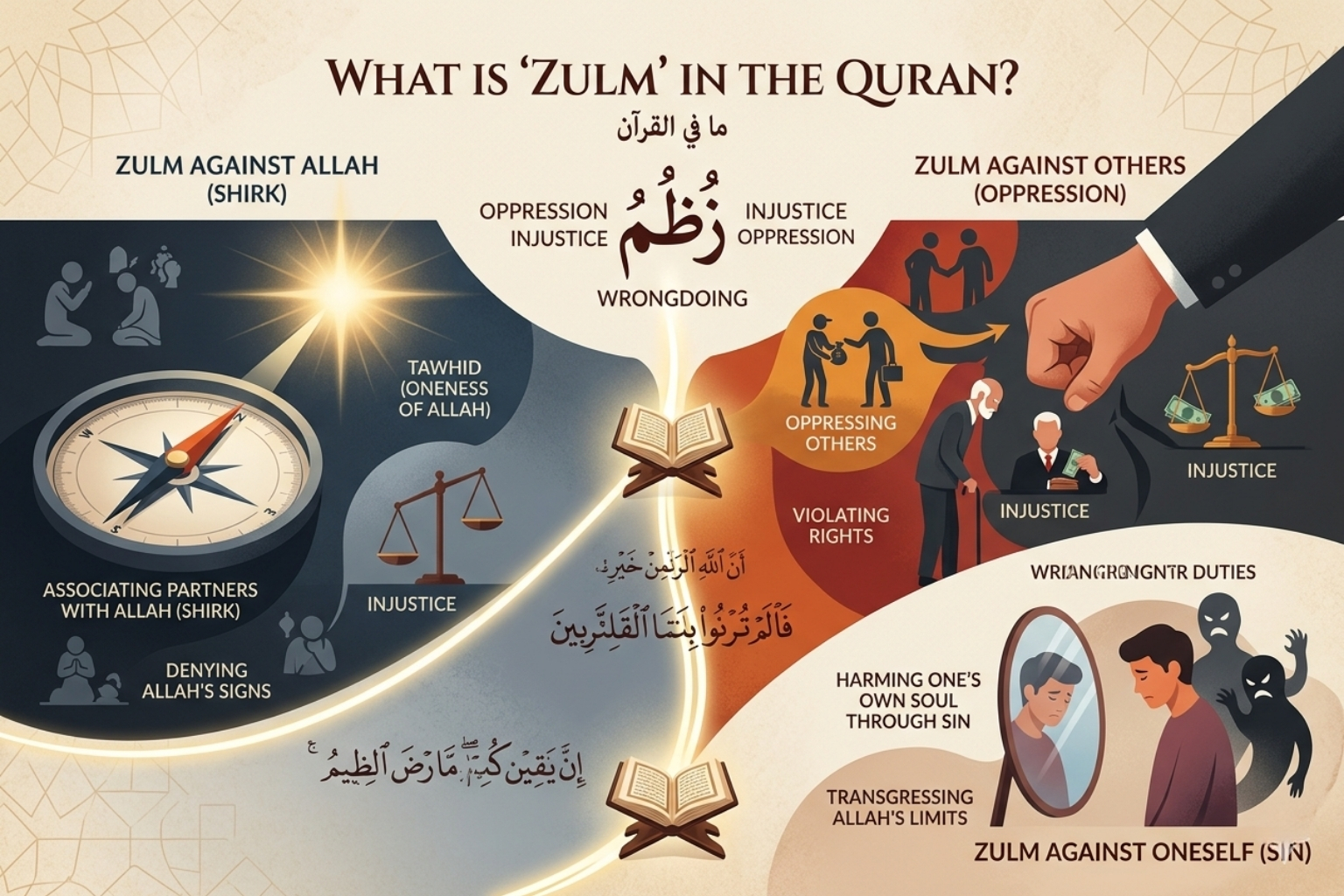

One of the important moral concepts repeatedly mentioned in the Quran is Zulm 1 (ظلم).
The word is commonly translated as injustice, oppression, wrongdoing, or placing something where it does not belong.
The Quran strongly warns against Zulm and describes justice as one of the foundations of faith and righteous living.
Understanding the meaning of Zulm helps explain how Islam views fairness, human rights, personal responsibility, and the treatment of others.
What Does “Zulm” Mean?
The Arabic word Zulm carries meanings related to injustice, unfairness, and wrongdoing.
In the Quranic sense, Zulm includes:
- Oppressing others
- Violating rights
- Acting unfairly
- Harming people unjustly
- Committing sins against oneself
- Rejecting truth and guidance
A person who commits Zulm is called a Zalim 2 (ظالم).
The Quran uses the word in both spiritual and social contexts.
Allah Does Not Commit Zulm
The Quran repeatedly emphasizes that Allah is perfectly just and never wrongs anyone.
Allah says:
وَلَا يَظْلِمُ رَبُّكَ أَحَدًا
“And your Lord does injustice to no one.”
— Surah Al-Kahf (18:49)
This verse highlights the absolute justice of Allah in judgment, mercy, and accountability.
Zulm Against Others
One common form of Zulm is oppression 3 or injustice toward people.
Islam strongly commands fairness, honesty, and protecting the rights of others.
Allah says:
إِنَّ اللَّهَ يَأْمُرُ بِالْعَدْلِ وَالْإِحْسَانِ
“Indeed, Allah commands justice and excellence.”
— Surah An-Nahl (16:90)
Examples of Zulm against others include:
- Cheating
- Stealing
- Lying
- Abuse
- Corruption 4
- Taking rights unfairly
The Prophet Muhammad ﷺ warned against oppression.
He ﷺ said:
اتَّقُوا الظُّلْمَ فَإِنَّ الظُّلْمَ ظُلُمَاتٌ يَوْمَ الْقِيَامَةِ
“Beware of ظلم, for ظلم will be darkness on the Day of Resurrection.”
— Sahih Muslim, Hadith 2578
Zulm Against Oneself
The Quran also describes sin and disobedience as a form of self-oppression.
When people commit sins, they harm their own souls spiritually.
Allah says:
وَمَا ظَلَمُونَا وَلَٰكِن كَانُوا أَنفُسَهُمْ يَظْلِمُونَ
“They did not wrong Us, but they wronged themselves.”
— Surah Al-Baqarah (2:57)
This teaches that sinful actions ultimately damage the individual before anyone else.
Shirk as the Greatest Zulm
The Quran describes Shirk 5 — associating partners with Allah — as the greatest form of Zulm.
Luqman عليه السلام advised his son:
يَا بُنَيَّ لَا تُشْرِكْ بِاللَّهِ ۖ إِنَّ الشِّرْكَ لَظُلْمٌ عَظِيمٌ
“O my son, do not associate anything with Allah. Indeed, Shirk is a great injustice.”
— Surah Luqman (31:13)
This is because Shirk violates the rights of Allah by directing worship to others besides Him.
Justice in Islam
Islam teaches believers to remain just even during conflict or disagreement.
Allah says:
وَلَا يَجْرِمَنَّكُمْ شَنَآنُ قَوْمٍ عَلَىٰ أَلَّا تَعْدِلُوا ۚ اعْدِلُوا هُوَ أَقْرَبُ لِلتَّقْوَىٰ
“Do not let the hatred of a people prevent you from being just. Be just; that is closer to righteousness.”
— Surah Al-Ma’idah (5:8)
Justice in Islam is not based on emotions, race, wealth, or status.
The Consequences of Zulm
The Quran repeatedly warns that oppression and injustice lead to destruction and accountability.
Allah says:
وَتِلْكَ الْقُرَىٰ أَهْلَكْنَاهُمْ لَمَّا ظَلَمُوا
“And those towns — We destroyed them when they committed ظلم.”
— Surah Al-Kahf (18:59)
Zulm harms individuals, societies, and communities.
Mercy and Repentance
Even after committing wrongdoing, the Quran encourages repentance 6 and returning to Allah.
Allah says:
إِنَّ اللَّهَ يَغْفِرُ الذُّنُوبَ جَمِيعًا
“Indeed, Allah forgives all sins.”
— Surah Az-Zumar (39:53)
Islam teaches believers to correct injustice, seek forgiveness, and restore the rights of others whenever possible.
Conclusion
Zulm in the Quran means injustice, oppression, wrongdoing, and violating rights.
The Quran strongly condemns all forms of ظلم, whether against Allah, other people, or oneself.
At the same time, Islam teaches justice, mercy, accountability, and repentance as essential values for building righteous individuals and societies.