

Why Do Muslims Perform Wudu Before Prayer? The Spiritual and Physical Meaning of Purification in Islam
Before Muslims stand in prayer, they first wash specific parts of the body in a process known as Wudu — often translated as ablution 1.
Several times each day, millions of people around the world pause before prayer to wash:
- Their hands
- Mouth
- Face
- Arms
- Head
- Feet
To someone unfamiliar with Islam, this practice may appear to be only a physical cleaning ritual. But Wudu carries a much deeper meaning.
In Islam, prayer is not approached casually. Standing before Allah is considered a sacred 2 act of worship that deserves preparation — physically, mentally, and spiritually.
Wudu therefore becomes more than washing the body. It becomes a moment of purification 3, reflection, and readiness before entering prayer.
Cleanliness Holds a Special Place in Islam
Islam places enormous importance on cleanliness and personal purity.
The Prophet Muhammad ﷺ said:
“الطُّهُورُ شَطْرُ الْإِيمَانِ”
“Purity is half of faith.”
— Sahih Muslim (223)
This teaching reflects how Islam connects physical cleanliness with spiritual wellbeing 4.
Cleanliness in Islam is not limited to appearance alone. It extends to:
- The body
- Clothing
- Environment
- Speech
- Intentions
- The heart itself
Wudu becomes part of this broader concept of purification in daily life.
What Happens During Wudu?
The basic steps of Wudu include washing:
- The hands
- The mouth
- The nose
- The face
- The arms
- Wiping the head
- The feet
This process is usually completed within only a few minutes, yet it is repeated multiple times daily before prayer.
The Qur’an says:
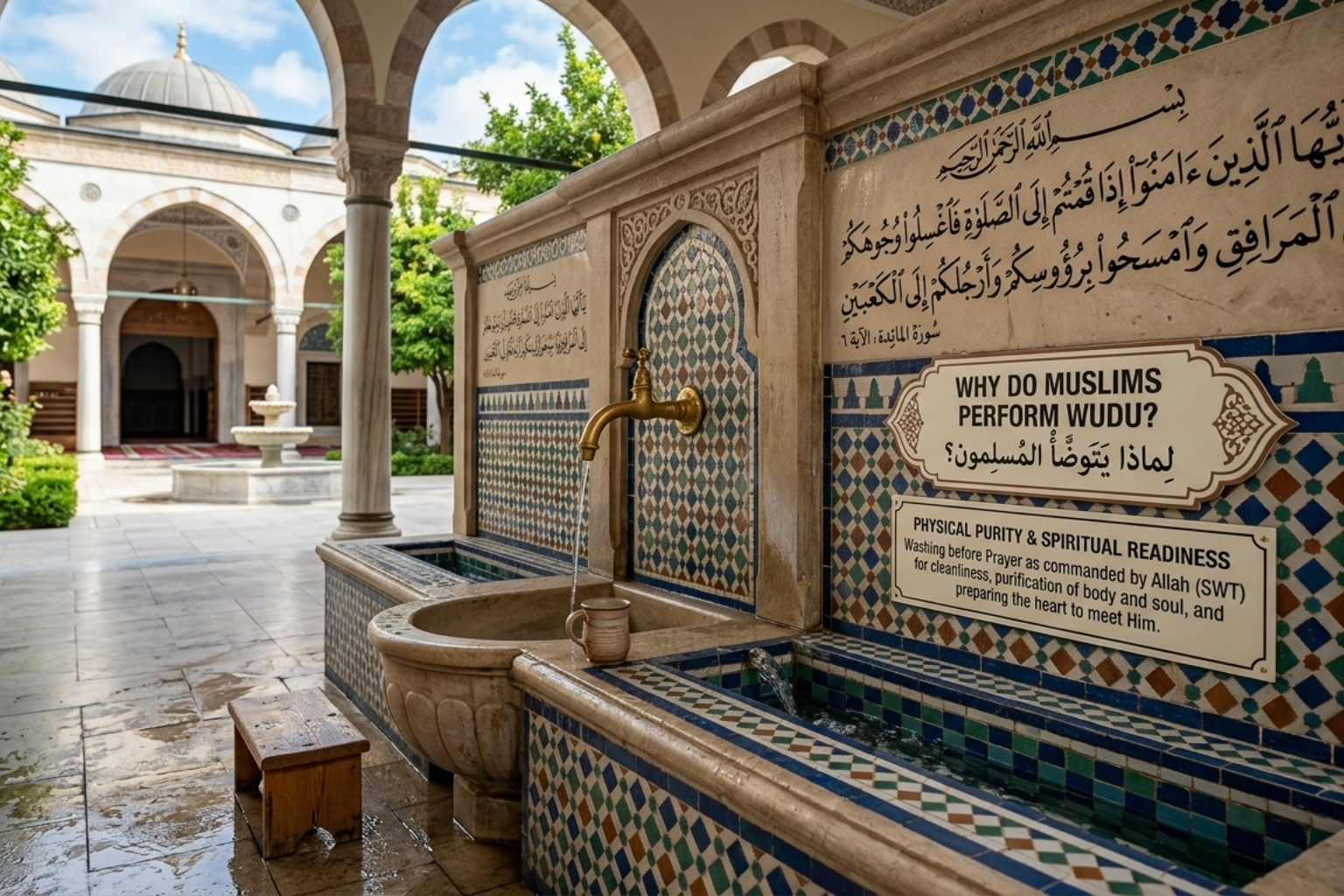
“يَا أَيُّهَا الَّذِينَ آمَنُوا إِذَا قُمْتُمْ إِلَى الصَّلَاةِ فَاغْسِلُوا وُجُوهَكُمْ وَأَيْدِيَكُمْ إِلَى الْمَرَافِقِ…”
“O you who believe, when you rise for prayer, wash your faces and your hands up to the elbows…”
— Surah Al-Ma’idah (5:6)
This verse establishes Wudu as part of preparing for Salah (prayer).
Wudu Is a Preparation for Standing Before Allah
One of the deepest meanings behind Wudu is spiritual preparation.
People usually prepare carefully before meeting someone important:
- They dress properly
- Clean themselves
- Organize their appearance
In Islam, prayer is a direct connection between the servant and Allah.
Wudu reminds the believer that worship deserves attention, dignity, and presence of heart.
Instead of rushing mindlessly 5 into prayer while distracted by worldly concerns, Wudu creates a transition between ordinary life and worship.
The washing itself often brings calmness and mental focus before prayer begins.
Wudu Symbolizes Spiritual Cleansing
Islam teaches that Wudu not only removes physical impurities 6, but also carries spiritual meaning.
The Prophet Muhammad ﷺ described how sins are symbolically 7 washed away through ablution.
He ﷺ said:
“إِذَا تَوَضَّأَ الْعَبْدُ الْمُسْلِمُ… خَرَجَتْ خَطَايَاهُ مِنْ جَسَدِهِ”
“When a Muslim servant performs Wudu… his sins leave his body.”
— Sahih Muslim (244)
This does not mean Wudu replaces repentance or accountability. Rather, it reflects Allah’s mercy and the spiritual effect of sincere worship.
Each act of washing becomes a reminder that the believer seeks inner purification alongside outward cleanliness.
Why Wudu Is Repeated Throughout the Day
One remarkable aspect of Islam is how acts of worship are woven continuously into daily life.
Since Muslims pray five times daily, Wudu is also repeated regularly.
This repeated purification creates:
- Spiritual awareness
- Personal discipline
- Consistent hygiene
- Moments of reflection during busy days
In modern life, people often become overwhelmed by constant noise, stress, and distraction. Wudu interrupts that cycle briefly and refocuses the heart toward worship and remembrance of Allah.
For many believers, even the feeling of water during Wudu brings peace and calmness.
The Connection Between Purity and Prayer
Islam teaches that prayer is not only physical movement or spoken words. It is an act requiring sincerity, humility 8, and spiritual presence.
Because of this, purification comes before worship.
The Prophet Muhammad ﷺ said:
“لَا تُقْبَلُ صَلَاةٌ بِغَيْرِ طُهُورٍ”
“Prayer is not accepted without purification.”
— Sahih Muslim (224)
This principle demonstrates the seriousness and sacred nature of Salah in Islam.
Wudu helps create the mental and spiritual state appropriate for standing before Allah.
Wudu and Human Psychology
Beyond spirituality, Wudu also affects the human mind emotionally and psychologically.
Water naturally creates feelings of:
- Freshness
- Calmness
- Relaxation
- Renewal
Repeated washing throughout the day can help reduce tension and mental fatigue.
Many people today search for mindfulness practices to slow down and regain focus. Wudu naturally introduces moments of pause and reflection several times daily.
This combination of physical action and spiritual intention creates a unique form of inner balance.
Islam Encourages Both Physical and Spiritual Purity
One important feature of Islam is balance.
Some belief systems focus heavily on outward rituals without inner spirituality. Others focus only on internal feelings while neglecting discipline and practice.
Islam combines both.
Wudu reflects this balance perfectly:
- The body is cleaned externally
- The heart prepares internally
True purification in Islam includes both dimensions together.
Conclusion
Wudu is far more than a washing ritual before prayer. It is an act of purification that prepares the body, mind, and soul for worship.
Through Wudu, Muslims cleanse themselves physically while also renewing spiritual awareness, humility, and focus before standing in prayer before Allah.
Repeated throughout the day, this practice creates moments of calmness, discipline, and reflection within the rhythm of daily life.
In Islam, purity is not only about cleanliness of the body — it is also about preparing the heart to connect sincerely with its Creator.