
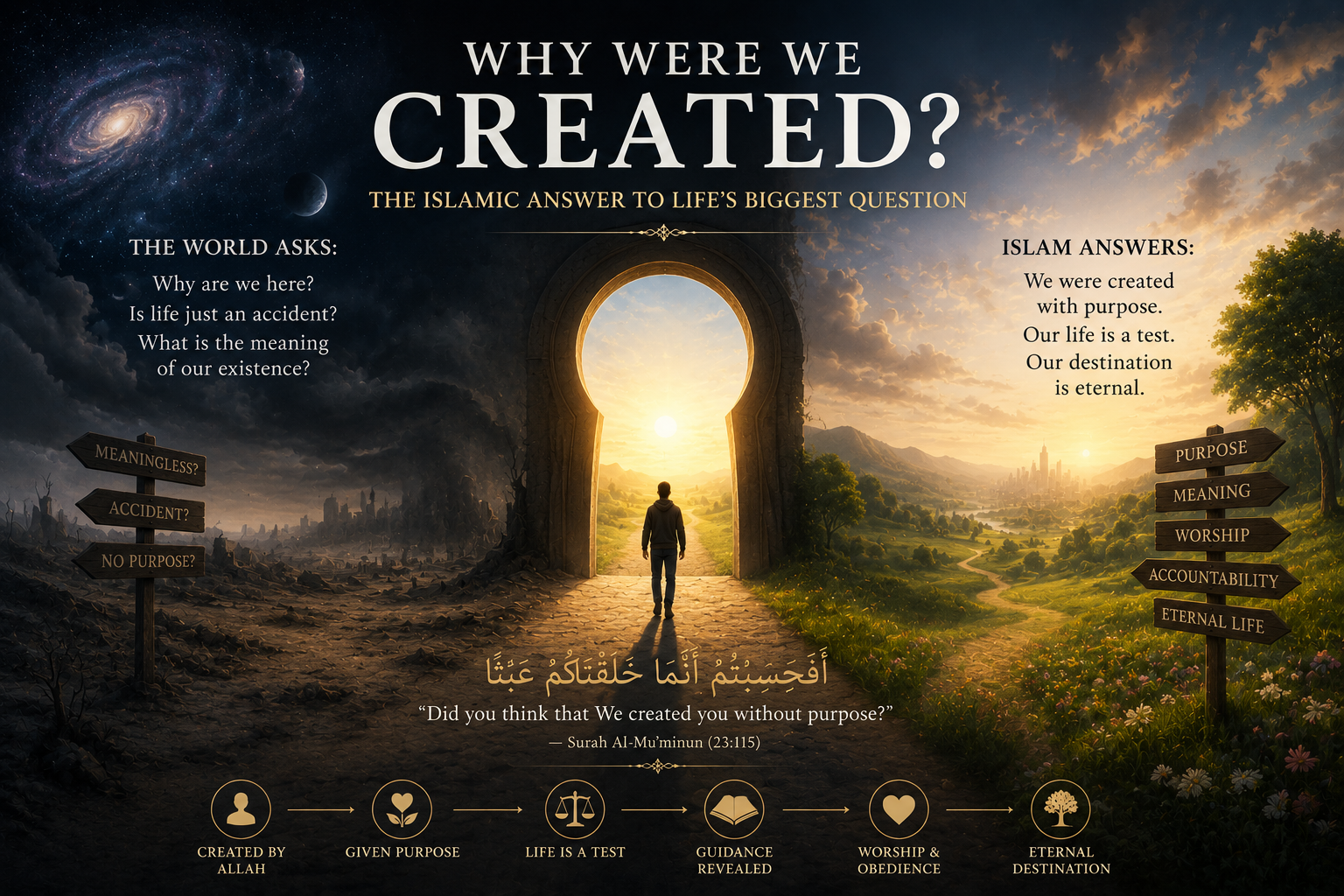

Every human being eventually asks the same question.
Why are we here?
Why does life exist at all?
Is human existence 1 simply an accident in a vast universe, or is there a deeper purpose behind our creation?
For centuries, philosophers, scientists, and religious thinkers have struggled to answer these questions. Some people spend their entire lives searching for meaning through wealth, success, pleasure, or status, only to discover that temporary achievements rarely satisfy the deeper emptiness inside the human soul.
Islam approaches this question directly.
According to the Qur’an, human beings were not created randomly, nor were they abandoned without purpose. Life itself is meaningful, intentional 2, and connected to a greater reality beyond the physical world we see around us.
The Qur’an says:
“أَفَحَسِبْتُمْ أَنَّمَا خَلَقْنَاكُمْ عَبَثًا”
“Did you think that We created you without purpose?”
— Surah Al-Mu’minun (23:115)
This verse establishes one of the central foundations of Islam: human existence has meaning.
Before the Universe Existed
Islam teaches that before the creation of the heavens, the earth, and all living things, only Allah existed.
The Prophet Muhammad ﷺ said:
“كَانَ اللَّهُ وَلَمْ يَكُنْ شَيْءٌ غَيْرُهُ”
“Allah existed and there was nothing besides Him.”
— Sahih al-Bukhari (7418)
Allah is not dependent on creation. He does not need the universe, human beings, or worship in order to exist. Unlike creation, Allah is eternal 3 — without beginning and without end.
Everything else depends upon Him.
Human beings breathe because Allah allows them to breathe. Hearts continue beating because Allah sustains life every moment. Islam constantly reminds people that human power is limited, temporary, and fragile 4.
The Qur’an describes Allah as:
“هُوَ الْأَوَّلُ وَالْآخِرُ”
“He is the First and the Last.”
— Surah Al-Hadid (57:3)
This understanding completely changes the way life is viewed. Humanity is not at the center of existence — Allah is.
The Purpose of Human Creation
Islam gives a direct answer regarding why human beings were created.
Allah says:
“وَمَا خَلَقْتُ الْجِنَّ وَالْإِنسَ إِلَّا لِيَعْبُدُونِ”
“I did not create jinn and mankind except to worship Me.”
— Surah Adh-Dhariyat (51:56)
At first glance, some people misunderstand this verse. They assume worship in Islam means spending every moment isolated inside a mosque constantly praying.
But Islamic worship is much broader than rituals alone.
In Islam, worship includes every sincere 5 action done to please Allah:
- Helping others
- Being honest
- Caring for family
- Showing kindness
- Seeking knowledge
- Working ethically 6
- Giving charity
- Speaking truthfully
Even ordinary daily actions can become acts of worship when connected to sincere intention.
The Prophet Muhammad ﷺ taught that kindness, mercy, and good character are deeply connected to faith itself.
Islam Does Not Separate Spirituality from Daily Life
One unique feature of Islam is that it does not divide life into “religious” and “non-religious” sections the way some people imagine.
Faith is meant to shape the entire human being:
- Character
- Relationships
- Business
- Morality
- Family life
- Social behavior
A Muslim worships Allah not only through prayer, but also through honesty in business, patience during hardship, compassion toward others, and responsibility toward society.
For this reason, Islam is described not just as a religion, but as a complete way of life.
The Prophet Muhammad ﷺ said:
“إِنَّمَا بُعِثْتُ لِأُتَمِّمَ صَالِحَ الْأَخْلَاقِ”
“I was sent only to perfect good character.”
— Musnad Ahmad (8952)
Spirituality 7 without morality is incomplete.
Why Does Islam Emphasize Belief in the Unseen?
Modern society often accepts only what can be physically measured or scientifically tested. Islam, however, teaches that reality extends beyond the visible world.
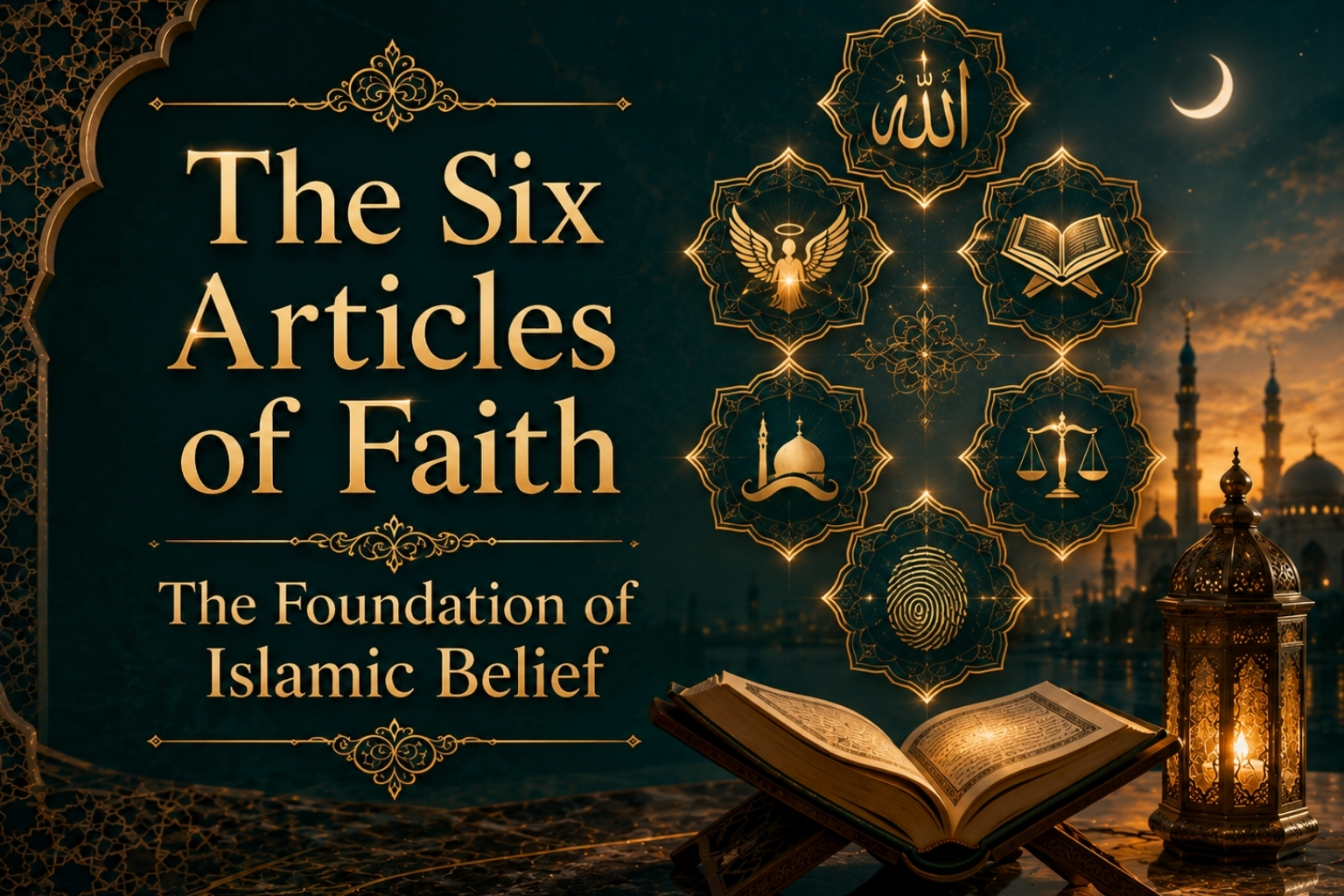
Muslims believe in:
- Angels
- Revelation
- The afterlife
- Paradise and Hell
- Divine destiny
These are known in Islam as matters of the unseen 8.
The Qur’an praises believers by saying:
“الَّذِينَ يُؤْمِنُونَ بِالْغَيْبِ”
“Those who believe in the unseen.”
— Surah Al-Baqarah (2:3)
Islam does not teach blind belief without thought. Rather, it encourages reflection upon creation while also recognizing the limitations of human knowledge.
Human beings can explore science, mathematics, medicine, and the universe itself — yet there will always remain realities beyond complete human understanding.
Destiny and Human Life
One of the most powerful concepts in Islam is belief in divine destiny.
Muslims believe Allah possesses complete knowledge of:
- The past
- The present
- The future
Nothing escapes His knowledge.
The Prophet Muhammad ﷺ said:
“كَتَبَ اللَّهُ مَقَادِيرَ الْخَلَائِقِ قَبْلَ أَنْ يَخْلُقَ السَّمَاوَاتِ وَالْأَرْضَ بِخَمْسِينَ أَلْفَ سَنَةٍ”
“Allah wrote the destinies of creation fifty thousand years before He created the heavens and the earth.”
— Sahih Muslim (2653)
Belief in destiny 9 provides peace of mind in times of hardship.
It teaches that life is not controlled by chaos alone. Even painful moments occur within Allah’s knowledge and wisdom.
This belief does not remove human responsibility. People still make choices and remain accountable 10 for their actions. However,Allah fully knows every outcome before it occurs.
The Human Search for Meaning
Modern life often encourages people to define success through:
- Wealth
- Fame
- Appearance
- Status
- Material achievement
Yet many individuals who achieve these things still feel spiritually empty.
Islam teaches that the human heart was created to seek connection with Allah. Without that connection, temporary 11 pleasures cannot fully satisfy the soul.
The Qur’an says:
“أَلَا بِذِكْرِ اللَّهِ تَطْمَئِنُّ الْقُلُوبُ”
“Surely in the remembrance of Allah do hearts find peace.”
— Surah Ar-Ra’d (13:28)
This inner peace is one reason many people across the world continue exploring Islam today.
Life as a Test
Islam describes worldly life as temporary.
Human beings are given:
- Freedom
- Choices
- Intelligence
- Moral responsibility
Through these things, life becomes a test of character, faith, and actions.
The Qur’an says:
“الَّذِي خَلَقَ الْمَوْتَ وَالْحَيَاةَ لِيَبْلُوَكُمْ”
“He who created death and life to test you.”
— Surah Al-Mulk (67:2)
According to Islam, death is not the end of existence. It is the transition into another stage of life where people are held accountable for how they lived.
This belief gives human actions lasting meaning.
Conclusion
Islam teaches that human beings were created with purpose, dignity, and responsibility. Life is not meaningless, nor is humanity abandoned without guidance.
People were created to know Allah, worship Him sincerely, and live morally in preparation for the eternal life to come.
For Muslims, true success is not measured only by material achievement, but by faith, character, and closeness to the Creator.
In a world where many people struggle to understand why they exist, Islam offers a deeply meaningful answer: human life is part of a greater purpose designed by Allah with wisdom, mercy, and intention.