
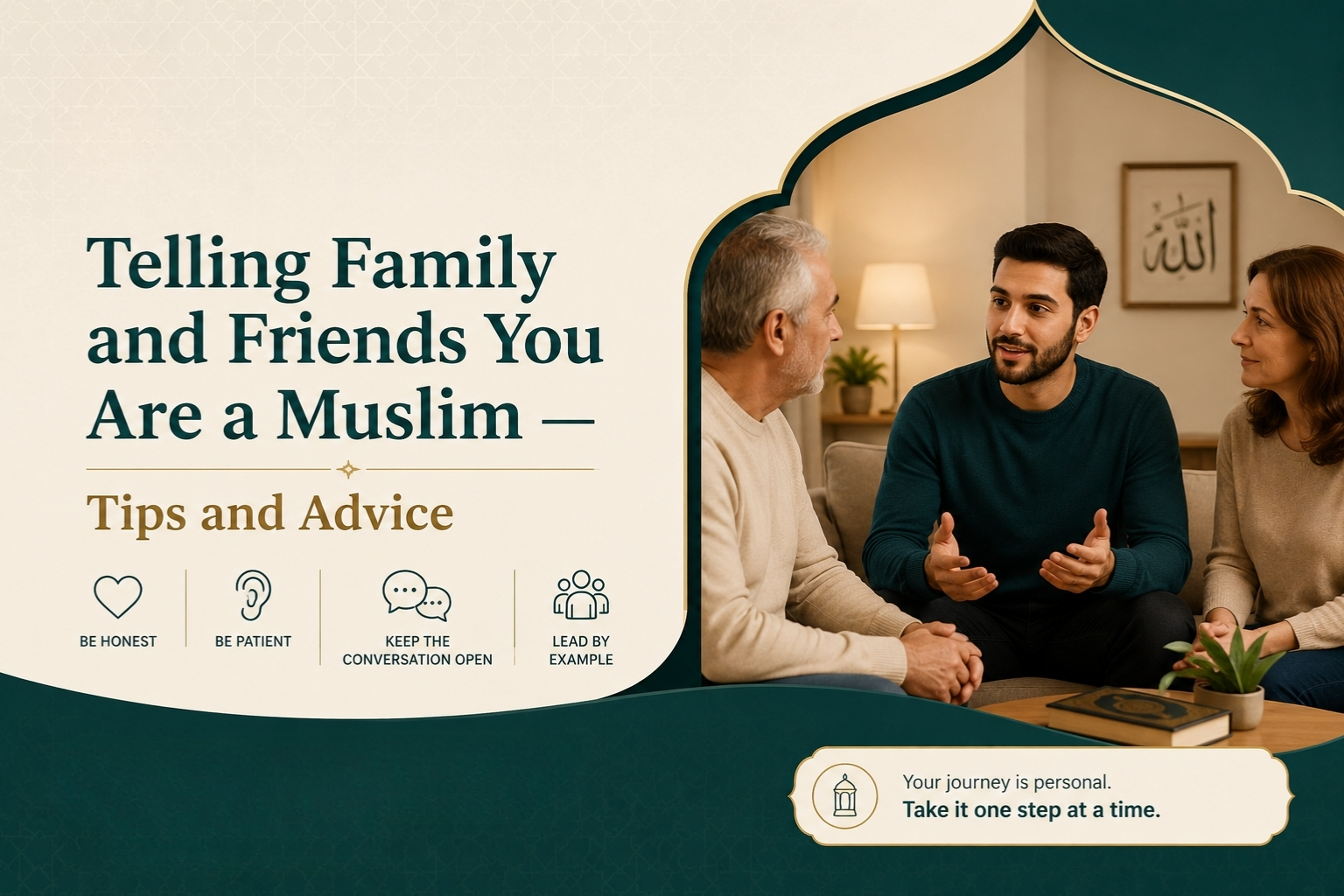

Practical guidance for one of the most personal conversations a new Muslim will ever have
The Conversation You Have Been Thinking About
For many new Muslims, the moment of accepting Islam is private — a quiet turning of the heart, a declaration made to God before it is made to anyone else. But at some point, the people closest to you will need to know. And that conversation — with a parent, a sibling, a spouse, a close friend — is one that many new Muslims find more daunting than any act of worship.
This article will not pretend it is easy. It is not always easy. But it is navigable — with patience, wisdom, the right timing, and the right understanding of what you are actually trying to communicate.
Before You Say Anything: Know Why You Are Telling Them
There is a difference between telling someone and informing someone. Before you have this conversation, ask yourself what you are hoping for.
Are you hoping for acceptance? Celebration? Understanding? Or simply honesty — because living a double life is exhausting and you want the people you love to know who you actually are?
All of these are valid. But clarity about your own motivation will shape how you approach the conversation, how you respond to reactions you did not expect, and how you measure whether it went “well.”
The most realistic goal, especially at first, is not full acceptance — it is honest communication. You are not asking for permission. You are sharing something true about yourself with people you trust. What they do with that truth is, ultimately, their process, not yours to control.
Timing and Setting Matter Enormously
Choose the right moment
Do not have this conversation in the middle of a conflict, during a busy holiday gathering, or when the other person is stressed, distracted, or emotionally stretched. Choose a calm, private moment when the person you are speaking to has the mental space to actually hear you.
One-on-one conversations are almost always better than group announcements. Telling your mother privately before she hears it from your sibling gives her the dignity of being trusted first. It also removes the social pressure that comes from having an audience — pressure that can cause people to react defensively even when they might have responded with openness in private.
Do not delay indefinitely
Some new Muslims wait months or even years before telling family, hoping to find the “perfect moment.” The perfect moment rarely comes — and the longer the secret is kept, the more jarring the eventual revelation can feel to those who were kept out.
There is wisdom in waiting until you feel grounded in your faith — secure enough in your own conviction that someone else’s reaction does not shake you. But groundedness is different from avoidance. Once you feel settled, do not let fear keep you silent indefinitely.
How to Begin the Conversation
There is no script that works for every family or every friendship. But a few principles tend to hold across most situations:
Start with the relationship, not the announcement
Rather than opening with “I have something important to tell you” — which immediately raises anxiety — begin with warmth. Remind the person, through tone and presence, that this is still the same relationship it has always been. You are still the same person they love. What you are sharing is something that has happened inside you, not a rejection of them.
Be honest about your own journey
People respond better to a story than to a declaration. Instead of “I am a Muslim now,” consider sharing something of the path that brought you here: what you were searching for, what drew you to Islam, what changed in you when you found it. This gives the other person something to understand rather than simply react to.
You do not owe anyone your entire spiritual autobiography. But a window into your experience — even a small one — tends to disarm defensiveness and open genuine curiosity.
Speak from your own experience
Use “I” language rather than “Islam says” language, especially at the start. “I have found the peace I was looking for” lands very differently from “Islam teaches that…” The first is a personal truth they cannot argue with. The second invites debate before the conversation has even found its footing.
Common Reactions — and How to Respond to Them
No two families are the same, and reactions to a loved one accepting Islam vary enormously. Here are the most common responses and how to navigate them with wisdom.
Shock and silence
Many people, when told something significant they did not expect, simply go quiet. Do not interpret silence as rejection. It is often just the mind catching up to information it was not prepared for. Give the person space. Silence is not the end of the conversation — it is often the beginning of processing.
Questions about Islam
“What does that mean?” “Why Islam?” “What will change?” These are good questions — they come from curiosity, not hostility. Answer them simply and honestly, without lecturing. If you do not know the answer to something, say so. You are not required to defend or explain every dimension of a 1,400-year-old tradition in one conversation.
It is also completely acceptable to say: “I am still learning. This is new for me too.” Honesty about your own journey tends to invite more compassion than a defensive rehearsed response.
Fear and concern
Parents especially often respond to a child’s conversion with fear — fear of the unknown, fear of how it will change the relationship, fear of what it means for the future. This fear deserves to be taken seriously, not dismissed.
Acknowledge it directly: “I understand this is unexpected and I know you might be worried. Can you tell me what concerns you most?” Asking the person to name their specific fear is far more productive than trying to address fears you are assuming they have.
Often, fears about Islam come from media images and cultural stereotypes rather than knowledge of what Islam actually is. You do not need to dismantle those images in one conversation. Plant a seed of reality — your reality, lived in front of them — and let time do the rest.
Anger
Some people, particularly parents, may respond to a conversion with genuine anger. This can feel devastating, especially when you have approached the conversation with care and vulnerability.
If someone responds with anger, do not match it. The Prophet Muhammad ﷺ said: “The strong person is not the one who overcomes others by force. The strong person is the one who controls themselves when they are angry.”
Give the person time. Return to the conversation when emotions have settled. And hold firmly to the knowledge that your relationship with God is not contingent on anyone else’s approval — not even the approval of people you deeply love.
Complete rejection
In some cases — not all, but some — a new Muslim faces a response that feels like rejection of them as a person, not just of their choice. This is one of the hardest experiences a person can face.
If this happens, do not make any permanent decisions in the immediate aftermath. Family dynamics, especially around religion, take time to shift. The relationship that feels fractured today is often the relationship that quietly heals over months and years — as the people who love you see, in how you live, that you are still you and that Islam has not taken you from them but has, in some visible ways, made you more patient, more gentle, more present.
Specific Relationships, Specific Considerations
Parents
The Quran places enormous weight on the relationship with parents — even non-Muslim parents. God says:
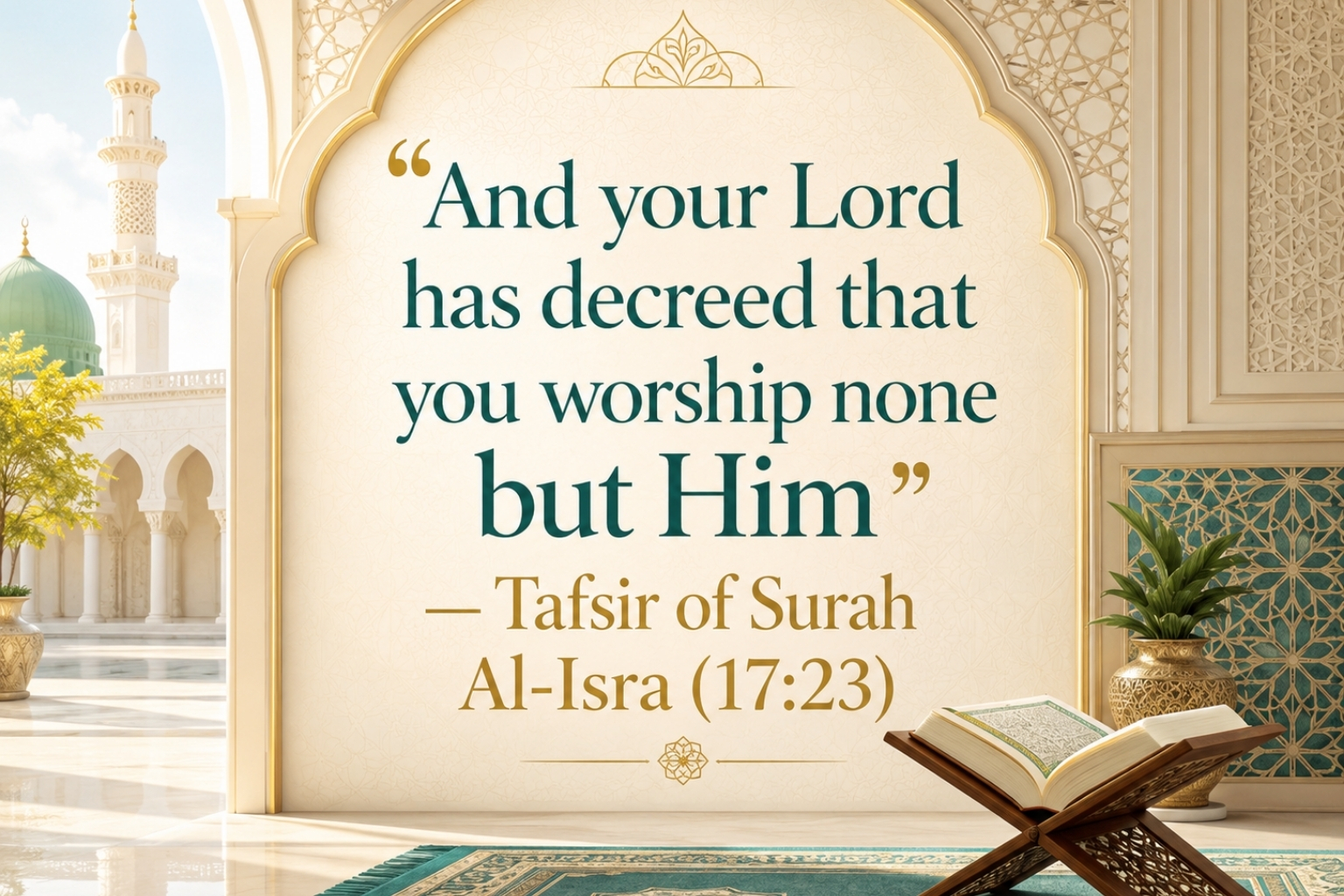
“And your Lord has decreed that you worship none but Him, and that you be kind to parents. Whether one or both of them reach old age in your care, never say to them a word of contempt, nor repel them, but speak to them with a gentle word.” — Surah Al-Isra (17:23)
This verse does not come with the condition “unless they are non-Muslim” or “unless they disapprove of your choices.” Kindness to parents is an obligation that runs alongside faith in God — not one that is cancelled by disagreement.
In practical terms: keep calling. Keep showing up. Keep being present. Accept their food when you can. Do not make every family gathering a lesson in Islamic practice. Love them as you always have — because that love is now an act of worship.
Spouse or partner
If you are in a relationship, telling your partner is both one of the most important and most complex conversations to have. Islam has specific guidance about marriage between Muslims and non-Muslims, and it is worth speaking to a knowledgeable Muslim scholar or counselor about your specific situation rather than navigating it entirely alone.
What is certain is that honesty is essential. A partner who discovers your conversion through someone else, or much later than you knew, will feel a breach of trust that is far harder to repair than the initial conversation would have been.
Close friends
Friends often respond with curiosity more than fear. Many new Muslims find that friendships survive and even deepen after a conversion — especially with friends who value authenticity and who are secure enough in the relationship to make room for the ways you are changing.
Some friendships that were built primarily around habits that Islam has now changed — drinking, socializing in certain settings — may naturally shift or fade. This is painful, but it is also a natural part of a life redirected. New friendships, often with other Muslims, will come in time.
What You Are Not Obligated to Do
You do not need to debate
If a family member or friend wants to argue about Islam — its history, its politics, its texts — you are not obligated to enter that argument, especially in the early months when you are still learning. It is completely acceptable to say: “I am not in a place to debate right now, but I am happy to share what Islam means to me personally.”
Debates about religion rarely change minds. Witnessing a life lived with genuine faith, patience, and love — that changes minds.
You do not need to justify your choice
Your faith is not on trial. You do not owe anyone a legal brief in defense of your decision. You can share your experience. You can answer sincere questions. But you are not required to prove that your choice is reasonable to every person who challenges it.
You do not need to change everything at once
Practical changes — in diet, in dress, in how you spend certain times — do not all need to be announced or explained simultaneously. Let changes emerge naturally as you implement them, and explain them simply when they are noticed. “I do not eat pork anymore” is a complete sentence. It does not require a theological treatise.
What Islam Says About Non-Muslim Family
Islam is unambiguous on this point: maintaining family ties is an obligation, and cutting family ties — even in the face of conflict — is strongly discouraged.
The Prophet ﷺ said: “The one who maintains family ties is not the one who reciprocates — the one who truly maintains them is the one who, when ties are cut, restores them.”
This means that even if a family member responds to your conversion by pulling away, the Islamic obligation is to keep reaching — with patience, with kindness, without expectation of immediate return. Not because you need their approval, but because the relationship itself has value, and because love expressed consistently across differences is one of the most powerful forms of dawah — invitation — there is.
You Will Not Do This Perfectly
The conversation will not always go as you hoped. You may say too much or too little. You may cry when you want to be calm. The other person may react in ways you were not prepared for.
That is all right. This is not a performance to be evaluated. It is a real conversation between real people navigating real change. Give yourself the same patience you would offer someone else in the same situation.
And remember: God already knows. He knew before you spoke the words. He knew what it cost you to say them. That knowledge — that you were seen and understood before the first word was spoken — is, in itself, a steadying thing.
“And He is with you wherever you are.” — Surah Al-Hadid (57:4)