

We live in an era of hyper-isolation. Despite being more digitally connected than any generation in human history, we are also the loneliest. We spend our workweeks staring at screens, communicating through asynchronous chat apps, and managing our lives through detached digital interfaces. This fracturing of the physical community carries an immense psychological tax, acting as a massive fuel source for chronic overthinking in Islam. When we lack deep, consistent, physical bonds with a community, our personal anxieties expand—leaving our minds trapped in exhausting internal loops, starved of genuine connection and peace of mind.
To combat this isolating social drag, modern self-care culture heavily promotes community meetups, digital networking groups, or weekend social clubs. While these spaces offer a temporary break from the house, they often require us to present a curated version of ourselves, keeping our social anxieties active as we seek validation in the worldly marketplace.
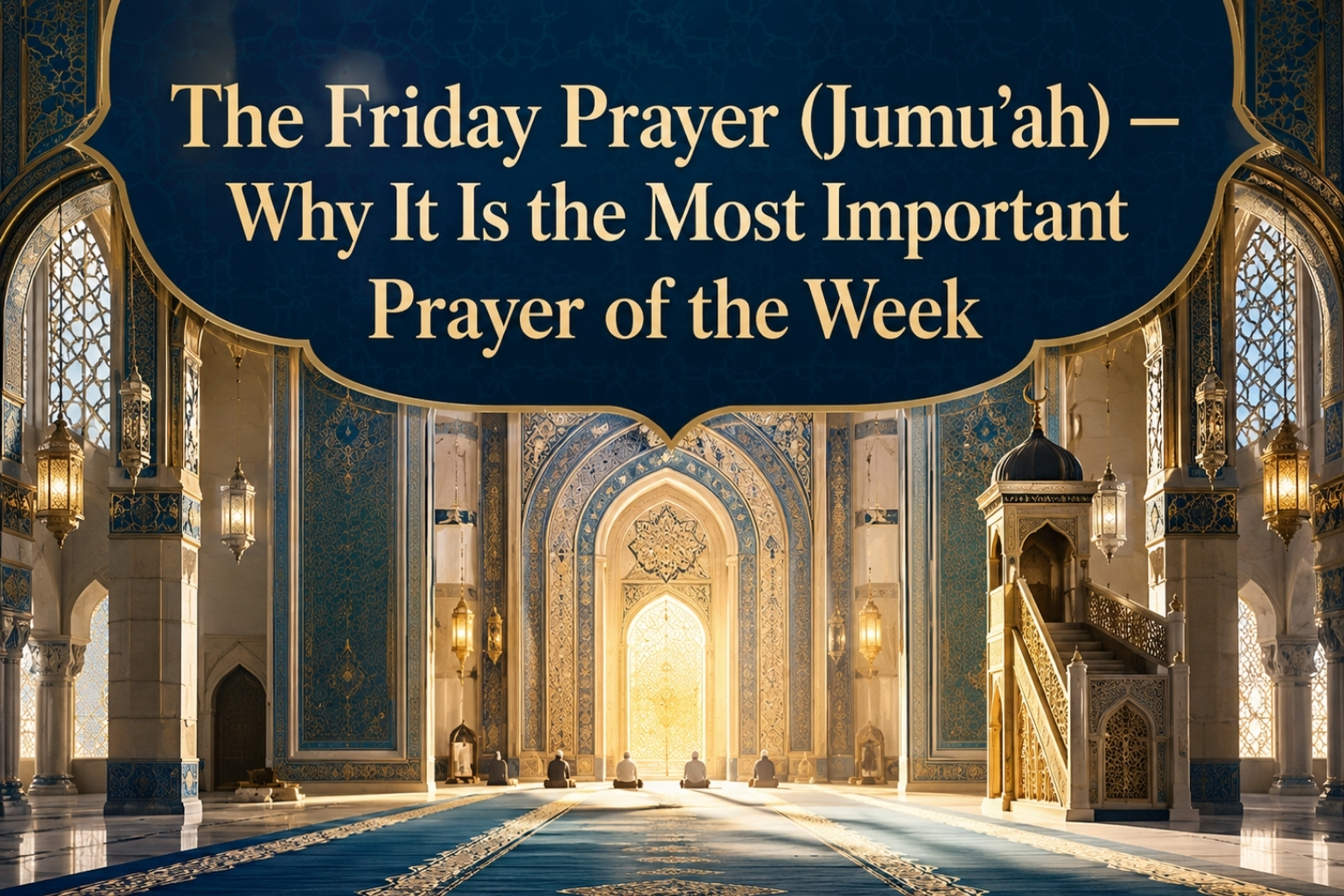
However, when we apply Tadabbur (deep Quranic reflection) to the structural architecture of Islamic worship, we find that Islam does not leave community cohesion to chance or voluntary mood. It mandates a weekly, high-vibrancy physical gathering designed to completely shatter isolation, realign the intellect, and serve as a supreme engine for healing anxiety with the Quran: Jumu’ah (the Friday prayer). In the framework of Islamic psychology, Jumu’ah is not just a standard congregational routine; it is a divinely engineered weekly reset button that purifies the soul, silences mental noise, and anchors the believer in trusting Allah’s plan.
The Divine Mandate: Freezing the Market for the King
The word Jumu’ah linguistically shares the same root as Jam‘a, which means to gather, assemble, or unify. Friday is explicitly designated in Islamic theology as Sayyid al-Ayyam—the Master of Days—possessing a spiritual weight that surpasses all other days of the week.
The requirement to attend this weekly assembly is so absolute that Allah commands believers to completely halt their economic machinery, freeze their corporate transactions, and walk away from their businesses the moment the call is made:
“يَا أَيُّهَا الَّذِينَ آمَنُوا إِذَا نُودِيَ لِلصَّلَاةِ مِن يَوْمِ الْجُمُعَةِ فَاسْعَوْا إِلَىٰ ذِكْرِ اللَّهِ وَذَرُوا الْبَيْعَ ۚ ذَٰلِكُمْ خَيْرٌ لَّكُمْ إِن كُنتُمْ تَعْلَمُونَ”
“O you who have believed, when [the adhan] is called for the prayer on the day of Jumu’ah, then proceed to the remembrance of Allah and leave commerce. That is better for you, if you only knew.”
— Surah Al-Jumu’ah, 62:9
Consider the profound behavioral therapy embedded in this command. By ordering you to physically shut down your laptop or walk away from an active business deal at midday on a Friday, the law of Al-Khaliq (The Creator) shatters the illusion that your constant hustle is what keeps you secure. It teaches your overthinking mind that the market does not sustain you—Al-Razzaq does.
The Structural Blueprint: The Daily vs. Weekly Geometry
To appreciate why Jumu’ah holds such immense transformative power, it is helpful to look at how Islam systematically scales its community architecture. It moves from intimate neighborhood circles to massive city-wide unifications:
The Spiritual Gathering | The Required Frequency | The Geographic Scope | The Psychological Objective |
The Five Daily Prayers | 5 Times Everyday | Local Neighborhood Mosque (Musalla) | The Micro-Reset. Keeps your individual ego anchored and prevents daily tasks from consuming your focus. |
The Jumu’ah Prayer | Once a Week (Friday Midday) | Central City Cathedral Mosque (Jāmi‘) | The Macro-Realignment. Pulls you out of individual isolation, merging your story with the broader community. |
The Eid Prayers | Twice a Year | Entire City-Wide Assembly (Musalla/Eidgah) | The Global Cohesion. A massive celebration of unity and collective gratitude after major acts of worship. |
The Weekly Clean Slate: Decompressing the Soul
Anxiety is fundamentally a cumulative weight. Over the course of seven days, we absorb micro-stressors: difficult workplace conversations, financial worries, exposure to negative news, and a steady buildup of subconscious spiritual guilt. If this mental cargo is left unmanaged, it creates chronic emotional fatigue.
Jumu’ah serves as a powerful weekly filtration system designed to systematically flush out this toxic buildup. The Prophet Muhammad revealed an incredible spiritual law of maintenance:
“The five daily prayers and from one Jumu’ah to the next Jumu’ah is an expiation for whatever sins occur between them, so long as major sins are avoided.” — Sahih Muslim, 233
Through Tadabbur, we see that entering the mosque for Jumu’ah is identical to stepping into a spiritual decontamination chamber. The mandatory rituals preceding the prayer are engineered to calm your nervous system.
When you perform a meticulous ritual bath (Ghusl), put on your cleanest clothes, apply fragrance, and walk calmly to the mosque, you are actively signaling to your brain that you are leaving the frantic pace of the world behind. By the time you sit on the carpet to listen to the sermon (Khutbah), your mind has dropped its defensive armor, making it perfectly receptive to the deep, therapeutic medicine of divine remembrance.
The Ritual Etiquette: The Protocol of Silent Presence
There is a strict prophetic protocol attached to the Friday sermon that reveals a brilliant understanding of human psychology. The moment the Imam stands on the pulpit (Minbar) to deliver the address, absolute vocal silence is demanded of every person in the room.
The Prophet emphasized this boundary with uncompromising precision:
“If you say to your companion on Friday, ‘Listen quietly,’ while the Imam is delivering the sermon, then you have engaged in an idle, invalidating action.”
— Sahih al-Bukhari, 934
In a modern world that constantly demands our commentary, likes, shares, and immediate verbal reactions, this rule forces a state of radical, passive listening. You are barred from checking your phone, speaking to your neighbor, or reacting out of impulse. For thirty minutes, you are ordered to simply sit, look forward, and absorb. This forced stillness silences the chatter of your personal ego, calms your overthinking mind, and allows the rhythmic recitation of the Quran during the prayer to restore a profound sense of mental order and peace of mind.
The Perfect Friday Blueprint: Maximizing the Master of Days
To ensure your Fridays serve as a genuine source of deep spiritual healing rather than a rushed lunchtime chore, implement this structured sequence every week:
1.The High-Vibrancy Preparation (The Ghusl & Scent):Friday Morning.
Wake up with an intentional focus on the day. Perform a thorough ritual bath (Ghusl), trim your nails, and wear your best, cleanest garments. Apply non-alcoholic fragrance (Itr). This physical upgrade acts as behavioral therapy, lifting your mood and differentiating Friday from a standard workday.
2.The Cognitive Alignment (Surah Al-Kahf):Before Midday Prayer.
Set aside 20 minutes before heading to the mosque to read Surah Al-Kahf (The Cave). The Prophet taught that reciting this Surah on Friday illuminates a light for the believer until the following week. Its deep narratives teach your overthinking intellect that temporary worldly crises are completely governed by Al-Hakim (The All-Wise) under how to trust Allah.
3.The Early Lockout & Silent Reflection:Arriving Early.
Arrive at the mosque at least 15 minutes before the sermon begins. Perform two units of greeting the mosque (Tahiyyat al-Masjid), sit close to the pulpit, and refuse to open your phone. Sit in total, ambient silence, allowing the collective calm of the congregation to lower your heart rate.
4.The Golden Window of Answered Prayer:The Hour Before Sunset.
Do not let the evening of Friday fade into standard weekend leisure. The Prophet revealed that there is a highly specific, hidden window on Friday where no Muslim asks Allah for anything except that He grants it. The vast majority of scholars note this window is the hour directly preceding Sunset (Maghrib). Isolate yourself, raise your hands, and make a deep session of Du’a for your mental health and goals.
Actionable Steps to Secure Weekly Balance
- Establish a Firm “Friday Lunch Lockout” with Management: If you work in a non-Muslim or corporate environment, do not apologize or compromise for your Jumu’ah attendance. Proactively sit down with your team or HR and block out a permanent, non-negotiable 60-to-90-minute window on your calendar every Friday. Reframing this as a vital religious accommodation prevents the recurring anxiety of last-minute schedule conflicts.
- Practice the Art of Physical “Row-Filling”: When you enter the mosque for Jumu’ah, refuse the urge to sit isolated in the back corner or near the shoes. Move forward into the main prayer hall and sit shoulder-to-shoulder with fellow believers. In Islamic psychology, physical proximity breeds internal empathy. Sitting closely alongside strangers from entirely different economic and cultural backgrounds dissolves the ego and reinforces your belonging to a vast, universal family.
- Anchor Financial Panic in the Post-Prayer Release: If the pressures of your career or an unstable market leave you feeling desperate on Friday morning, look closely at the verse that directly follows the Jumu’ah mandate: “And when the prayer has been concluded, disperse throughout the land and seek the bounty of Allah” (62:10). Go back to your desk after prayer with an entirely renewed energy, knowing that you have honored your Lord first, and that He has now unlocked your provisions.
Conclusion
The vast, unifying, and deeply restorative institution of the Friday prayer in Islam serves as an essential spiritual harbor for a human generation completely drowning in digital isolation, social anxiety, and hyper-competitive exhaustion. Islam reminds you that you were never engineered to carry the heavy burdens of your workweek entirely on your own fragile shoulders, locked away in an isolated cubicle. You are an honorable member of a living, breathing, and deeply connected global brotherhood of faith, operating under the constant, loving custody of Al-Wadud (The Loving). When you choose to step away from your commerce, honor the silent protocol of the pulpit, and anchor your ultimate confidence in trusting Allah’s plan, the suffocating weight of modern overthinking completely evaporates—leaving your mind beautifully wrapped in an unshakeable state of absolute security, community warmth, and everlasting spiritual success.