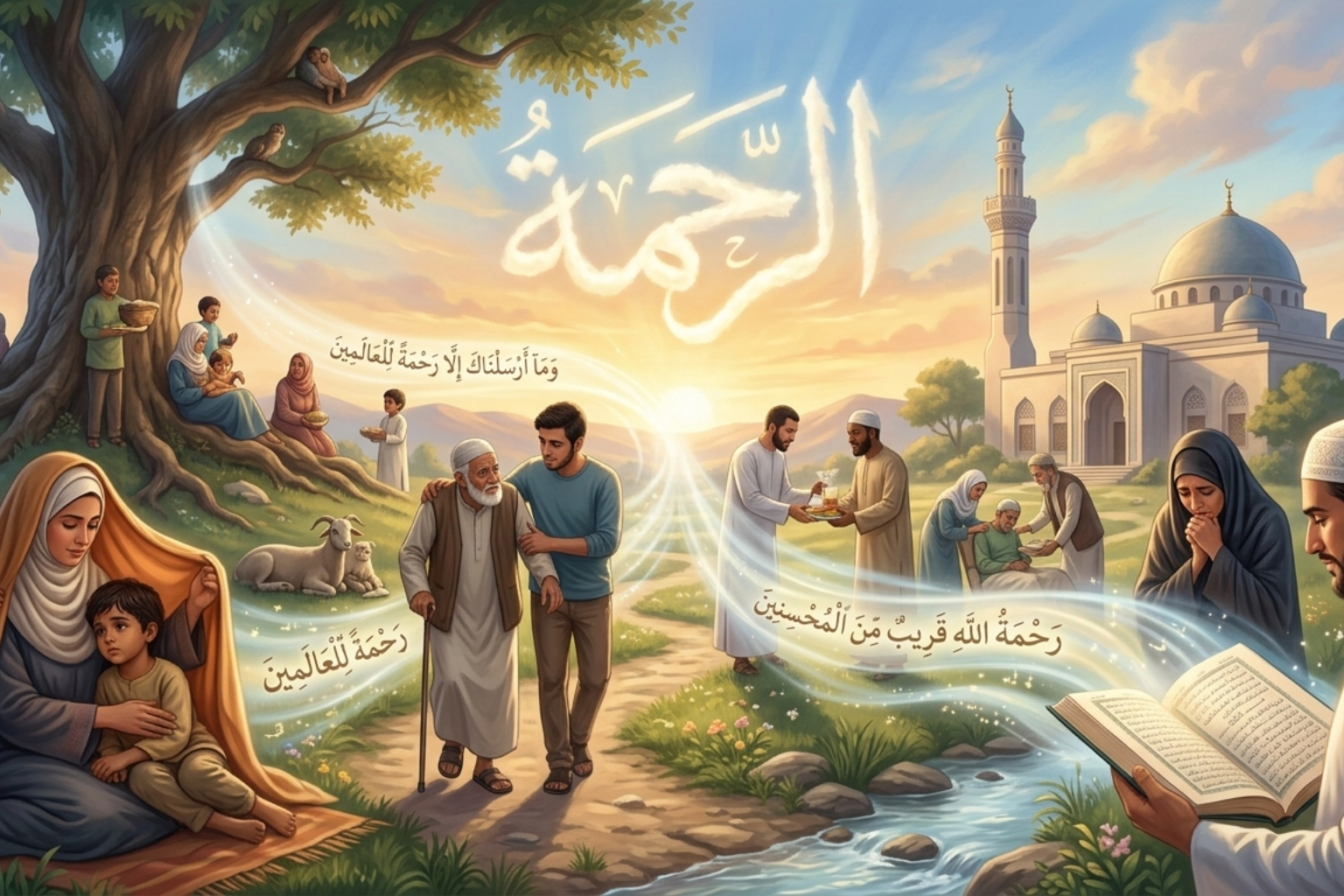

One of the most beautiful and frequently mentioned words in the Quran is Rahmah 1 (رحمة), which means mercy, compassion 2, kindness, and divine care.
Rahmah is one of the central foundations of Islam.
The Quran constantly reminds humanity that Allah is full of mercy and that His mercy surrounds all creation.
Understanding the meaning of Rahmah helps explain the compassionate nature of Islam and the relationship between Allah and His servants.
What Does “Rahmah” Mean?
The Arabic word Rahmah comes from the root letters ر-ح-م (R-Ḥ-M), which carry meanings connected to mercy, tenderness, compassion, and loving care.
Rahmah includes:
- Mercy
- Compassion
- Forgiveness 3
- Gentleness
- Kindness
- Care for others
In Islam, Rahmah is not limited to emotions alone.
It is mercy expressed through actions, forgiveness, generosity, patience, and guidance.
Allah Is The Most Merciful
The Quran repeatedly describes Allah with the names:
- Ar-Rahman (ٱلرَّحْمَـٰن) — The Entirely Merciful
- Ar-Rahim (ٱلرَّحِيم) — The Especially Merciful
Almost every chapter of the Quran begins with:
بِسْمِ اللَّهِ الرَّحْمَٰنِ الرَّحِيمِ
“In the name of Allah, the Entirely Merciful, the Especially Merciful.”
— Beginning of the Quran chapters
Allah emphasizes the vastness of His mercy in the Quran:
وَرَحْمَتِي وَسِعَتْ كُلَّ شَيْءٍ
“And My mercy encompasses all things.”
— Surah Al-A‘raf (7:156)
This verse shows that Allah’s mercy reaches every part of creation 4.
Rahmah in the Life of the Prophet Muhammad ﷺ
The Prophet Muhammad ﷺ was sent as a mercy to humanity.
Allah says in the Quran:
وَمَا أَرْسَلْنَاكَ إِلَّا رَحْمَةً لِّلْعَالَمِينَ
“And We have not sent you except as a mercy to the worlds.”
— Surah Al-Anbiya (21:107)
The Prophet ﷺ showed mercy to:
- Children
- The poor
- Animals
- His companions
- Even his enemies
His character reflected kindness, patience, forgiveness, and compassion in daily life.
The Prophet ﷺ said:
الرَّاحِمُونَ يَرْحَمُهُمُ الرَّحْمَٰنُ
“The merciful are shown mercy by the Most Merciful.”
— Jami‘ At-Tirmidhi, Hadith 1924
Rahmah Between People
Islam teaches believers to treat others with mercy and compassion.
Rahmah appears in:
- Helping those in need
- Forgiving mistakes
- Speaking kindly
- Caring for family
- Supporting the weak
- Showing patience
The Prophet Muhammad ﷺ taught that mercy toward people is connected to receiving mercy from Allah.
مَن لَا يَرْحَمُ لَا يُرْحَمُ
“Whoever does not show mercy will not be shown mercy.”
— Sahih al-Bukhari, Hadith 6013
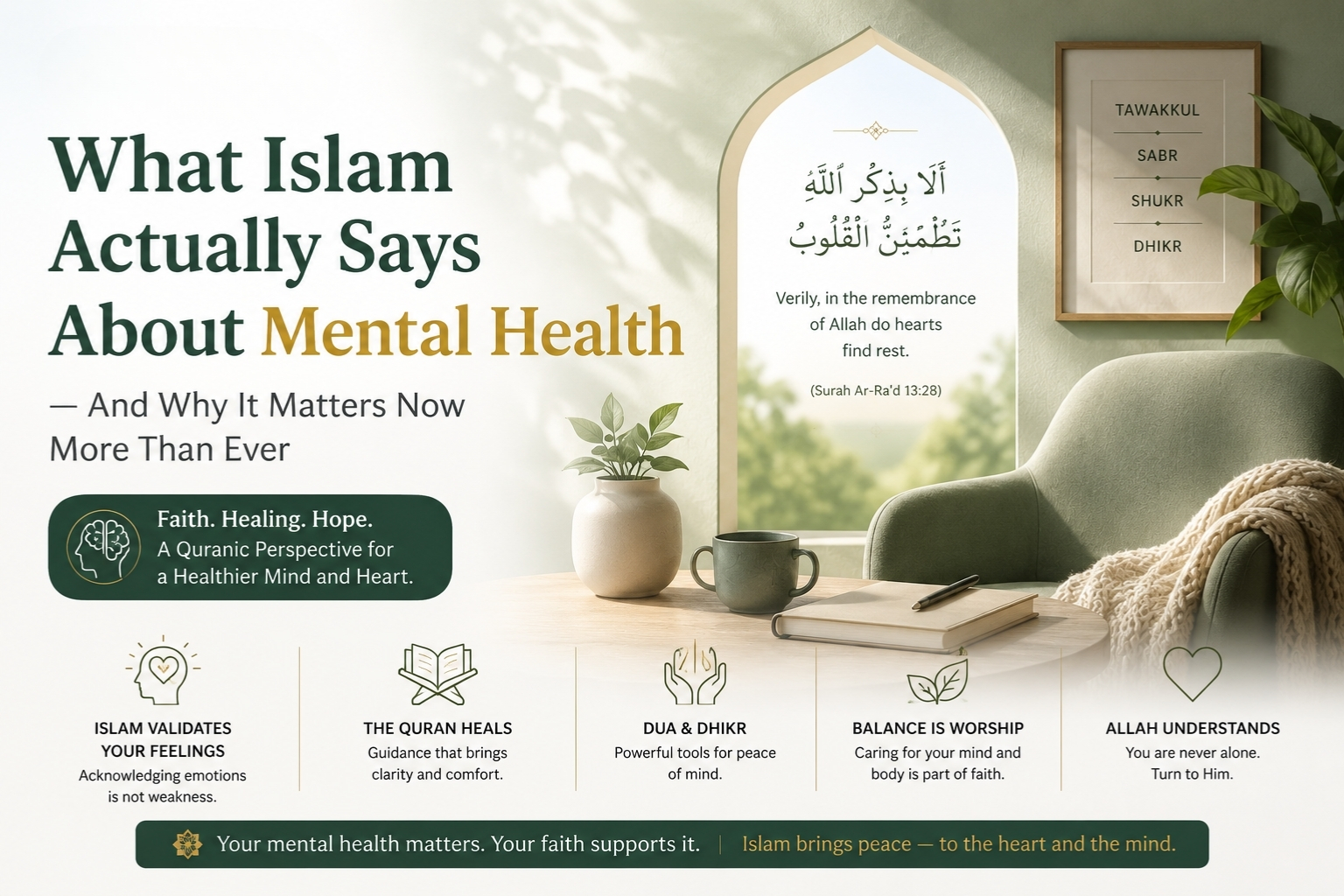
Rahmah and Forgiveness
One of the greatest forms of Rahmah is Allah’s forgiveness.
No matter how many mistakes a person makes, the door of repentance 5 remains open.
Allah says:
قُلْ يَا عِبَادِيَ الَّذِينَ أَسْرَفُوا عَلَىٰ أَنفُسِهِمْ لَا تَقْنَطُوا مِن رَّحْمَةِ اللَّهِ
“Say, ‘O My servants who have transgressed against themselves, do not despair of the mercy of Allah.’”
— Surah Az-Zumar (39:53)
This verse gives hope to believers and reminds them never to lose faith in Allah’s mercy.
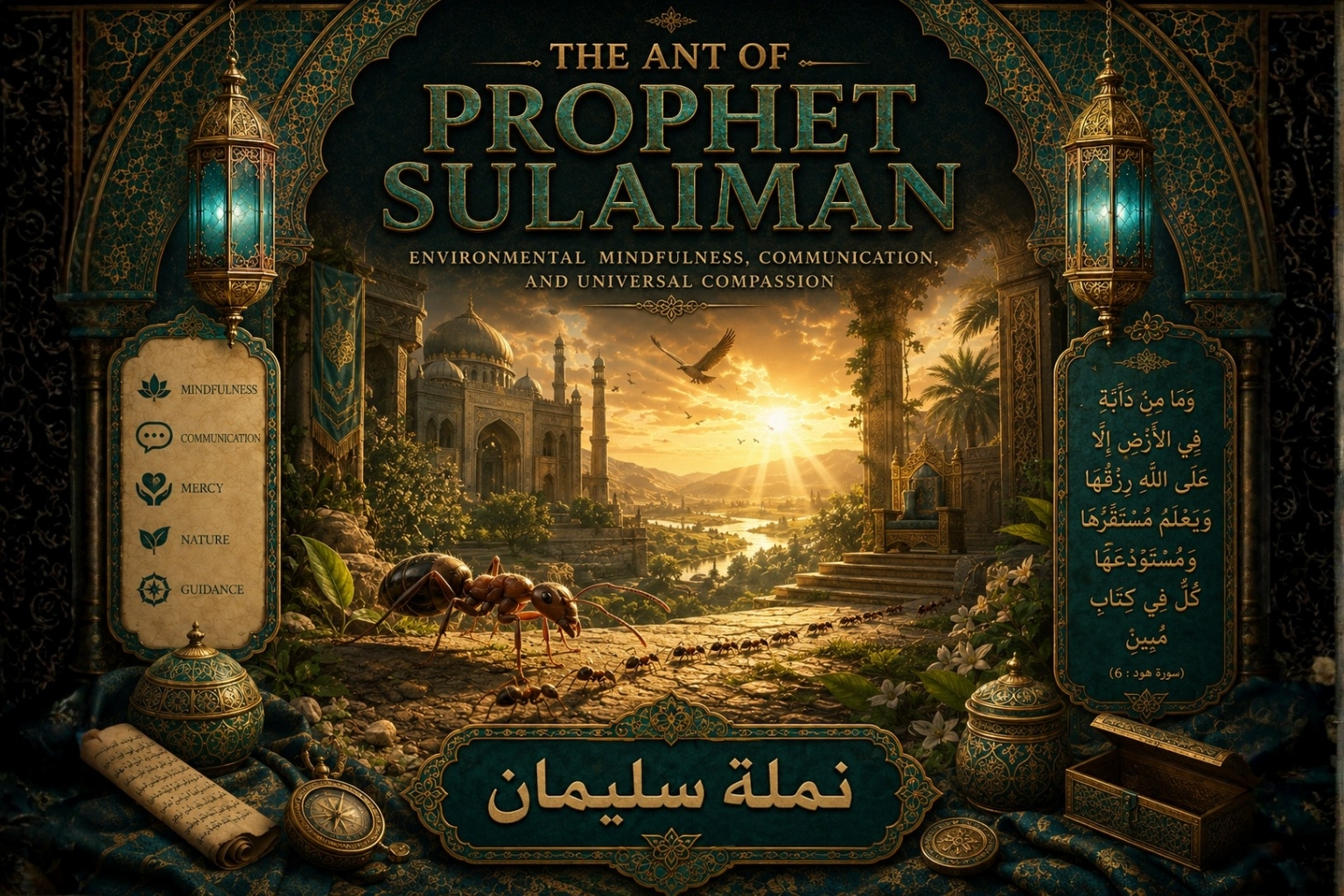
Rahmah Toward Animals and Creation
Islamic teachings also emphasize mercy toward animals and the environment.
The Prophet ﷺ warned against cruelty and encouraged kindness to all living beings.
He ﷺ said:
فِي كُلِّ كَبِدٍ رَطْبَةٍ أَجْرٌ
“In every living being there is reward for kindness.”
— Sahih al-Bukhari, Hadith 2363
This demonstrates that Rahmah in Islam extends beyond humans to all creation.
The Balance Between Justice and Mercy
Islam teaches both justice and mercy together.
Allah is perfectly just, but His mercy is greater than His anger.
The Prophet ﷺ narrated that Allah said:
إِنَّ رَحْمَتِي سَبَقَتْ غَضَبِي
“Indeed, My mercy prevails over My anger.”
— Sahih al-Bukhari, Hadith 7404
This balance gives believers hope while encouraging responsibility and obedience.
Conclusion
Rahmah is one of the most important concepts in Islam and the Quran.
It represents Allah’s compassion, forgiveness, kindness, and care for His creation.
The Quran teaches that mercy should appear not only in worship, but also in how people treat others, respond to mistakes, and live their daily lives.
Through Rahmah, Islam builds a society based on compassion, forgiveness, patience, and love for goodness.