
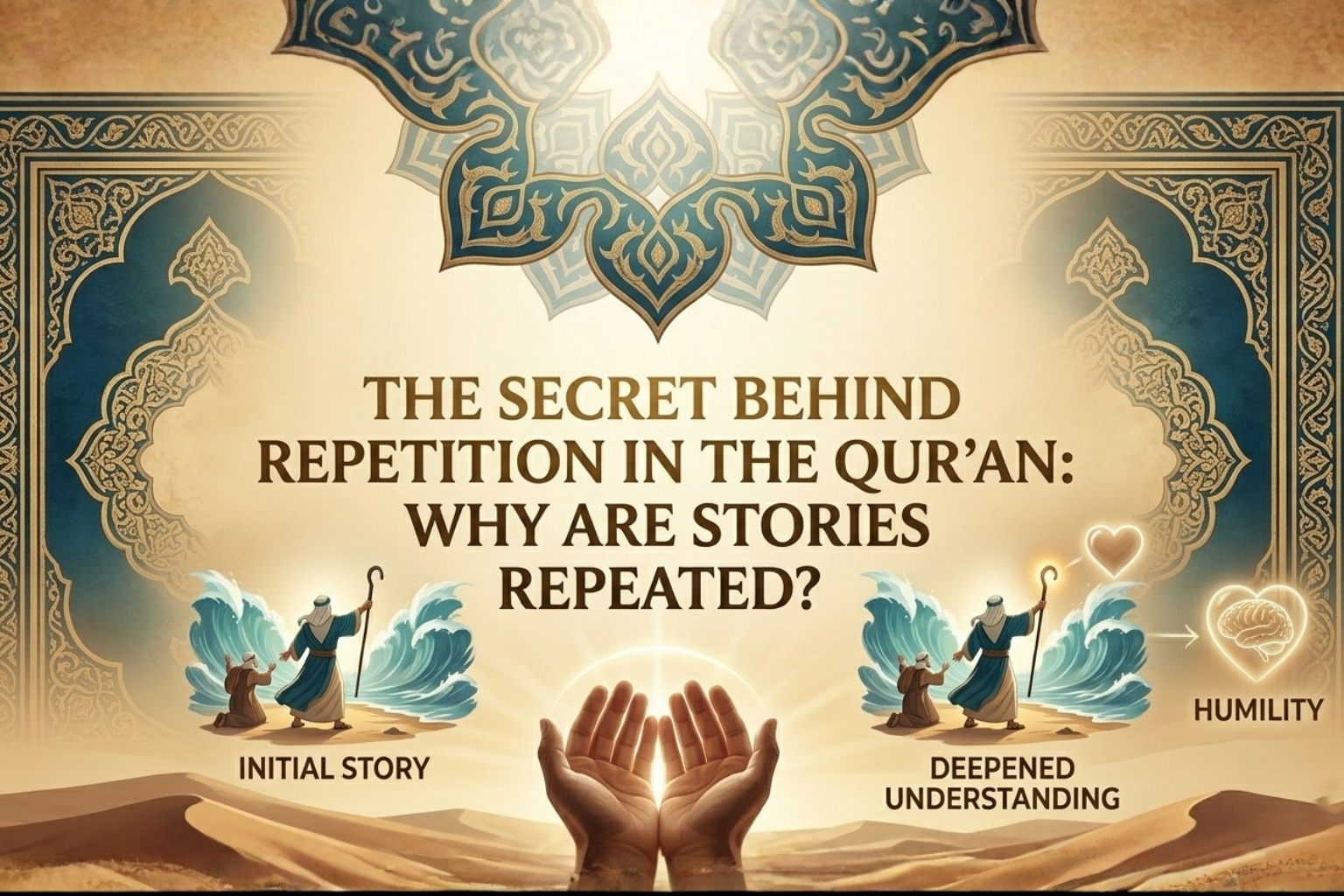

One of the first things many readers notice while reading the Qur’an is that certain stories appear more than once. The story of Prophet Musa (Moses) appears repeatedly throughout different chapters. The stories of Nuh (Noah), Ibrahim (Abraham), Isa (Jesus), and other prophets are also mentioned again and again.
For some readers unfamiliar with the style of the Qur’an, this repetition may initially seem unusual. Why would the same story appear multiple times? Why are certain events retold across different chapters instead of being mentioned only once in chronological order?
The answer lies in one of the most remarkable features of the Qur’an itself: repetition in the Qur’an is never meaningless repetition. Every repeated story carries a new lesson, a different emotional tone, a unique context, or a deeper spiritual message.
Rather than weakening the message, repetition in the Qur’an strengthens it.
The Qur’an Is Not a Conventional 1 Book
To understand why stories repeat in the Qur’an, it is important first to understand what the Qur’an actually is.
The Qur’an is not written like a history book, a novel, or a biography. It was not revealed merely to entertain readers or document events chronologically 2. Its primary purpose is guidance.
Allah says:
“ذَٰلِكَ الْكِتَابُ لَا رَيْبَ ۛ فِيهِ ۛ هُدًى لِّلْمُتَّقِينَ”
“This is the Book about which there is no doubt, a guidance for those conscious of Allah.”
— Surah Al-Baqarah (2:2)
Because the Qur’an is a book of guidance, every story serves a purpose beyond narration 3. The Qur’an focuses not only on what happened, but also on what human beings should learn from what happened.
This is why the same story may appear in different places with different details emphasized each time.
Every Repetition Has a Different Purpose
One of the most fascinating aspects of Qur’anic storytelling is that repeated stories are never completely identical.
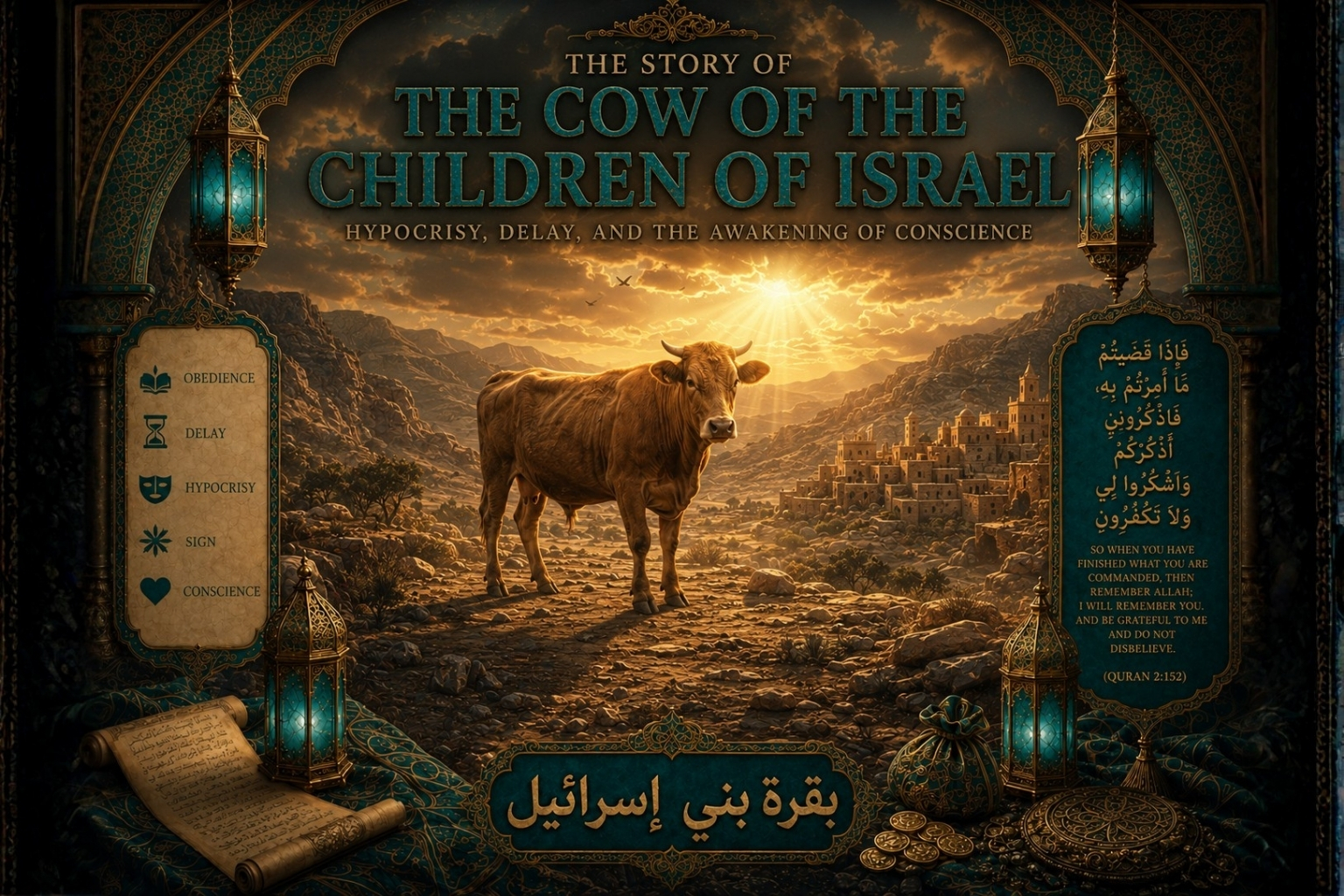
Take the story of Prophet Musa عليه السلام as an example. It appears in many chapters throughout the Qur’an, including:
- Surah Taha
- Surah Al-Qasas
- Surah Ash-Shu’ara
- Surah Al-A‘raf
However, each chapter highlights a different dimension of the story.
In one chapter, the focus may be on fear and trust in Allah.
In another, the emphasis may be on leadership and patience.
Elsewhere, the story may focus on the arrogance of Pharaoh or the struggle between truth and falsehood.
This unique literary style allows the Qur’an to teach multiple lessons through the same event without becoming repetitive in a meaningless way.
Repetition Strengthens Human Memory
Human beings naturally forget. One of the reasons repetition is powerful is because it reinforces important ideas in the mind and heart.
This is true even in everyday life:
- Teachers repeat lessons
- Parents repeat advice
- Leaders repeat important messages
The Qur’an addresses human nature directly. Essential truths are repeated because guidance must remain alive in the heart of the believer.
Allah says:
“وَلَقَدْ صَرَّفْنَا فِي هَٰذَا الْقُرْآنِ لِلنَّاسِ مِن كُلِّ مَثَلٍ”
“And We have certainly diversified in this Qur’an for the people from every kind of example.”
— Surah Az-Zumar (39:27)
The Qur’an repeats stories because human beings need reminders. Faith is not strengthened by hearing truth once and then forgetting it. Repetition revives reflection.
The Emotional Power of Repetition in the Qur’an
Another remarkable feature of Qur’anic repetition is emotional impact.
When a believer repeatedly encounters the stories of the prophets, certain values become deeply rooted:
- Patience
- Trust in Allah
- Perseverance 4
- Mercy
- Courage
- Reliance upon God
For example, the repeated struggles of the prophets teach believers that hardship is part of the journey of faith.
The repetition itself creates emotional familiarity. Over time, readers feel connected to the prophets and their experiences. The stories become living reminders rather than distant historical events.
The Qur’an Repeats What Humanity Needs Most
Not every topic in the Qur’an is repeated equally. The themes most frequently repeated are often the themes most essential for humanity:
- Tawhid (the Oneness of Allah)
- Resurrection
- Accountability 5
- Guidance
- The struggle between truth and falsehood
This repetition reflects the importance of these messages.
Allah says:
“وَذَكِّرْ فَإِنَّ الذِّكْرَىٰ تَنفَعُ الْمُؤْمِنِينَ”
“And remind, for indeed the reminder benefits the believers.”
— Surah Adh-Dhariyat (51:55)
The Qur’an itself describes its verses as reminders because people constantly need spiritual renewal 6.
A Literary Style Unlike Any Other
One reason repetition in the Qur’an feels different from ordinary repetition is because the Qur’an uses extraordinary linguistic variation 7.
Even when discussing the same story:
- The wording changes
- The rhythm changes
- The emotional atmosphere changes
- The focus changes
This is one reason why Muslims regard the Qur’an as possessing a unique literary style unlike ordinary prose or poetry.
The repetition is dynamic 8 , purposeful 9 , and interconnected 10.
Why This Matters Today
Modern readers often live in a world full of distraction and information overload 11. Important truths are quickly forgotten. In this environment, the Qur’anic method of repetition becomes even more meaningful.
The repeated stories of the prophets continue to remind people about:
- Remaining patient during hardship
- Standing for truth
- Trusting Allah during uncertainty
- Maintaining faith despite challenges
The repetition transforms the Qur’an from a book that is merely read into a message that continuously reshapes the heart.
Conclusion
The repetition found in the Qur’an is not accidental, nor is it a weakness in style. On the contrary, it is one of the Qur’an’s greatest strengths.
Every repeated story carries renewed meaning, deeper wisdom, and fresh lessons for the reader. Through repetition, the Qur’an educates, reminds, strengthens faith, and keeps essential truths alive within the human heart.
More than fourteen centuries after its revelation, the Qur’an continues to move readers precisely because its message is not delivered once and forgotten. Instead, it returns again and again — each time with greater depth, stronger emotion, and clearer guidance.