
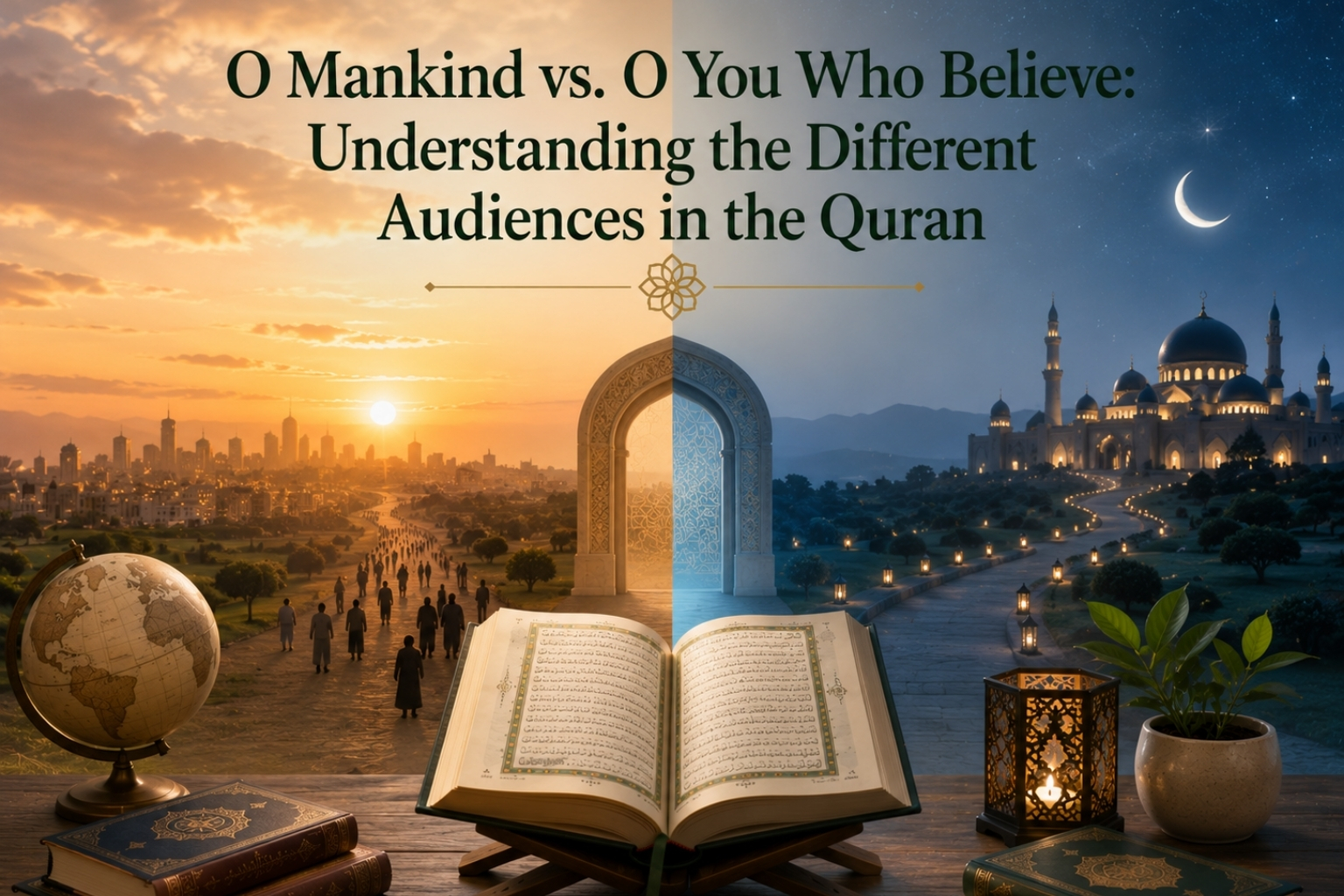

When you read the Holy Book in English, you will notice that the text frequently pauses to address its readers directly. However, it doesn’t always address the same group of people. In some chapters, the text exclaims, “O Mankind!” (Ya Ayyuha al-Nas), while in others, it shifts to, “O you who believe!” (Ya Ayyuha alladhina amanu).
To a reader approaching the text for the first time, these shifting phrases might seem like repetitive filler. In reality, they represent a highly sophisticated linguistic and educational framework. Understanding the different audiences in the Quran is one of the most effective ways to decipher the timeline, tone, and ultimate purpose behind any given verse.
The Two Main Eras of Revelation
To understand why the Quranic address changes, we must look at the context of revelation. The 23-year prophetic journey was divided into two distinct historical eras, each with its own unique challenges and primary audiences:
1. The Meccan Era: The Universal Address (“O Mankind!”)
For the first 13 years of Islam in the city of Mecca, the message was delivered to a diverse, largely polytheistic society that did not believe in a single Creator or an afterlife.
- The Focus: The verses revealed during this time focused on foundational truths: the existence of God, the purpose of life, the beauty of nature, the certainty of judgment, and universal human morals like justice and kindness.
- The Phrasing: Because the message was being introduced to humanity at large, the text used the broad, inclusive address: “O Mankind!” It speaks to the shared human identity, regardless of faith, race, or background.
2. The Medinan Era: The Community Address (“O You Who Believe!”)
When the Prophet and his companions migrated to the city of Medina, a formal, committed community of faith was established. They already accepted the foundational theology; now, they needed to build a functioning, ethical society.
- The Focus: The verses in this era introduced specific laws, social responsibilities, civic duties, and spiritual practices—such as fasting, charity, family laws, and business ethics.
- The Phrasing: Since these obligations required a prior commitment to faith, the text shifted its address to: “O you who believe!” It is a targeted call to action for those who have already chosen to trust the message.
Why this Distinction Matters for the Modern Reader
Recognizing who is being addressed in a specific passage instantly elevates your comprehension of the text in three ways:
A. It Clarifies the Tone of the Verse
When the text addresses “O Mankind,” the tone is generally philosophical, awe-inspiring, and argumentative. It invites you to look at the stars, ponder creation, and reflect on your mortality. When it addresses “O you who believe,” the tone transforms into a warm, familial, yet firm call to duty. It appeals to the reader’s pre-existing love and devotion to inspire ethical behavior.
B. It Distinguishes Between Universal and Specific Laws
Some critics or confused readers take laws meant specifically for the practicing Muslim community and try to apply them to all of humanity, or vice versa. Checking the audience prevents this. For example, universal ethical values (like honoring parents or avoiding oppression) are addressed to all of mankind. Specific spiritual rituals (like the physical parameters of prayer or fasting) are exclusively addressed to those who believe.
C. It Invites Personal Progression
As a non-Arabic speaker or a new seeker reading the text, you can track your own spiritual journey through these phrases. You may start by reading the verses addressed to “O Mankind,” feeling your intellect and human nature (Fitrah) connecting with the universal message. As your faith grows and you choose to accept the path, the verses starting with “O you who believe” suddenly feel like direct, highly personal invitations meant specifically for you.
Conclusion: A Masterclass in Communication
The shifting phrases of the revelation are not random; they are a masterclass in divine communication. The text perfectly adapts its language, tone, and laws depending on who is listening, ensuring that both the global human family and the specific faith community receive the exact guidance they need.